
Research Highlights
Synthetic scaffolds outperform traditional methods for growing hPSCs-derived cardiomyocytes
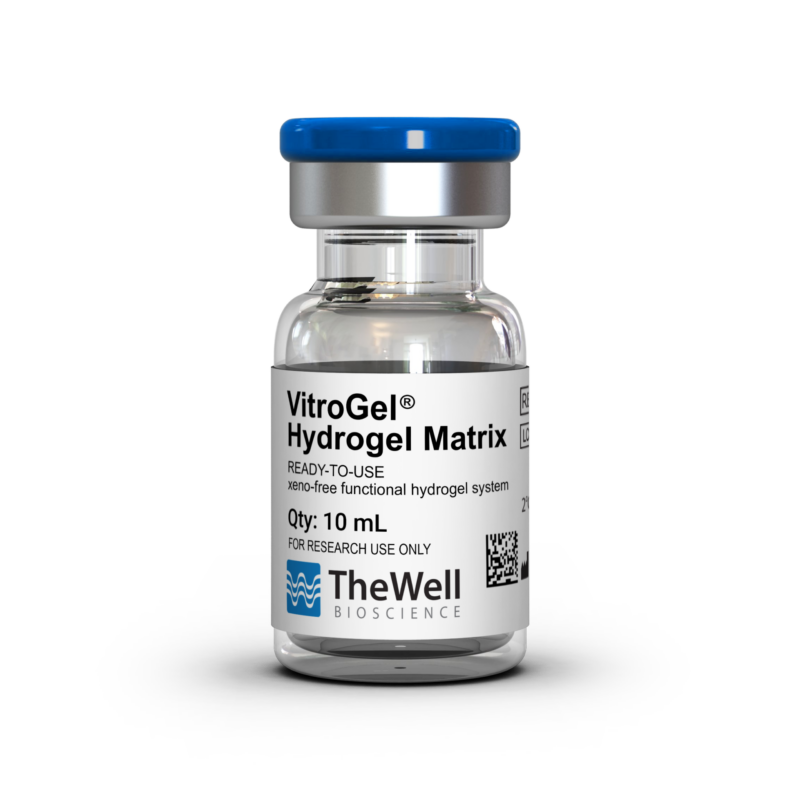
VitroGel® Hydrogel Matrix serves as a key benchmark for 3D cell culture in developing a novel thermo-responsive platform .
Category:
Cell Models / Functional Assays/ In Vitro Models
Cell Type:
hiPSC line WTC-11 and hESC line H9
Hydrogel:
VitroGel® Hydrogel Matrix (VHM01)
Team:
Luis F. Arrieta-Viana, Janet Mendez-Vega and Madeline Torres-Lugo
Institution:
Department of Chemical Engineering, University of Puerto Rico-Mayagüez
Regenerative medicine aims to repair damaged tissues, such as heart muscle after a heart attack, by using stem cells to generate new, healthy cells. A major hurdle is creating a reliable and scalable environment to grow these human pluripotent stem cells (hPSCs) and guide them to become specific cell types, like cardiomyocytes (heart muscle cells). Traditionally, scientists use animal-derived gels like Matrigel™, but these are inconsistent from batch to batch, have an undefined composition, and are difficult to scale up for clinical use. Without a standardized, synthetic alternative, the progress toward effective stem cell therapies remains slow and unpredictable. Synthetic hydrogels are emerging as a solution to these challenges.
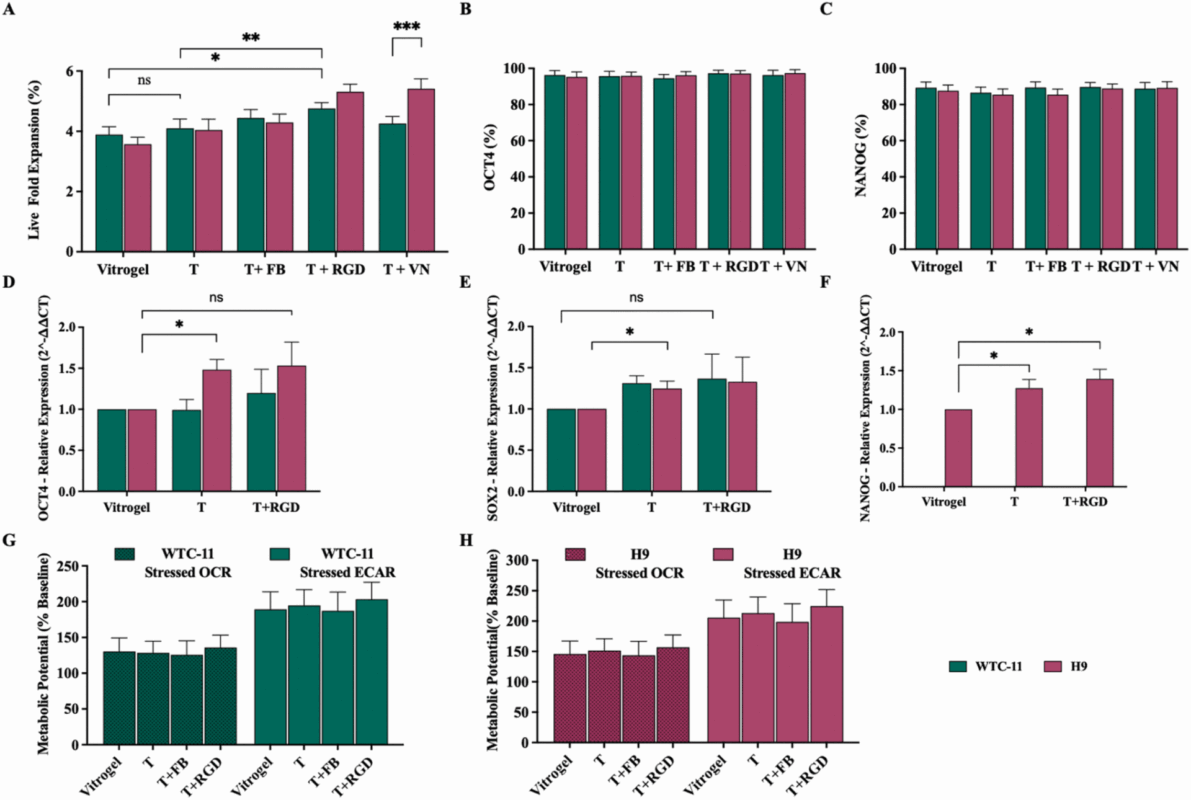
In this study, researchers developed and tested a new synthetic, thermo-responsive scaffold as a superior platform for growing hPSCs and differentiating them into cardiomyocytes. To rigorously evaluate their new material, they used VitroGel® Hydrogel Matrix, a xeno-free, biofunctional synthetic hydrogel, as a critical control in their 3D experiments. The team compared their custom scaffold, both with and without added bioactive molecules, against VitroGel® to benchmark performance in supporting cell growth, maintaining stem cell identity, and enabling efficient cardiac differentiation. The role of VitroGel® was essential in providing a consistent, xeno-free baseline, demonstrating that the novel terpolymer scaffold could achieve comparable or even better results than a leading commercial synthetic product.
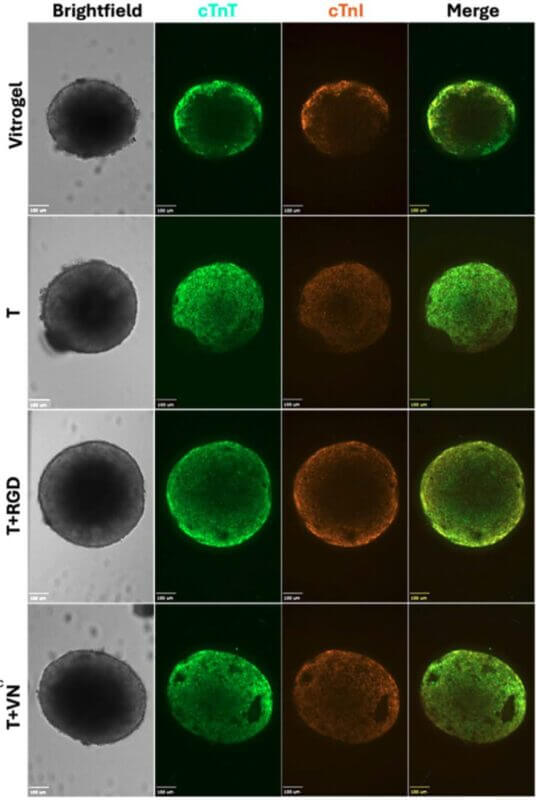
The research successfully demonstrated that the new synthetic scaffold supports robust stem cell expansion and directs them to differentiate into functional cardiomyocytes with high efficiency. By using VitroGel® as a reliable control, the study validated its novel platform as a powerful and reproducible alternative to variable natural matrices. This highlights how standardized synthetic systems like VitroGel® are indispensable tools for benchmarking next-generation biomaterials. The success of this approach paves the way for more predictable and scalable production of cardiomyocytes for drug testing, disease modeling, and future regenerative therapies.
VitroGel® STEM
Discover how VitroGel® can support your cell culture research
Explore our updated resources for a concise overview of VitroGel®’s key features and application areas.
Comparison of VitroGel® vs. Animal-based ECM
Discover the 20+ advantages of VitroGel® over animal-based ECM with this comprehensive comparison on key features, operation, application, and storage conditions.
Learn More
What is VitroGel® | Overview Video
Learn why VitroGel® is the leading animal-free hydrogel for 3D cell culture.
Learn More
VitroGel® for Invasion / Migration Studies
Learn how VitroGel® provides easy and consistent cell invasion studies compared to animal-based ECMs.
Learn More