Category Archives: Poster Presentations

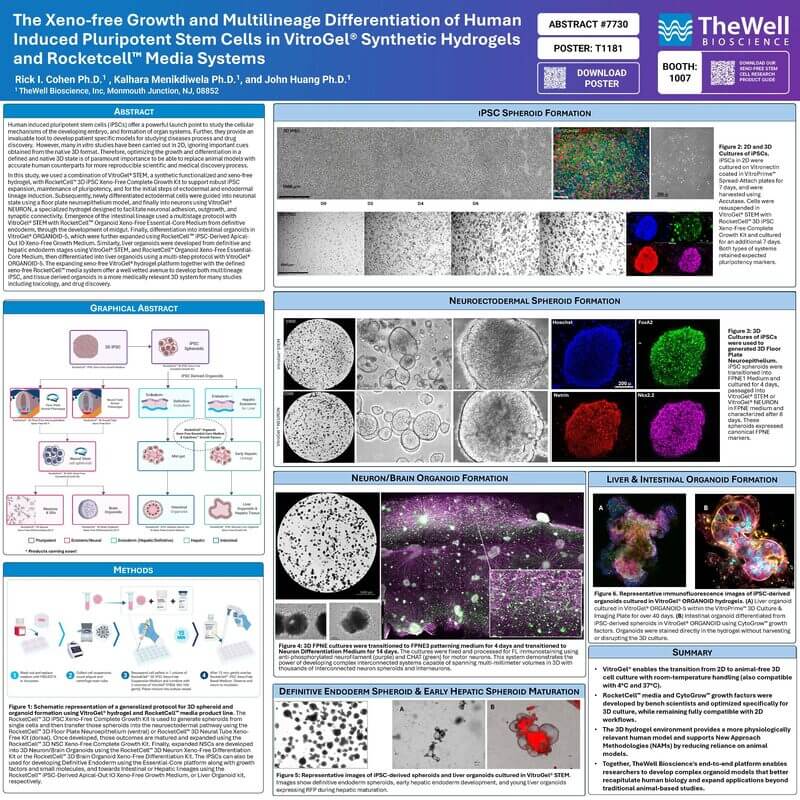
The Xeno-Free Growth and Multilineage Differentiation of Human Induced Pluripotent Stem Cells in VitroGel® Synthetic Hydrogels and RocketCell™ Media Systems

Poster-style abstract slide announcing #7730: The Xeno-Free Growth and Multilineage Differentiation of hiPSCs in VitroGel and RocketCell Media Systems; available July 09, 2026. Presented by Rick Cohen, Ph.D., TheWell Bioscience.

Authors: Rick Cohen, Ph.D., Kalhara Menikdiwela, Ph.D., John Huang, Ph.D. Abstract: Human induced pluripotent stem cells (iPSCs) offer a powerful launch point to study the cellular mechanisms of the developing embryo and the formation of organ systems. Further, they provide an invaluable tool for developing patient-specific models for studying disease processes and drug discovery. However, […]

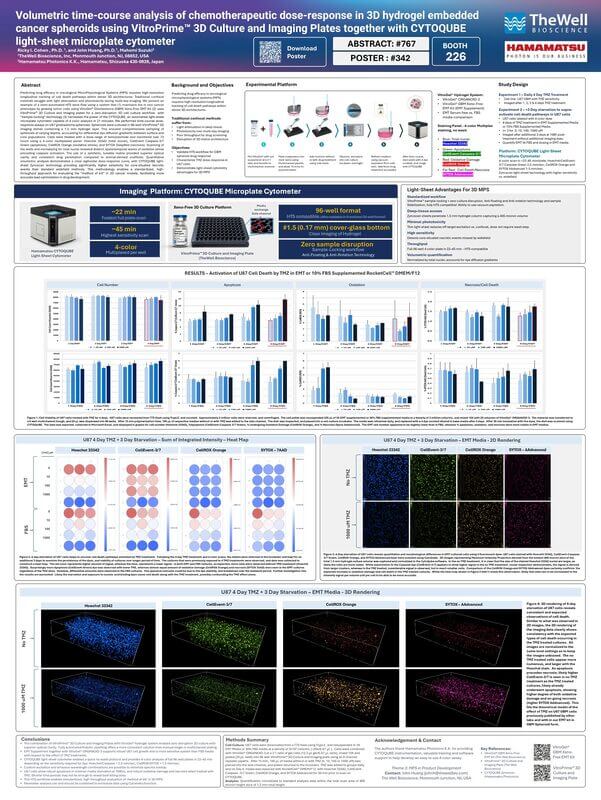
Volumetric time-course analysis of chemotherapeutic dose-response in 3D hydrogel embedded cancer spheroids using VitroPrime™ 3D Culture and Imaging Plates together with CYTOQUBE light-sheet microplate cytometer

Poster title and workflow: volumetric 3D culture platform study of chemotherapy dose-response using VitroPrime plates and CYTOQUBE light-sheet system. (informative poster)

ABSTRACT Predicting drug efficacy in oncological microphysiological systems (MPS) requires high-resolution longitudinal tracking of cell death pathways within dense 3D architectures. Traditional confocal methods struggle with light attenuation and phototoxicity during multi-day imaging. We present an example of a semi-automated HTS workflow using a system that (1) maintains the in vivo cancer phenotype by growing […]

Anti-progestin therapy targets hallmarks of breast cancer risk through epithelial-stromal remodelling

Poster banner for a scientific talk titled 'Anti-progestin therapy targets hallmarks of breast cancer risk through epithelial-stromal remodelling' with author photo and university logos in a purple gradient backdrop.

Background The luminal progenitor (LP) population in the normal breast is under the control of paracrine progesterone signalling and likely represents the cell of origin of estrogen receptor negative (ER-) BC. Exogenous progestins, as contraception or menopausal hormone replacement therapy (HRT), increase the risk of ER- and ER+ BC. We sought to examine the effect […]

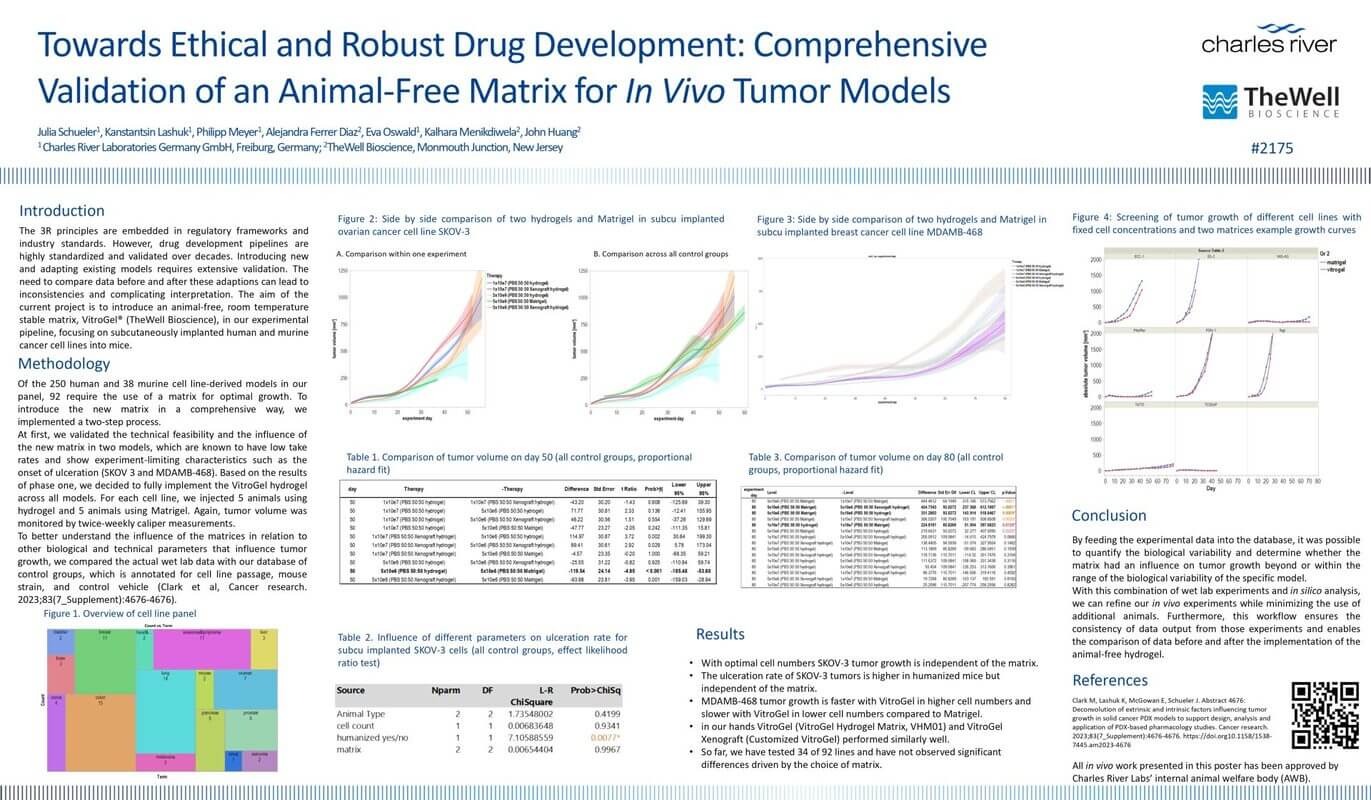
Towards Ethical and Robust Drug Development: Comprehensive Validation of an Animal-free Matrix for In Vivo Tumor Models

Poster header for a research abstract: 'Towards Ethical and Robust Drug Development: Comprehensive Validation of an Animal-Free Matrix for In Vivo Tumor Models' with author names and logos on the right, plus introductory text and figures below.

Presenter: Julia Schueler, Ph.D. – Charles River Laboratories Abstract: The 3R principles are embedded in regulatory frameworks and industry standards. However, drug development pipelines are highly standardized and validated over decades. Introducing new models and adapting existing ones requires extensive validation. The need to compare data before and after these adaptations can lead to inconsistencies […]

Developing Advanced Tumoroid Models Driven by Epithelial-to-Mesenchymal Transition with a Novel Xeno-Free and Biofunctional Hydrogel System

Poster on advanced tumor organoid models using a xeno-free synthetic hydrogel; collage of 2D/3D culture images and co-culture viability data.

Abstract: Epithelial-to-mesenchymal transition (EMT) is a key biological process that facilitates cancer metastasis to distant organs. Most preclinical studies investigating EMT are conducted using traditional two-dimensional (2D) culture models, which fail to recapitulate the in vivo tumor microenvironment, limiting the translational relevance of their findings to clinical settings. Consequently, three-dimensional (3D) culture systems have emerged […]

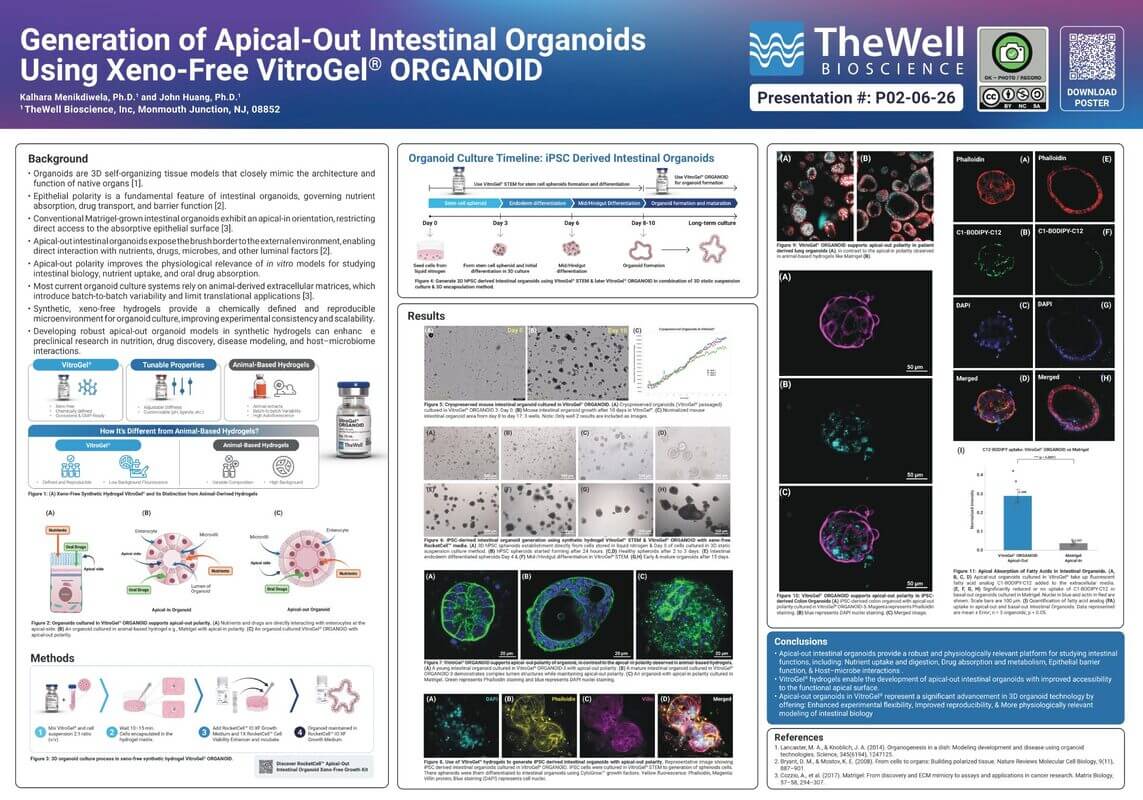
Innovative Xeno-Free Synthetic Hydrogel Supports iPSC-derived Intestinal Organoids and Colorectal Cancer (CRC) Organoid Growth

Poster summarizing a xeno-free synthetic hydrogel platform for iPSC-derived intestinal organoids, with methods and results sections for therapeutic screening.

Abstract: Colorectal cancer (CRC) is the fourth most commonly diagnosed cancer and the second leading cause of cancer death in the United States of America. Organoids, specifically CRC organoids have emerged as a powerful preclinical model as they closely recapitulate patient-specific tumor features, including tumor morphology, genetics, and treatment response. However, most organoid culture systems […]

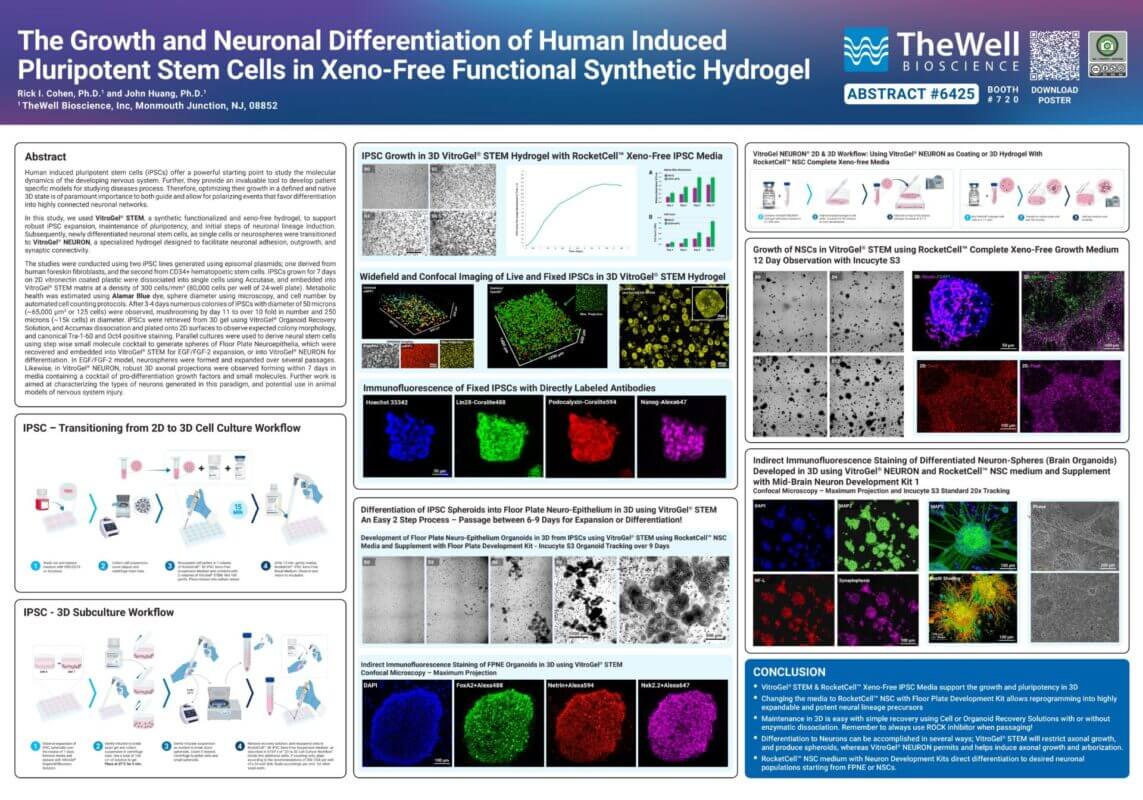
The Growth and Neuronal Differentiation of Human Induced Pluripotent Stem Cells in Xeno-Free Functional Synthetic Hydrogel​

Abstract: Human induced pluripotent stem cells (iPSCs) offer a powerful starting point to study the molecular dynamics of the developing nervous system. Further, they provide an invaluable tool for developing patient-specific models to study the disease process. Therefore, optimizing their growth in a defined, native 3D state is of paramount importance to both guide and […]

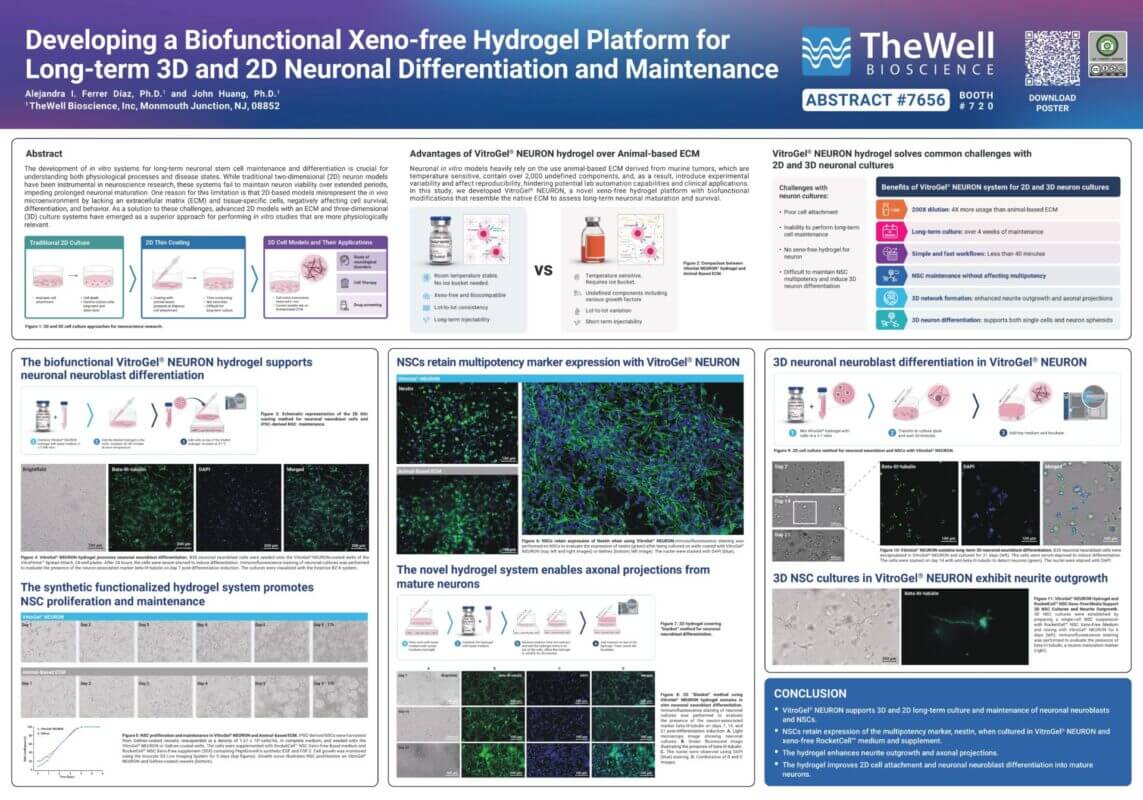
Developing a Biofunctional Xeno-free Hydrogel Platform for Long-term 3D Neuronal Differentiation and Maintenance

Abstract: The development of in vitro systems for long-term neuronal differentiation and survival is crucial for understanding both physiological processes and various disease states. While traditional two-dimensional (2D) neuron models have been instrumental in neuroscience research, these systems fail to maintain neuron viability over extended periods, impeding prolonged neuronal maturation. One reason for this limitation is that 2D-based models misrepresent […]

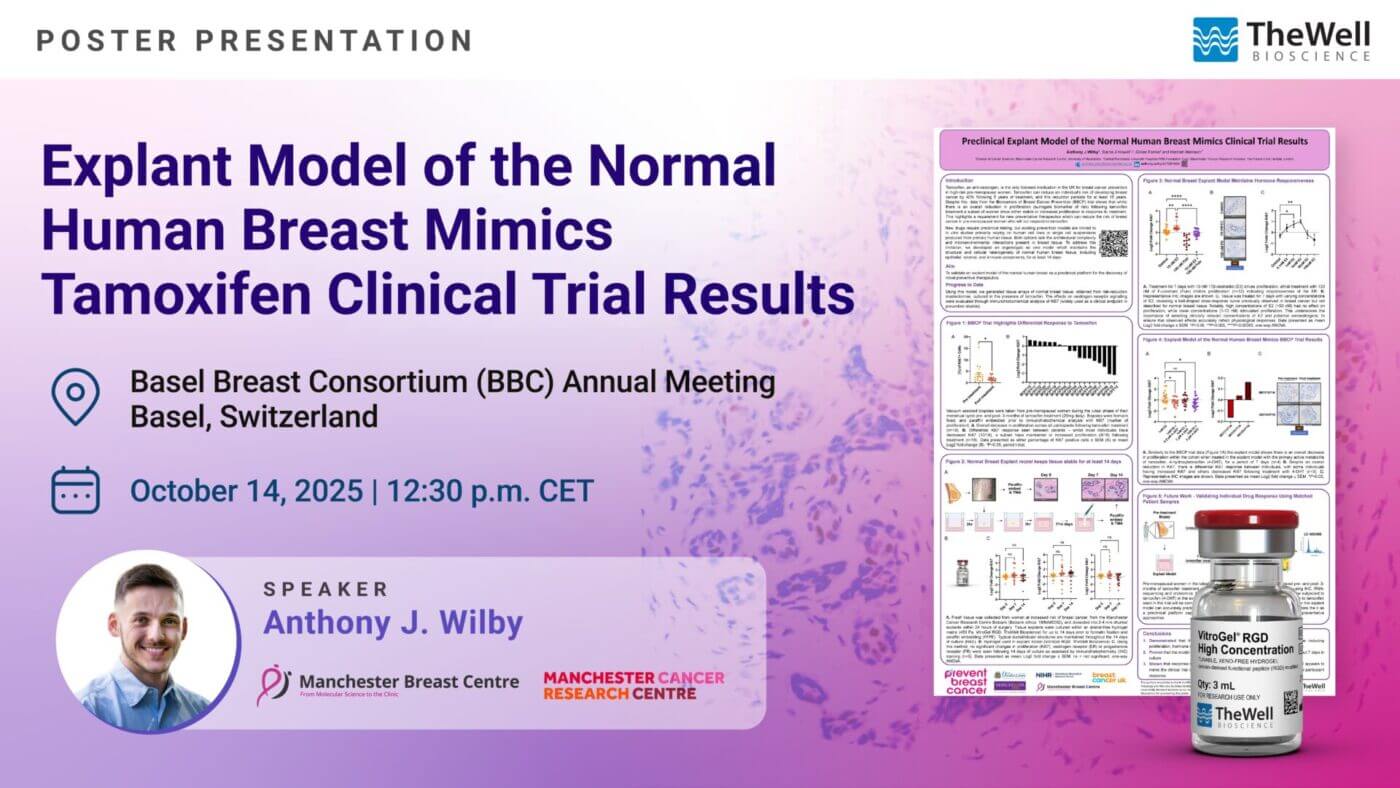
Explant Model of the Normal Human Breast Mimics Tamoxifen Clinical Trial Results

Abstract: Tamoxifen, an anti-oestrogen, is the only licensed medication in the UK for breast cancer prevention in high-risk, pre-menopausal women. Data from the Biomarkers of Breast Cancer Prevention (BBCP) trial show that, while tamoxifen reduces overall proliferation after three months of treatment, a subset of women (5/13) show stable or increased proliferation. As proliferation is […]

Discerning the Role of the Extracellular Matrix on Epithelial-to-Mesenchymal Transition and Invasiveness of Glioblastoma Multiforme using a Xeno-Free 3D Hydrogel System

Abstract: The invasive nature of cancer, driven by epithelial-to-mesenchymal transition (EMT), is a critical process influenced by external cues from the tumor microenvironment, such as extracellular matrix (ECM) composition. The ECM primes cells for EMT and metastasis, making it a key topic in understanding disease progression. For example, in glioblastoma multiforme (GBM), a grade IV […]