Webinars
Anti-Progestin Therapy Targets Hallmarks of Breast Cancer Risk
ON-Demand Webinar: VitroGel® for ex vivo organoid model
PRESENTER

Bruno M. Simões, Ph.D.
The University of Manchester
Division of Cancer Sciences, Breast Biology Group

WATCH THE WEBINAR

Xeno-free VitroGel® system provides a physiologically relevant platform for breast organoid culture to support breast cancer prevention research.
Bruno M. Simões, Ph.D., of the Division of Cancer Sciences, Breast Biology Group at The University of Manchester, will present his team’s recent Nature publication entitled “Anti-Progestin Therapy Targets Hallmarks of Breast Cancer Risk.”
Luminal progenitor (LP) cells, likely the cell of origin of aggressive breast cancers, are regulated by paracrine progesterone signalling, and exogenous progestins increase breast cancer risk.
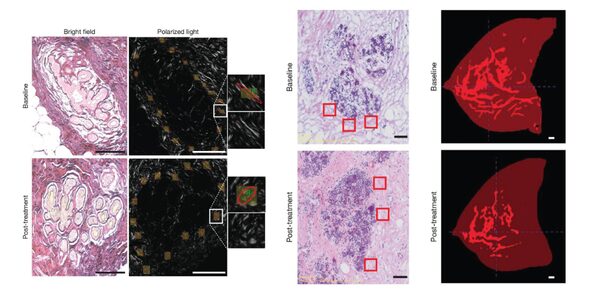
The Breast Cancer-Anti-Progestin Prevention Study 1 (BC-APPS1) evaluated 12 weeks of the progesterone receptor modulator ulipristal acetate (UA) in premenopausal women at increased risk using paired biopsies. UA significantly reduced epithelial proliferation and both LP proportion and activity. Single-cell RNAseq and proteomics showed extensive stromal remodelling, with Collagen VI as the top down-regulated epithelial protein. UA also reduced collagen organisation, tissue stiffness, and fibro-glandular volume on MRI.
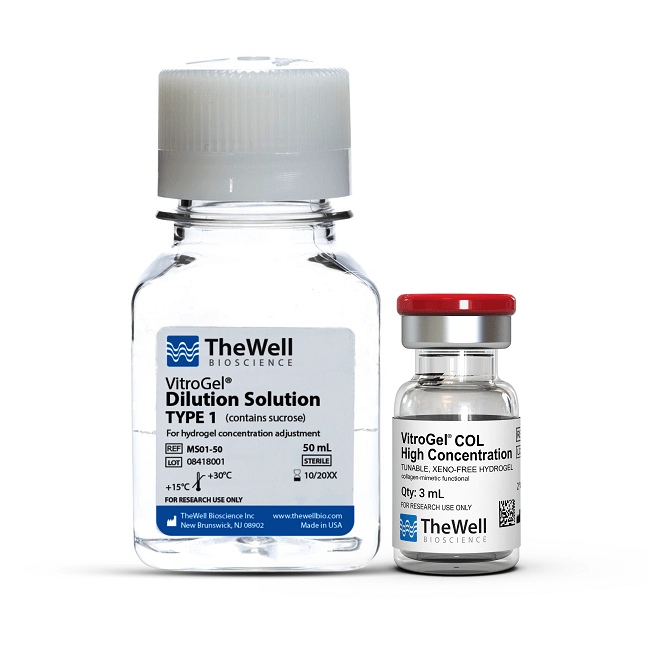
In using breast organoids/microstructures cultured in VitroGel® COL, a high-concentration hydrogel functionalized with collagen mimetics, UA blocked stiffness-induced progesterone signalling and progenitor activation. Overall, anti-progestin therapy reduces LP activity and breast stiffness, supporting further evaluation for prevention and highlighting breast density as a potential biomarker.
KEY TAKEAWAYS
- Anti-progestin therapy reduces the proliferation and activity of Luminal progenitor (LP) cells in normal breast tissue of young women at increased risk of breast cancer.
- Anti-progestin treatment reshapes the extracellular matrix (ECM) through interactions between progesterone receptor-positive (PR+) luminal mature cells, fibroblasts, and basal cells.
- Collagen VI appears central to ECM homeostasis, tissue stiffness, and breast density, and is strongly down-regulated by anti-progestin treatment.
- Anti-progestin therapy warrants further evaluation in prevention studies for premenopausal women at increased breast cancer risk.
- Ex vivo breast organoid cultures established with the VitroGel® system provide a physiologically relevant platform for evaluating therapeutic candidates for breast cancer prevention.
PRESENTER
Bruno is a breast cancer cell biologist who obtained his degree in Microbial Biology and Genetics from the University of Lisbon in 2004. After completing a research training year in Pavia, Italy, he pursued his PhD in Bilbao, Spain, where he studied the effects of estrogen on human breast stem cells.
In 2011, Bruno joined the University of Manchester to investigate the role of breast cancer stem cells in resistance to endocrine therapy in estrogen receptor-positive tumours. He now leads laboratory investigations using normal breast tissue from breast cancer prevention clinical studies. His research focuses on identifying the earliest molecular and cellular events that lead to aberrations in tumour-initiating cells, with the goal of developing improved chemoprevention strategies for women at increased risk of breast cancer.
Bruno’s primary focus is to gain insights into the biology underlying breast cancer risk factors in women at increased risk by deciphering the earliest molecular and cellular events that lead to aberrations in tumour-initiating cells. His ultimate goal is to advance understanding of breast cancer biology in order to inform novel preventive strategies.
Bruno has published 34 peer-reviewed papers with ~3500 citations (h-index: 28), and has given more than 30 invited seminars and oral presentations at prestigious universities and conferences. He serves as Associate Editor at the journal Breast Cancer Research.
Read the publication on Nature: