
Unified Core System
Replaces the need for separate supplementation, providing a complete nutritional foundation in one simple kit.
New
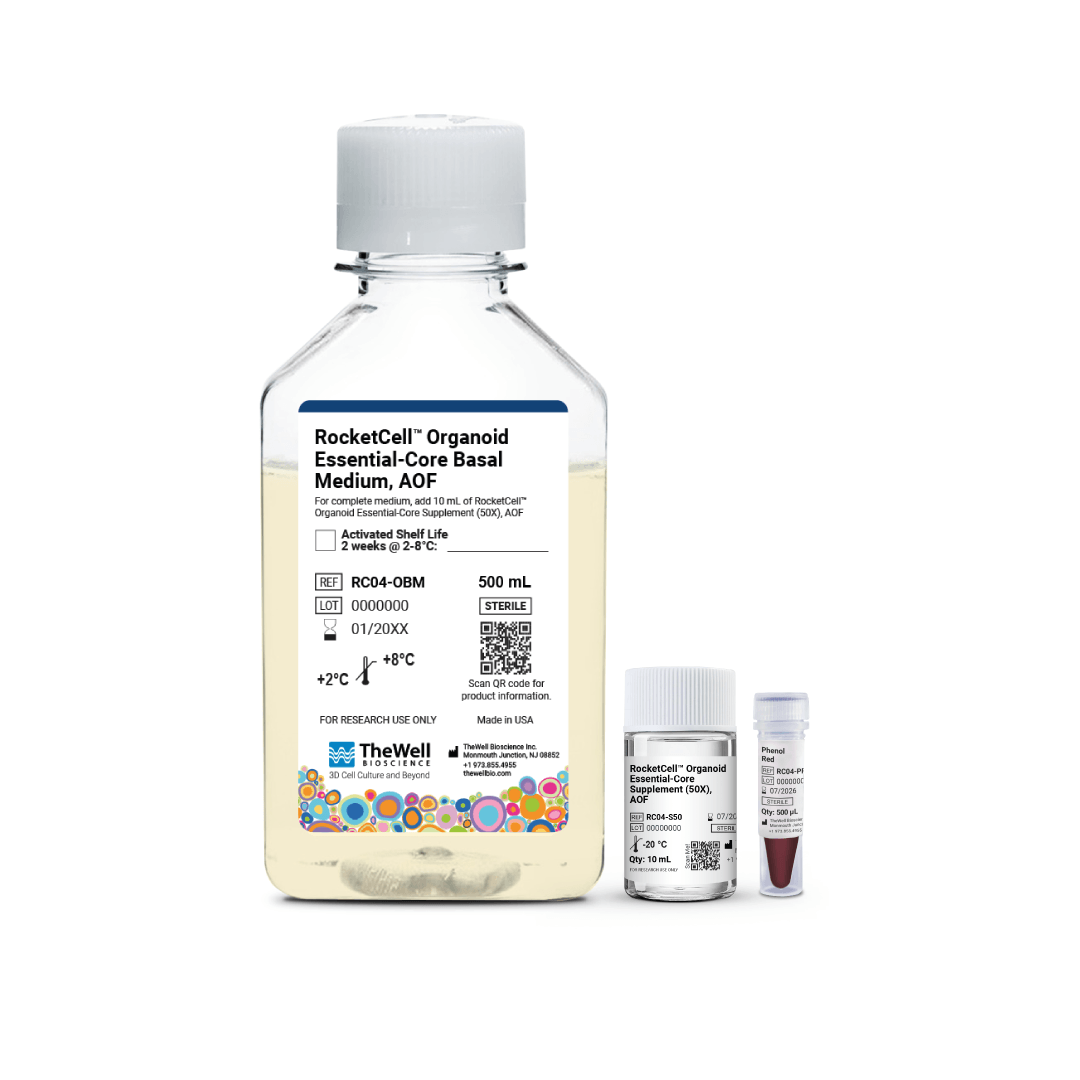
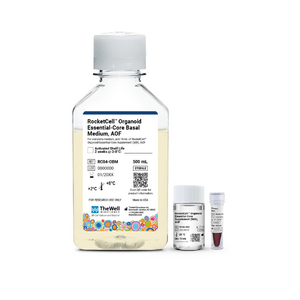
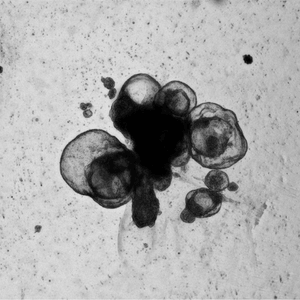
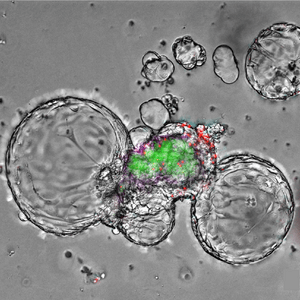
RocketCell™ Organoid Essential-Core Medium, AOF
One Core Medium. Endless Organoid Possibilities. An animal origin-free medium that supports multiple organoid types – just add growth factors.
RocketCell™ Organoid Essential-Core Medium, AOF
One Core Medium. Endless Organoid Possibilities.


Plug-and-Play Flexibility
Serves as a versatile base for multiple organoid lineages and differentiation stages; just add the specific growth factors required for your specific model.
100% Animal Origin-Free & Defined
Ensures a controlled, animal origin-free environment, minimizing batch-to-batch variability and regulatory hurdles.

Broad Matrix Compatibility
Validated for use with both synthetic and animal-derived hydrogels, enabling seamless integration into existing organoid platforms.

Enhanced Viability & Recovery
Supports robust initial survival and maintains high viability through repeated passaging and long-term culture.

Maximum Efficiency
Drastically reduces media preparation time and calculation errors, allowing researchers to focus on data rather than bench work.
The RocketCell™ Organoid Essential-Core Medium, AOF is a standardized, animal origin-free foundation medium designed to simplify and unify organoid culture workflows. This ready-to-use kit serves as a fundamental medium that provides all essential nutrients and is flexible, allowing direct mixing with growth factors and signaling molecules to support various types of organoid development. It eliminates the need for conditioned media preparation or complex multi-component media and supplement mixing.
This advanced Essential-Core formulation replaces multiple supplementation steps (such as N2/B27) with a single, defined system. Researchers can generate customized, organoid-specific media simply by adding the desired growth factors and signaling molecules.
Developed to support long-term expansion, high post-passaging viability, and reproducible outcomes, RocketCell™ Essential-Core Medium establishes a flexible, animal origin-free platform for diverse organoid systems in both synthetic and animal-derived hydrogels. This medium supports organoids from different sources and can also serve as a flexible base for formulating differentiation media tailored to the developmental stages of iPSC-derived organoids. By providing a unified and consistent core formulation, this kit enables the establishment of standardized, reproducible workflows for organoid culture across research, translational, and industrial settings.
Specifications
| Use | For Organoid Cultures |
| Cell Harvesting | VitroGel® Organoid Recovery Solution 5-15 min cell recovery |
| Shipping and Storage | Basal Medium: Ships with ice pack. Store at 2-8°C. Supplement: Ships with dry ice. Store at -20°C. |
Recommended Product
Challenges We Solve


Key Challenges in Organoid Culture

Complexity and Variability
Preparing a conditional medium or mixing multiple supplements leads to batch inconsistency.

Laborious Preparation
Tedious calculations and labor-heavy media prep waste valuable research time.

Media Fragmentation
Buying specialized kits for every organoid type creates
rigid, non-transferable workflows.

High Costs and Waste
Prohibitive kit prices and expired unused reagents from specialized media inflate budgets.
RocketCell™ Organoid Essential-Core Advantages

Standardized Reproducibility
Replaces complex preparation procedures with a pre-optimized core for guaranteed consistency.

Time Efficiency
A ready-to-use system turns hours of prep work into just a few minutes.

Universal Foundation
One flexible core for all organoid types. Simple add the specific growth factors your need.

Economical Scaling
A single, versatile core reduces inventory costs and eliminates the waste of expired, niche media.
Growth Factors by Organoid Type

Perfect Match with CytoGrow™ Premium-Grade Growth Factors for Organoid Culture CytoGrow™ is TheWell Bioscience’s portfolio of premium-grade recombinant proteins that pair seamlessly with RocketCell™ Organoid Essential Core Medium, AOF to enhance cellular activity and drive superior performance.


Data and References
Case 1: Intestinal Organoid Growth Comparison: RocketCell™ Organoid Essential-Core Medium, AOF vs Commercial Intestinal Organoid media | Animal-based ECM


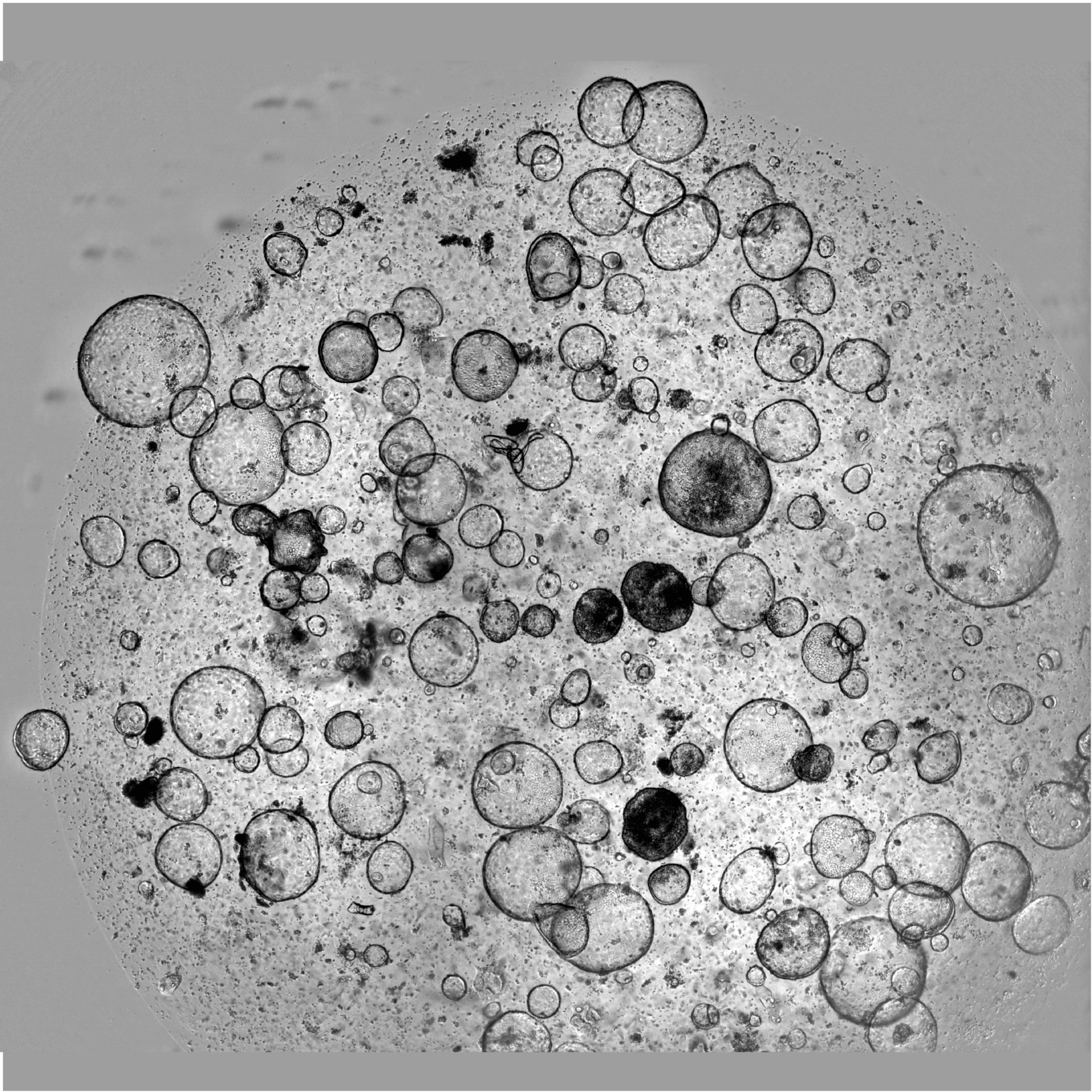
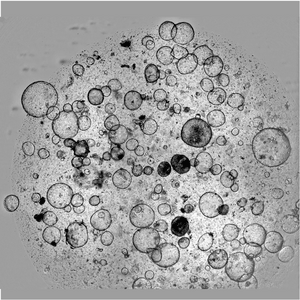
Figure 1: Intestinal Organoid Growth Comparison: RocketCell™ Organoid Essential-Core Medium, AOF vs. Commercial Intestinal Organoid Media | Animal-Based ECM. RocketCell™ Organoid Essential-Core Medium, AOF and commercial intestinal organoid media were prepared according to the manufacturer’s instructions. The 1X RocketCell™ Organoid Essential-Core Basal Medium, AOF was then supplemented with intestinal organoid-specific growth factors (e.g., Wnt pathway agonists, EGF, Noggin, and R-Spondin1). Organoids were cultured in an animal-derived gel (Matrigel) as domes, and growth was compared between 2 media types. (A&B) Organoid fragments cultured in media prepared using RocketCell™ Organoid Essential-Core Medium, AOF and commercial intestinal organoid media: Day 0. (C&D) Intestinal organoid growth after 5 days. (E) Normalized mouse intestinal organoid area from day 0 to day 5.
Case 2:
Use of RocketCell™ Organoid Essential-Core Medium, AOF in Mouse Intestinal Organoid Generation in Chemically Defined VitroGel® ORGANOID hydrogel
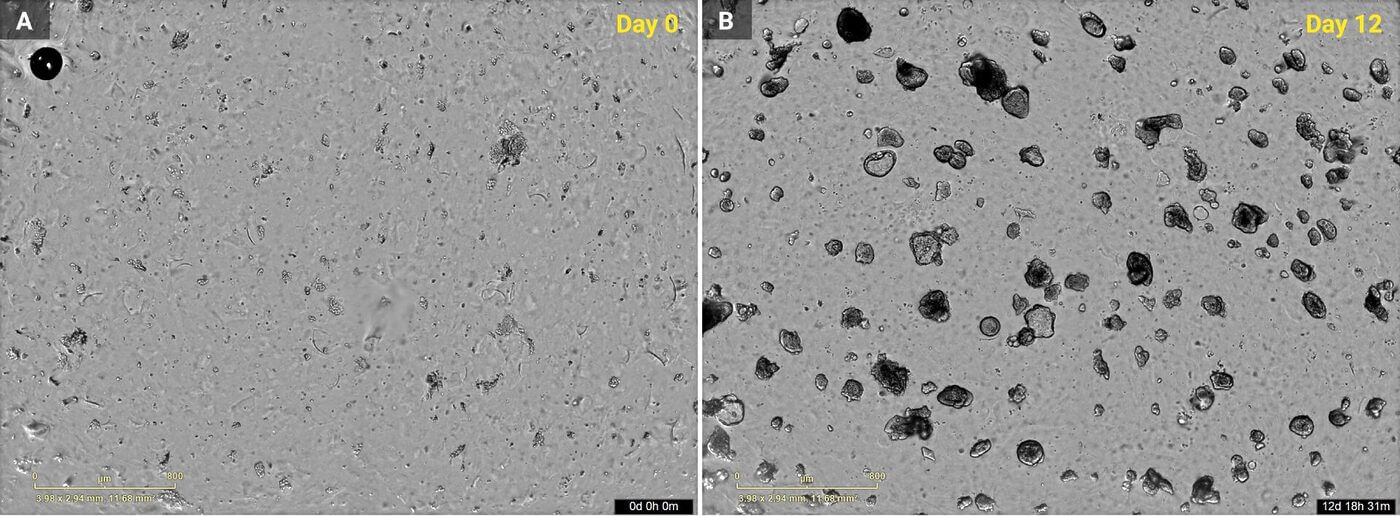
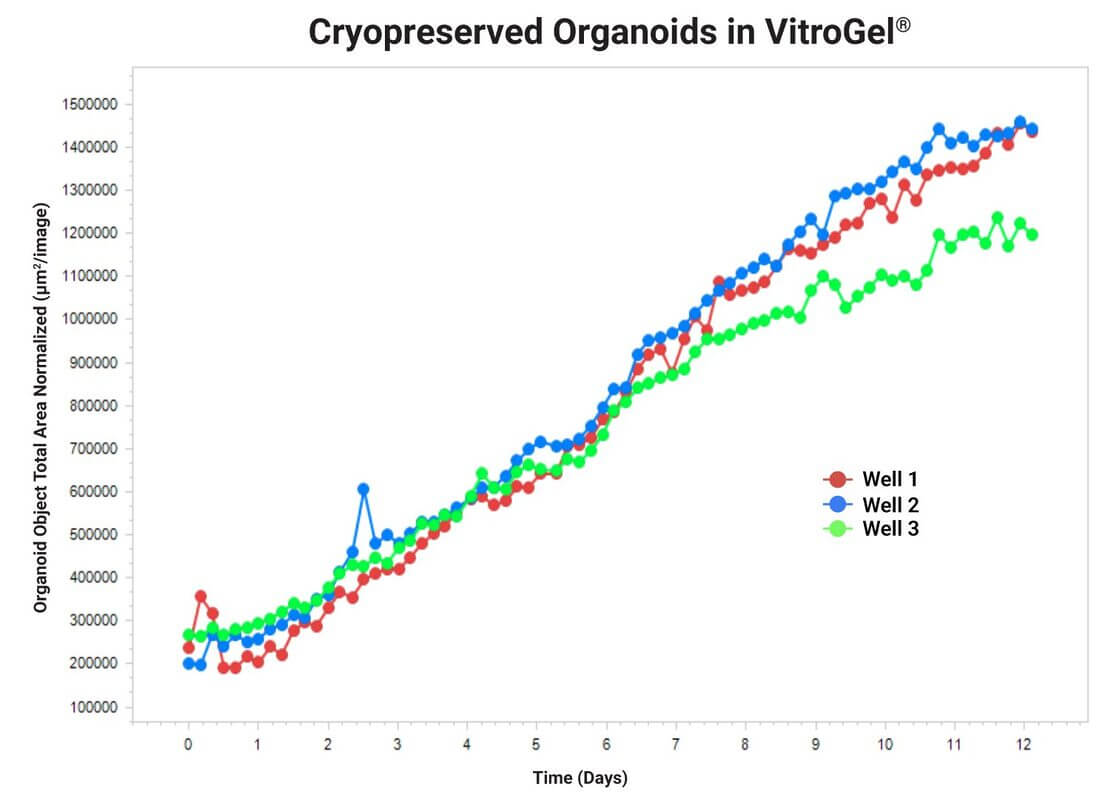
Figure 2: Use of RocketCell™ Organoid Essential-Core Medium, AOF in Generating Mouse Intestinal Organoid.
RocketCell™ Organoid Essential-Core Medium, AOF was prepared according to the manufacturer’s instructions. The medium was then supplemented with intestinal organoid–specific growth factors (e.g., Wnt pathway agonists, EGF, Noggin, and R-spondin) as required. The resulting complete medium was used in combination with VitroGel® ORGANOID hydrogel to support intestinal organoid formation, growth, and maintenance. (A) Organoids (VitroGel® passaged) fragments cultured in VitroGel® ORGANOID: Day 0. (B) Mouse intestinal organoids were maintained in intestinal organoid media prepared using RocketCell™ Organoid Essential-Core Medium, AOF. Organoid growth after 12 days. (C) Normalized mouse intestinal organoid area from day 0 to day 12: 3 wells. Note: Only well 1 set of results is included.
Case 3:
iPSC-derived Intestinal Organoids Generated using RocketCell™ Organoid Essential-Core Medium, AOF and Chemically Defined VitroGel® ORGANOID Hydrogel

C.

Figure 3: Use of RocketCell™ Organoid Essential-Core Medium, AOFin Generating iPSC Derived Intestinal Organoid.
RocketCell™ Organoid Essential-Core Medium, AOF was prepared according to the manufacturer’s instructions. This medium then serves as a flexible
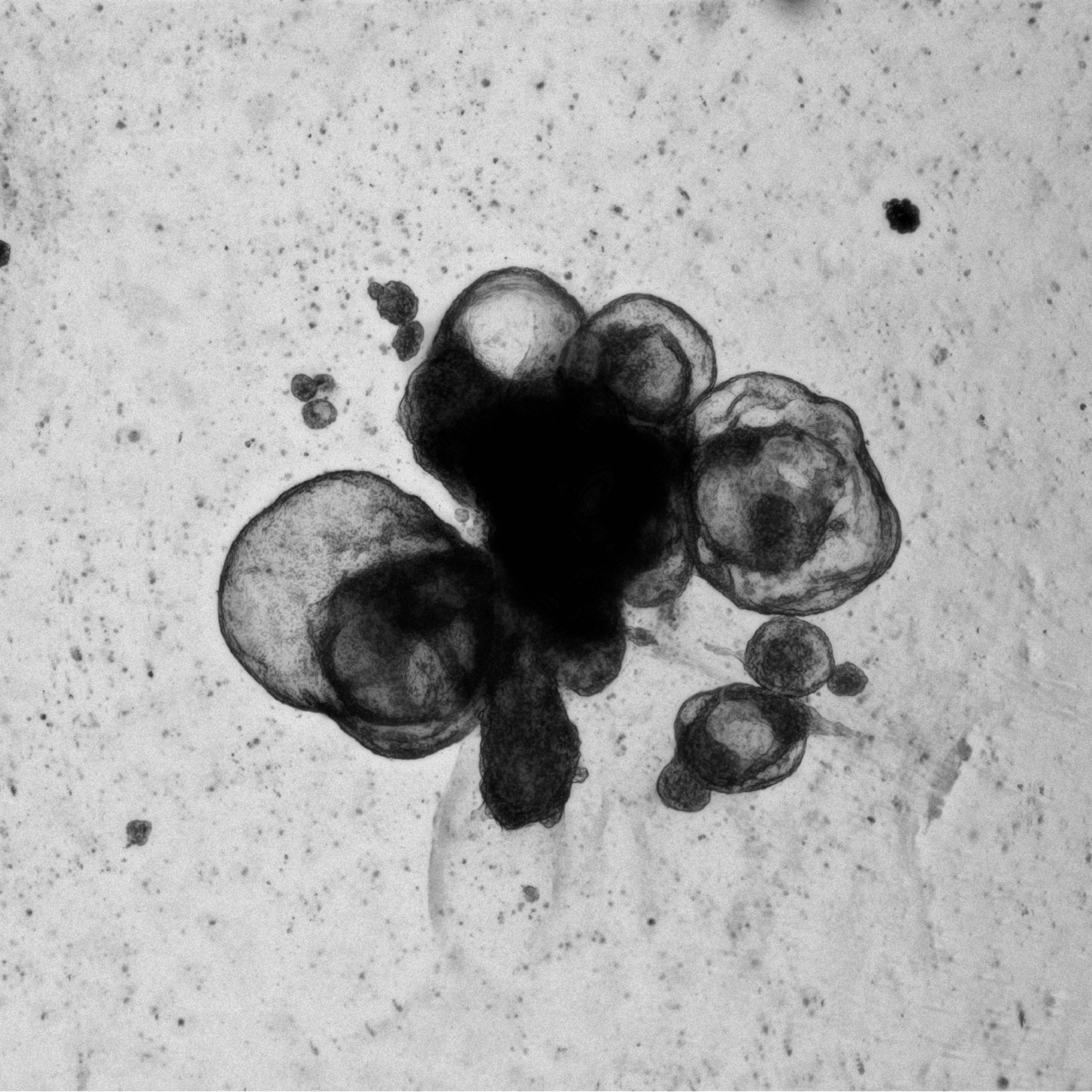
base for formulating differentiation media tailored to each developmental stage of iPSC-derived intestinal organoid differentiation. Mature organoids were cultured in VitroGel® ORGANOID hydrogel and maintained. (A) iPSC-derived organoids (VitroGel® passaged) fragments cultured in VitroGel® ORGANOID: Day 0. (B) Intestinal organoids were maintained in media prepared using RocketCell™ Organoid Essential-Core Medium, AOF. Organoid growth after 18 days. (C) Normalized intestinal organoid area from day 0 to day 10. (D) A movie clip on organoid growth.
Case 4: Immunofluorescence staining: iPSC-derived Intestinal Organoids Cultured Using RocketCell™ Organoid Essential-Core Medium, AOF in Chemically Defined VitroGel® ORGANOID Hydrogel


Figure 4: Use of RocketCell™ Organoid Essential-Core Medium, AOF in Generating iPSC-Derived Intestinal Organoid.
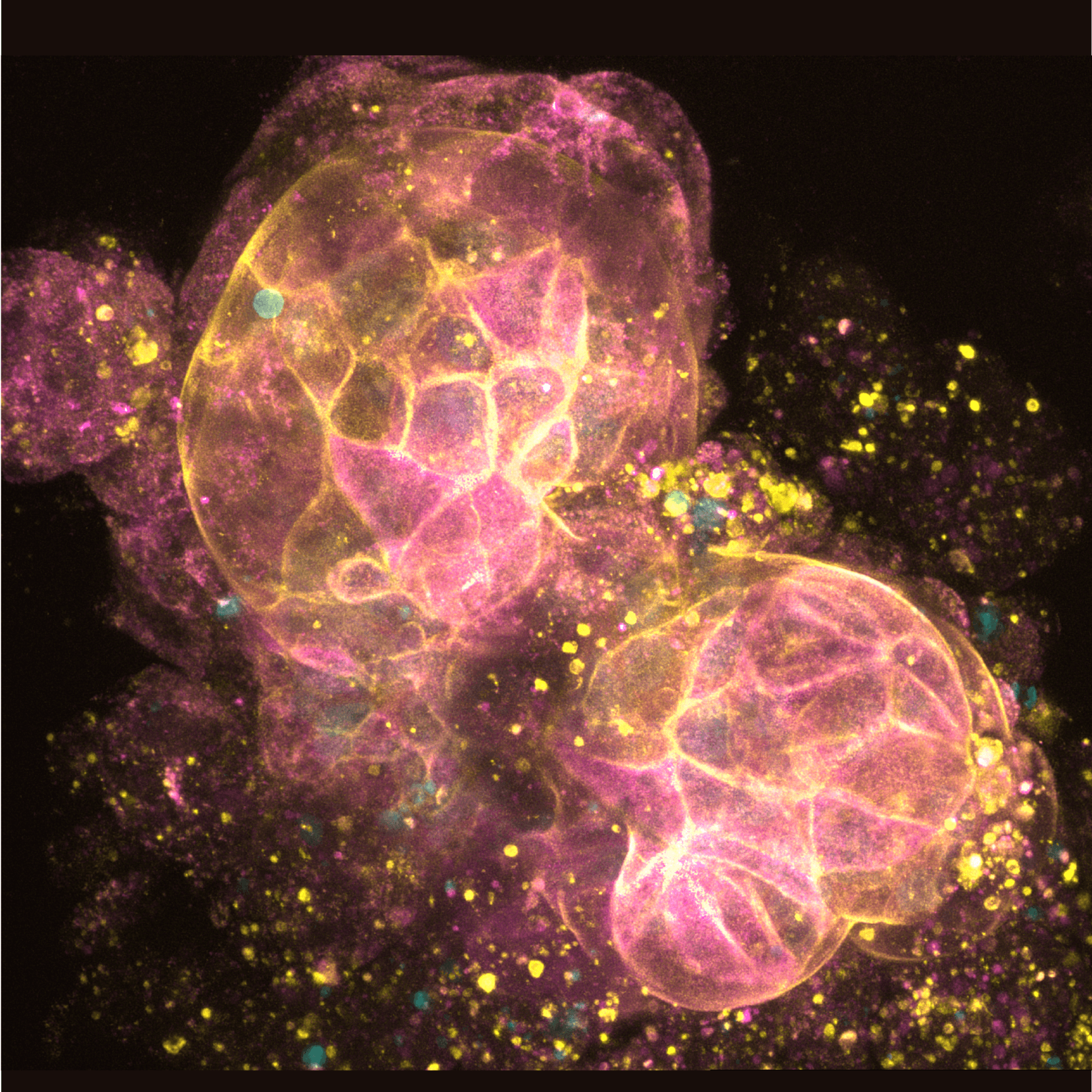
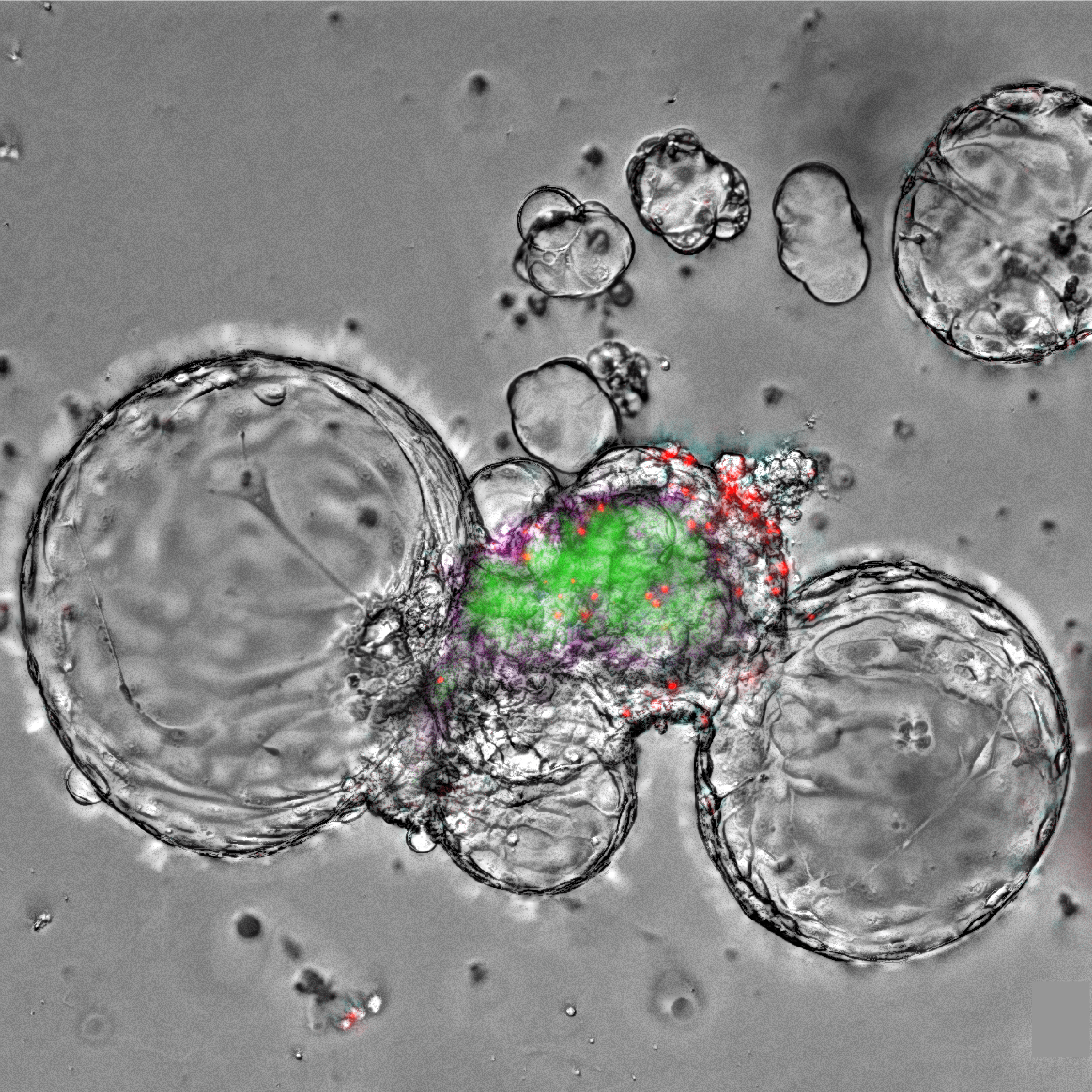
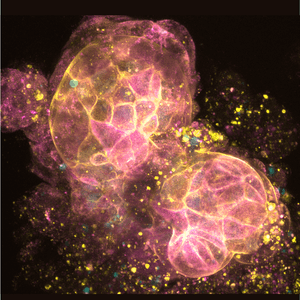
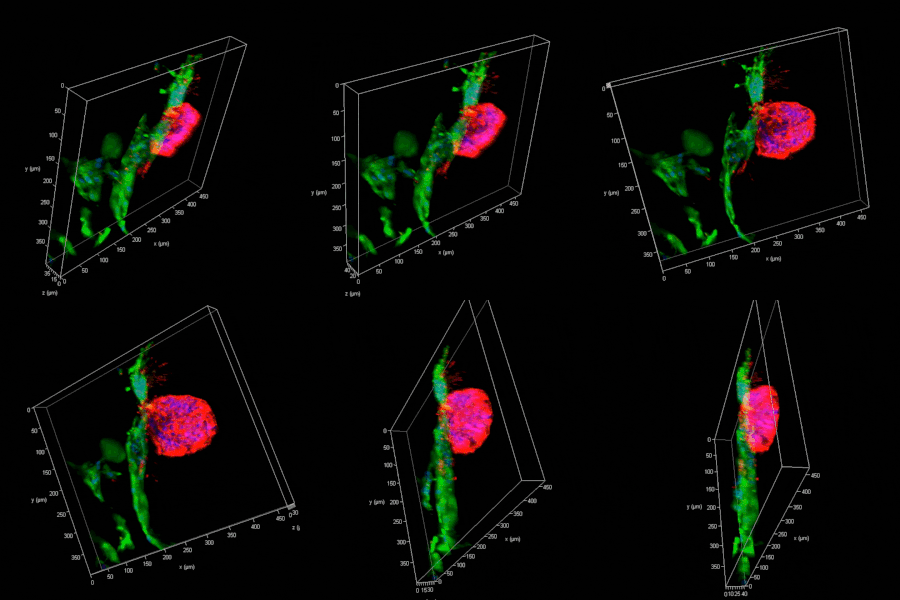
RocketCell™ Organoid Essential-Core Medium, AOF with VitroGel® hydrogels, CytoGrow™ growth factors were used to generate iPSC-derived intestinal organoids. Representative image showing iPSC-derived intestinal organoids cultured in VitroGel® ORGANOID 5. iPSC cells were 1st cultured in a medium supplemented with RocketCell™ Organoid Essential-Core Media with VitroGel® STEM to generate spheroid cells. These spheroids were then differentiated into intestinal organoids using CytoGrow™ growth factors & immunofluorescence staining was performed. Images (A) & (C) represent the center of iPSC-derived intestinal organoid & 3D structure, respectively. Yellow fluorescence: Phalloidin, Magenta: Villin protein, Blue staining (DAPI) represents cell nuclei. (B) Max projected an image of the same intestinal organoid. (D) A movie clip of an intestinal organoid stained with Cyto3D® Live-Dead Assay reagent.
Case 5: iPSC-derived Liver Organoid Using RocketCell™ Organoid Essential-Core Medium, AOF and Chemically Defined VitroGel® ORGANOID Hydrogel

Figure 5: Use of RocketCell™ Organoid Essential-Core Medium, AOF in Generating iPSC-derived Liver Organoids.
RocketCell™ Organoid Essential-Core Medium, AOF was prepared and supplemented with organoid–specific growth factors at different development stages until mature liver organoids are generated. Mature organoidswere cultured in VitroGel® ORGANOID hydrogel and maintained. (A) iPSC-derived spheroids generated in RocketCell™ Organoid Essential-Core Medium, AOF (B) Definitive endoderm differentiated spheroids. (C) Hepatic endoderm differentiated spheroids. (D) Early hepatic maturation. (E) Liver organoids with hepatic maturation. (F) Mature differentiated liver organoids generated in media supplemented with RRocketCell™ Organoid Essential-Core Medium, AOF and CytoGrow™ growth factors: Day 30.
Case 6:
Live-Dead Assay: Liver Organoids Culture Using RocketCell™ Organoid Essential-Core Medium, AOF


Figure 6: Live–dead Assay in Liver Organoids cultured using RocketCell™ Organoid Essential-Core Medium, AOF & CytoGrow™ Growth Factors.
Organoids were cultured in RocketCell™ Organoid Essential-Core supplemented medium, and liver organoids with hepatic maturation were then stained with Cyto3D® Live-Dead Assay Kit (2 μL of reagent for every 100 μL media). After 15-minute incubation at 37˚C, organoids were observed under a fluorescence microscope. (A) A bright-field image of a liver organoid hepatic maturation. Images show live cells (B: Green) and dead cells (C: Red) in the liver organoid. (D) Merged images. (E) A liver organoid stained with Cyto3D® Live-Dead Assay Kit & red indicates dead cells; Green indicates live cells. (F) A movie clip of a liver organoid stained with Cyto3D® Live-Dead Assay reagent.
Resources


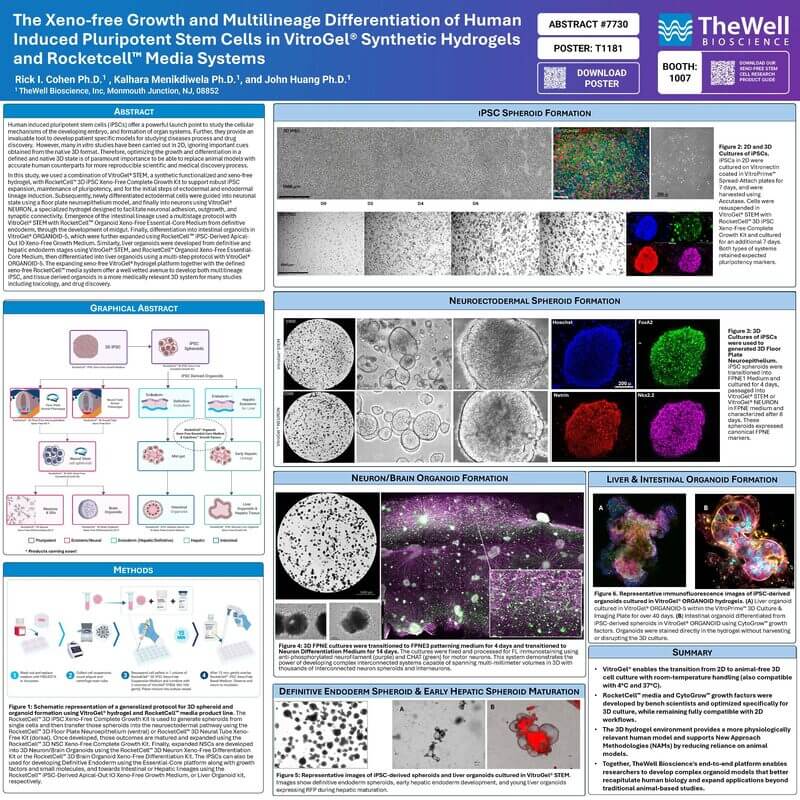

Enhance your organoid culture with these products:
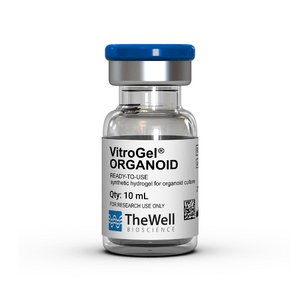
Hydrogels - Ready-To-Use
Ready-to-use, synthetic, chemically defined hydrogel system for organoid culture.
NEW
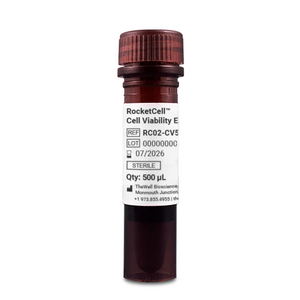
Cell Viability Enhancer
Maximize cell recovery and growth during passaging, thawing, and cryopreservation.
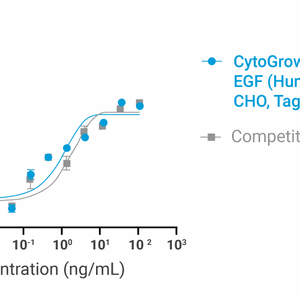
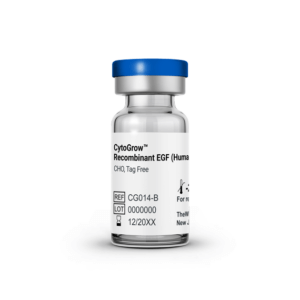
CytoGrow™ - Recombinant Proteins
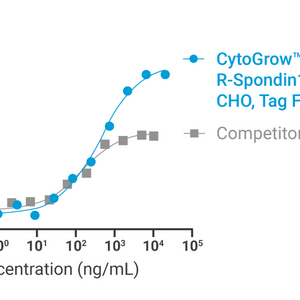
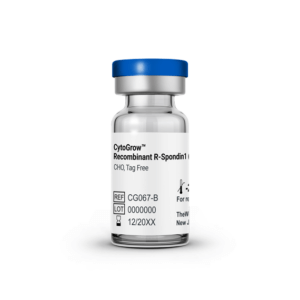
Premium CytoGrow™ growth factor suitable for cell culture supplementation, wound healing research, epithelial biology, and cancer signaling studies.
CytoGrow™ - Recombinant Proteins
Premium CytoGrow™ growth factor suitable for stem cell research, tissue regeneration, developmental biology, and cancer studies.


3D Culture Vessels
Unique surface treated for superior hydrogel spreading, adherence, and uniform surface.
New
3D Culture Imaging Plates
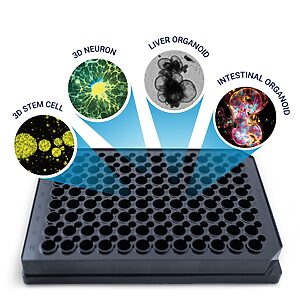
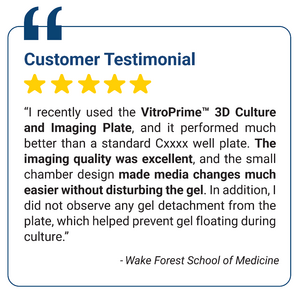
A premium cover-glass bottom plate for zero sample disruption 3D cell culture workflow: from cell seeding to high-resolution imaging.
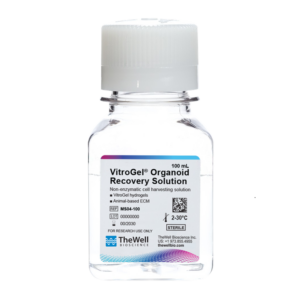
Cell Harvesting Solution
Chemically defined, non-enzymatic cell harvesting solution to recover cells/organoids from hydrogel or an animal-based ECM within 15 minutes.

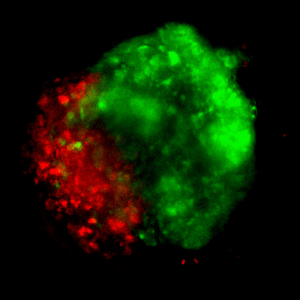
Downstream Cell Analysis
Fast (15 min), versatile, live/dead cell viability analysis for 3D and 2D cell culture.

Need a Custom Cell Culture Solution?
Looking for a customized media or supplement tailored to your specific cell culture needs? Our team can work with you to develop solutions designed around your cells, workflow, and research goals.
| Supplement Type | Standard, Minus Insulin, Minus Vitamin A |
|---|
Related products
NEW
Cell Viability Enhancer
Maximize cell recovery and growth during passaging, thawing, and cryopreservation.
NEW
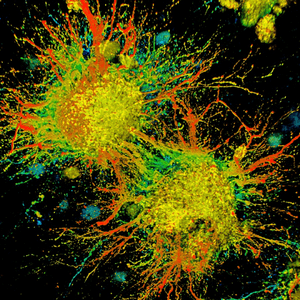
Culture Media and Supplements
N2B27-Premix Animal Origin-Free Supplement
New
Cell Culture Media (Animal Origin-Free)
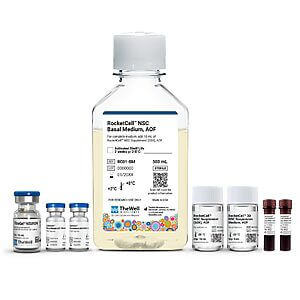
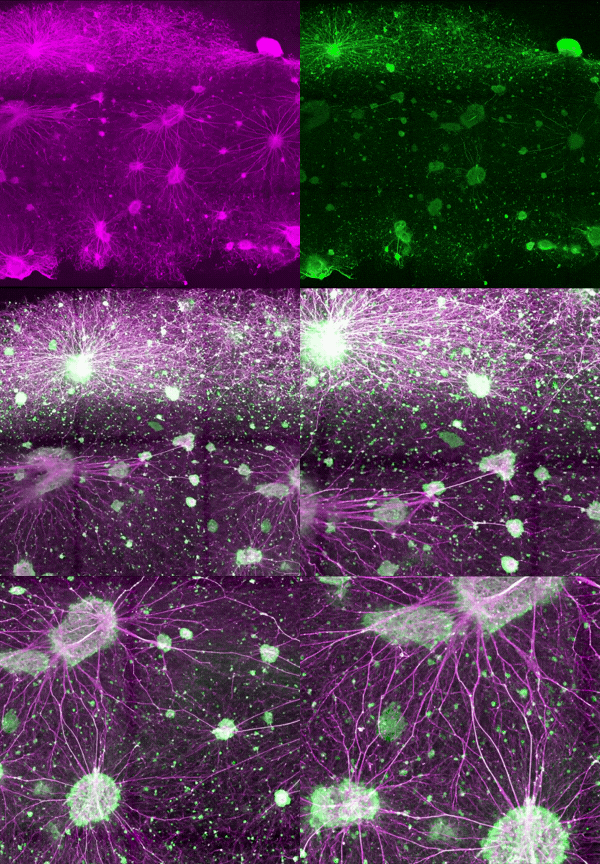
All-in-one, ready-to-use kit for 3D neural stem cell culture.
New
Cell Culture Media (Animal Origin-Free)
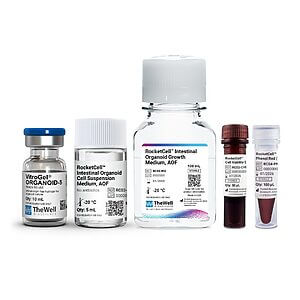
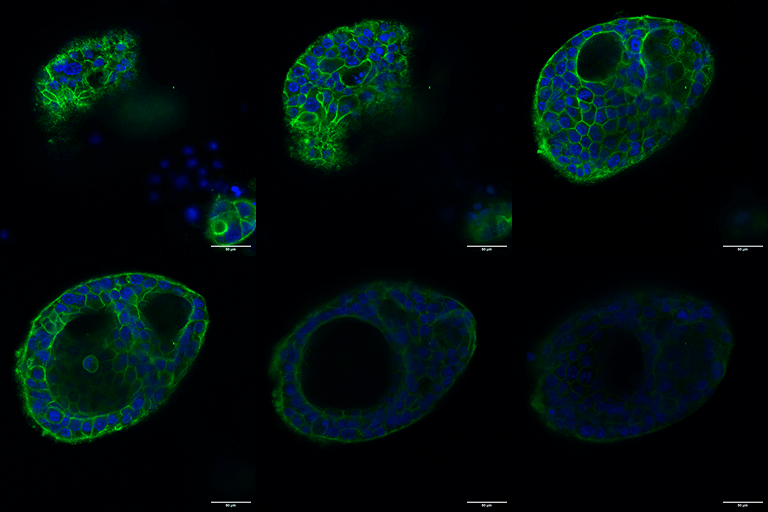
All-in-one, animal origin-free kit for growth, expansion, and passaging of apical-out intestinal organoids.
New
Cell Culture Media (Xeno-Free)
High-performance, xeno-free kit for superior expansion of human mesenchymal stem cells (hMSC)
New
Cell Culture Media (Animal Origin-Free)
Animal origin-free medium for 2D and 3D expansion of pluripotent stem cells.