Monmouth Junction, NJ and Tokyo, Japan — January 7, 2026 — TheWell Bioscience Inc., a biotechnology company pioneering next-generation animal-free biofunctional hydrogels, and PeptiGrowth Inc., a leader in innovative synthetic peptide growth factors, today announced that the two companies have entered into a Marketing Collaboration Agreement to jointly promote cutting-edge solutions for stem cell culture, […]
Author Archives: Kyra Baricaua
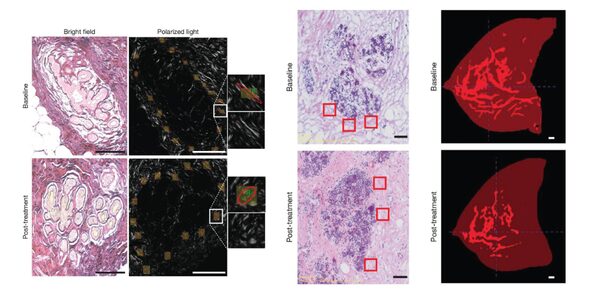
Xeno-free VitroGel® system supports breast cancer prevention studies.
TheWell Bioscience 2025: A Breakthrough Year in 3D Cell Culture Innovation 2025 was a transformative year for TheWell Bioscience, marked by strong execution across innovation, market expansion, and community engagement. Through pioneering product launches, we established the industry’s most comprehensive end-to-end xeno-free 3D cell culture platform—positioning the company for sustained growth in advanced translational research […]
There is no excerpt because this is a protected post.
SfN Neuroscience 2025 Recap: A Week of Innovation, Collaboration, and Discovery
VitroGel® 3D enables precise chemogenetic targeting of carotid body cells to uncover metabolic function. During intense exercise, our bodies have a “ceiling” for oxygen consumption, known as peak oxygen uptake (VO₂ peak), which is a key determinant of athletic endurance. For decades, scientists have known that a tiny organ in the neck, the carotid body, […]
VitroGel® MSC overcomes the limitations of 2D and microcarrier systems by delivering a reproducible, scalable, and functional workflow for MSC biomanufacturing, from expansion to genetic engineering. The production of mesenchymal stem cells (MSCs) at a clinical scale faces persistent challenges. Traditional 2D culture systems and microcarriers are limited by scalability, high costs, and difficulties in […]
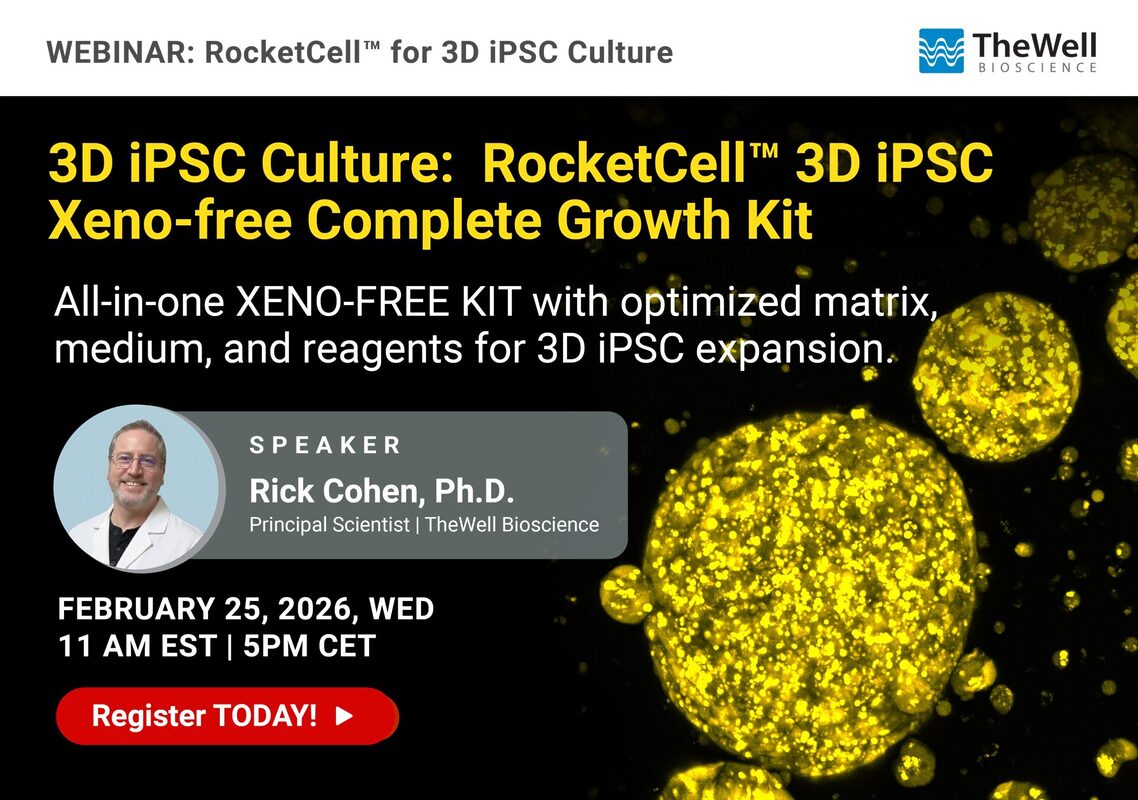
Abstract: Human induced pluripotent stem cells (iPSCs) offer a powerful starting point to study the molecular dynamics of the developing nervous system. Further, they provide an invaluable tool for developing patient-specific models to study the disease process. Therefore, optimizing their growth in a defined, native 3D state is of paramount importance to both guide and […]
Abstract: The development of in vitro systems for long-term neuronal differentiation and survival is crucial for understanding both physiological processes and various disease states. While traditional two-dimensional (2D) neuron models have been instrumental in neuroscience research, these systems fail to maintain neuron viability over extended periods, impeding prolonged neuronal maturation. One reason for this limitation is that 2D-based models misrepresent […]