


bFGF/FGF-2 (Eel), Recombinant Protein, E. coli, Tag Free
Premium CytoGrow™ growth factor suitable for stem cell culture, organoid development, tissue regeneration studies, angiogenesis assays, and cell signaling research.
CytoGrow™ Recombinant bFGF/FGF-2 (Eel), E. coli, Tag Free
Recombinant eel basic fibroblast growth factor (bFGF), also known as FGF-2, is produced in E. coli in a tag-free format, ensuring high purity and reliable biological activity. bFGF/FGF-2 is a conserved member of the fibroblast growth factor family, playing a crucial role in regulating cell proliferation, differentiation, and survival across diverse species.
In fish and other vertebrates, bFGF binds to fibroblast growth factor receptors (FGFRs) in the presence of heparan sulfate proteoglycans, activating downstream signaling pathways such as MAPK/ERK and PI3K/AKT. These pathways support cell growth, migration, angiogenesis, and tissue repair. bFGF is also important for developmental processes and regeneration, particularly in aquatic species. Recombinant eel bFGF is widely used in cell culture, aquaculture research, developmental biology, and tissue regeneration studies.
| Synonym: | Fibroblast growth factor 2; FGF-2; Basic fibroblast growth factor; bFGF |
| Species: | Eel |
| Expression System: | E. coli |
| Endotoxin: | ≤200 EU/mg |
| Appearance: | White powder, colorless liquid after reconstitution |
| Formulation | Lyophilized from a 0.2 μm filtered solution containing 10 mM PB, 5% Trehalose, and 0.01% Tween 80 |
| Reconstitution: | Recommended to redissolve in sterile deionized water |
| Shipping: | US - Ships overnight |
| Storage and Stability: | Store in a manual defrost freezer and avoid repeated freeze-thaw cycles. Lyophilized state: 36 months at -20°C to -80°C After reconstitution and under sterile conditions: 6 months at -20°C to -80°C 7-10 days at 2°C to 8°C |


Data and Bioactivity
Measured in a cell proliferation assay using NIH3T3 cells.
| Size | 1 μg, 10 µg, 50 μg, 1 mg, 100 mg, 1 g, 1 mL, 10 mL |
|---|
Related products
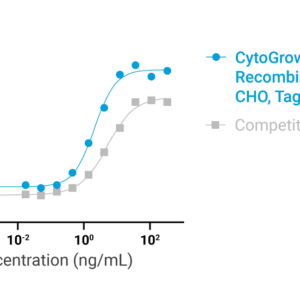
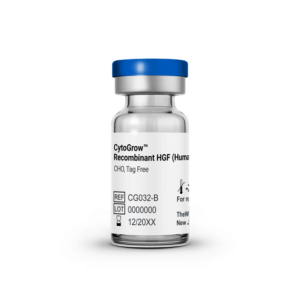
CytoGrow™ - Recombinant Proteins
Premium CytoGrow™ growth factor suitable for liver regeneration research, wound healing, angiogenesis, fibrosis studies, cancer biology, and regenerative medicine.
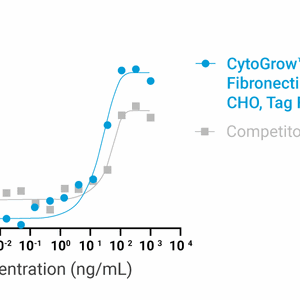
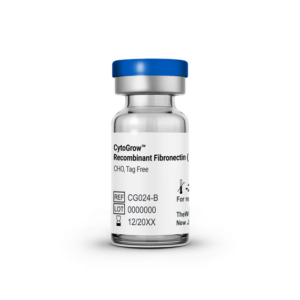
CytoGrow™ - Recombinant Proteins
Premium CytoGrow™ growth factor suitable for cell culture coating, ECM research, wound healing, angiogenesis, tissue engineering, and regenerative medicine.
CytoGrow™ - Recombinant Proteins
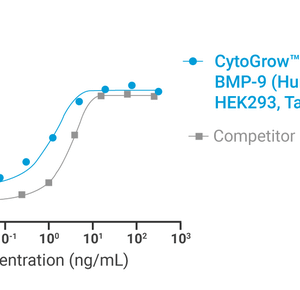
Premium CytoGrow™ growth factor suitable for angiogenesis and bone research, vascular disease models, liver fibrosis studies, cancer biology, and drug development.
CytoGrow™ - Recombinant Proteins
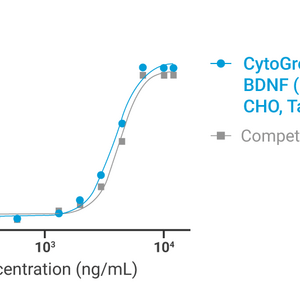
Premium CytoGrow™ growth factor suitable for neuronal cell culture, neurodegenerative disease research, synaptic plasticity studies, and drug discovery.
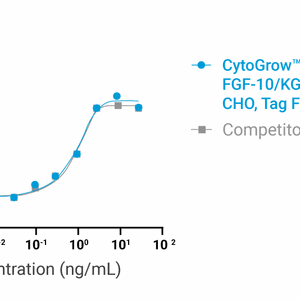
CytoGrow™ - Recombinant Proteins
Premium CytoGrow™ growth factor suitable for developmental biology, epithelial tissue regeneration, organoid culture, stem cell differentiation, and regenerative medicine.
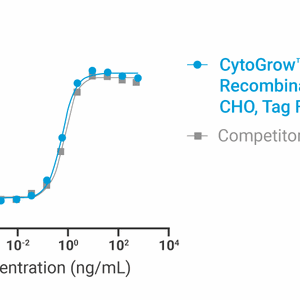
CytoGrow™ - Recombinant Proteins
Premium CytoGrow™ growth factor suitable for immunology research, oncology, autoimmune disease studies, cell culture, and therapeutic development.