
Apical-Out Intestinal Organoid Generation
Designed to generate apical-out organoids, enabling direct access to the apical surface while maintaining stability. Expensive and labor-intensive approaches (e.g., microinjection) are no longer required.
New
RocketCell™ Apical-Out Intestinal Organoid Growth Kit, AOF
All-in-one, animal origin-free kit for growth, expansion, and passaging of apical-out intestinal organoids.
RocketCell™ Apical-Out Intestinal Organoid Growth Kit, AOF
All-in-one, animal origin-free kit for growth, expansion, and passaging of apical-out intestinal organoids.


Establishes Apical-Out Organoid Bank
Supports efficient establishment and maintenance of apical-out intestinal organoid banks for consistent long-term culture, recovery, and downstream applications.
Animal Origin-Free and Chemically Defined System
Contains no animal-derived components, providing a more defined culture environment while helping reduce batch-to-batch variability for greater consistency and reproducibility.

All-in-one Complete System
Includes matrix, medium, and enhancer. Eliminates the need to source key components, including base media, supplements, growth factors, and animal-based hydrogels. Simplifies complex organoid workflows.

Improves Survival, Growth, and
Long-term Maintenance of Apical-Out Polarity
Supports initial intestinal organoid survival, high post-passaging viability, consistent renewal, and long-term culture while maintaining apical-out polarity.
High Quality Imaging and Protein Assay
Pure synthetic VitroGel® supports high-quality imaging and protein assays of organoids.
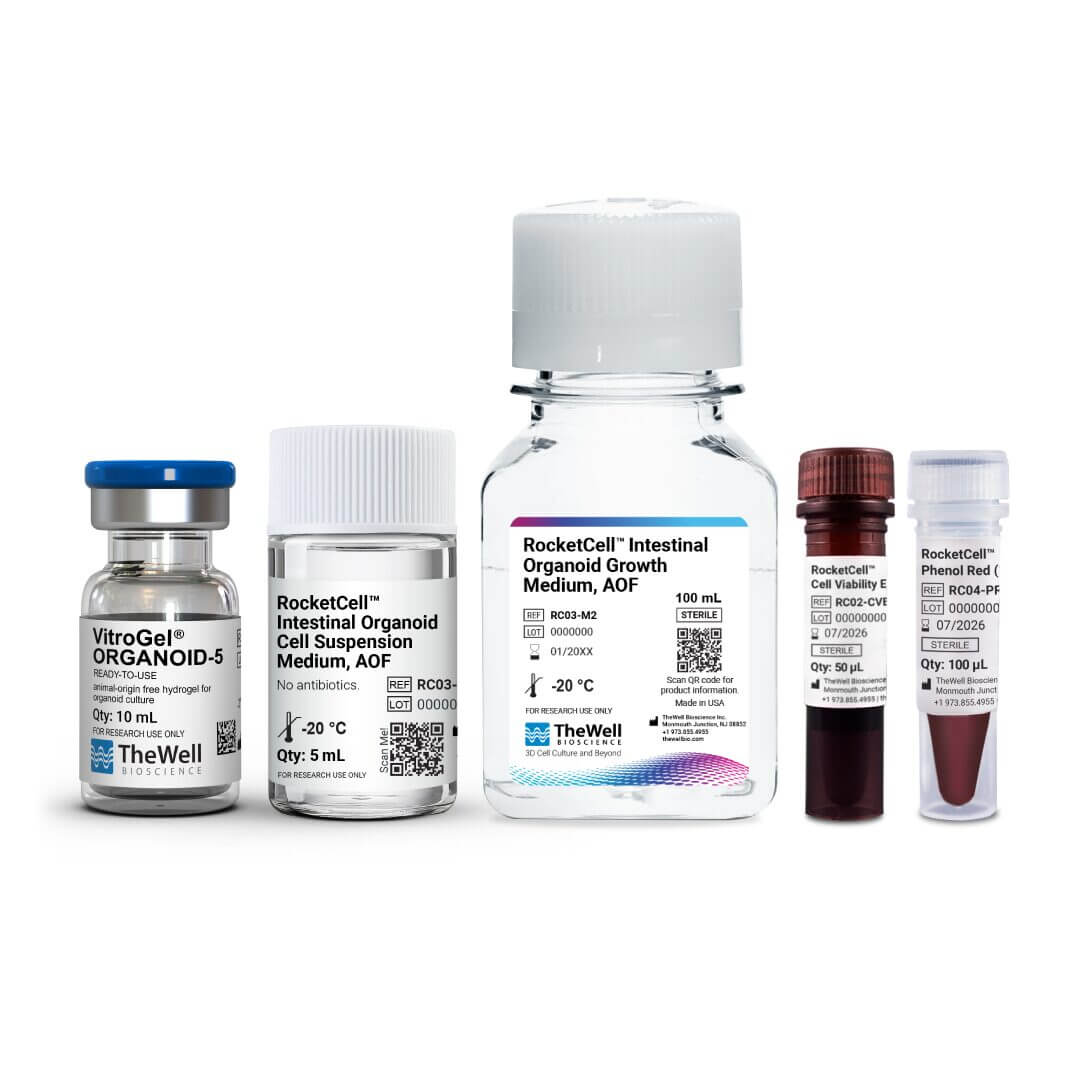
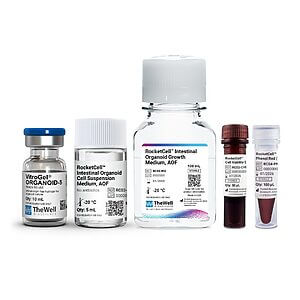
RocketCell™ Apical-out Intestinal Organoid Animal Origin-Free Growth Kit (TheWell Bioscience, Cat# RC03-GK) is a complete solution for generating mature apical-out intestinal organoids in a fully animal origin-free (AOF) environment.
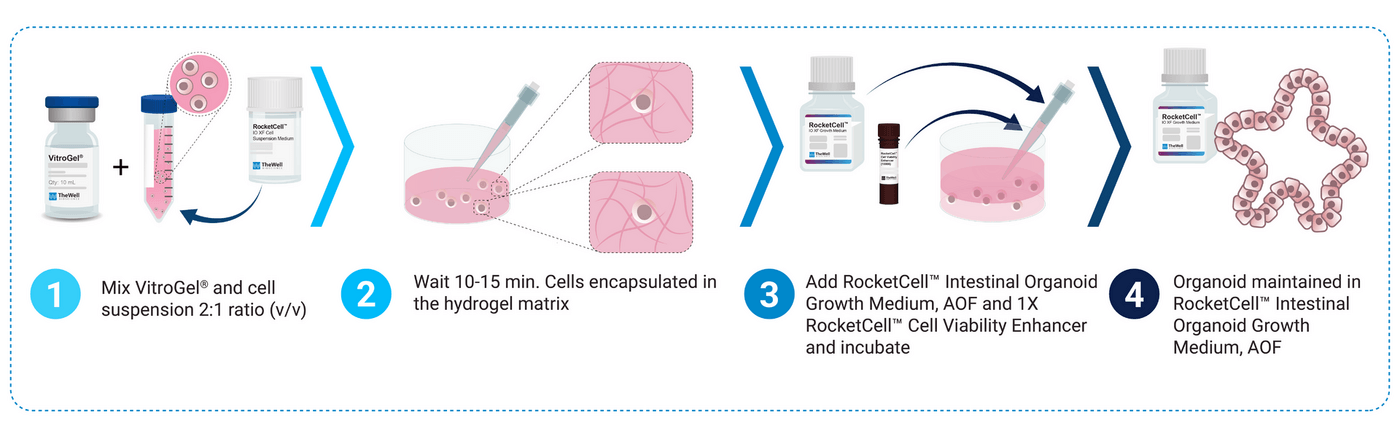
The kit includes synthetic VitroGel® ORGANOID-5 hydrogel, two ready-to-use, stage-specific media (cell suspension medium and cell growth medium), a cell viability enhancer, and phenol red, providing a complete solution for apical-out intestinal organoid initiation and maintenance.
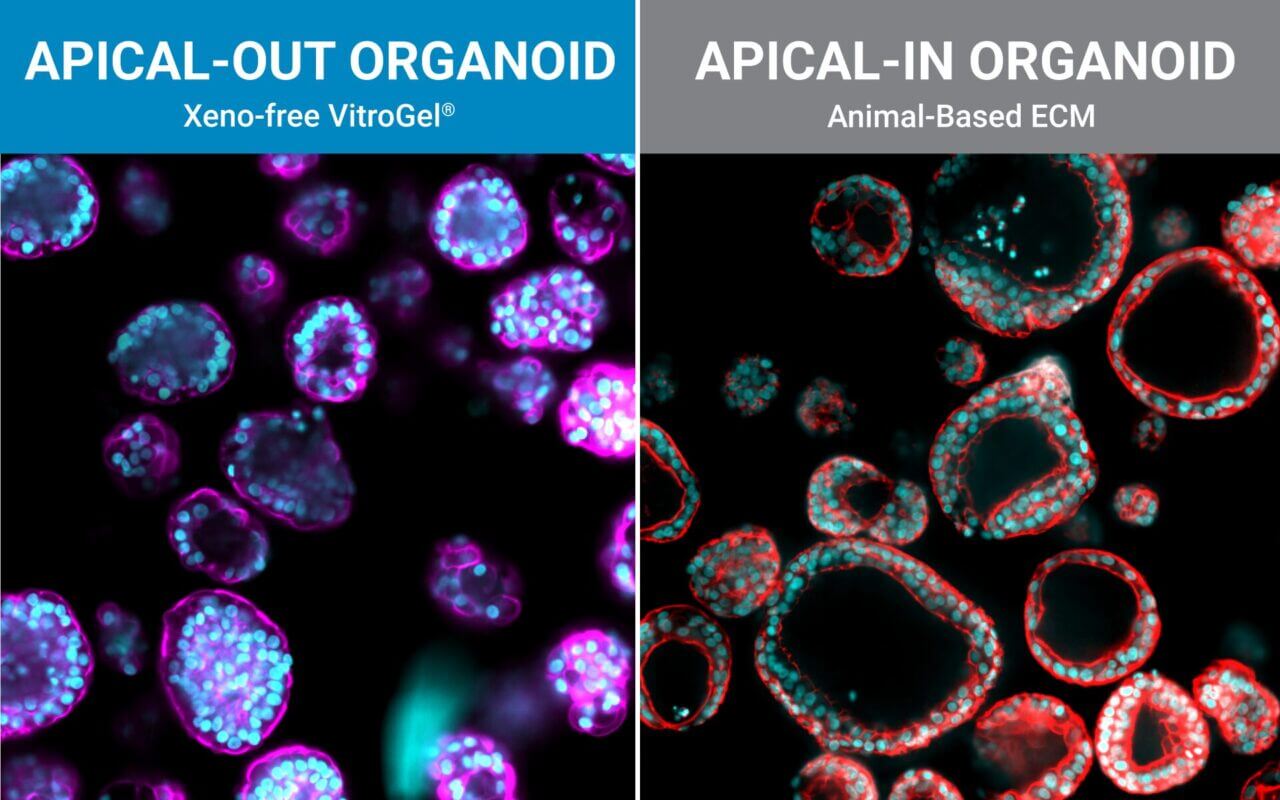
Organoid polarity is critical for physiological relevance. Conventional systems using animal-derived matrices (e.g., Matrigel) produce apical-in organoids, limiting access to the apical surface and restricting studies evaluating nutrient uptake, drug response, and host–microbiome interactions. Alternative methods to reverse polarity often compromise structural integrity and function. This kit is specifically designed to generate apical-out organoids, enabling direct access to the apical surface while maintaining stability. The apical-out organoid grown from this kit can be seeded onto animal-based ECM and transferred to an apical-in structure if needed.
RocketCell™ Apical-Out Intestinal Organoid Growth Kit, AOF supports every stage of organoid culture, including recovery, expansion, passaging, and long-term maintenance. Optimized for establishing and maintaining apical-out organoid banks, this kit is compatible with a wide range of organoid models, including patient-derived organoids, iPSC-derived organoids, co-culture systems, mouse organoids, and PDX-derived organoids.
RocketCell™ Apical-Out Intestinal Organoid Growth Kit, AOF
(RC03-GK)
- 1 x 10 mL, VitroGel® ORGANOID-5
- 1 x 5 mL, RocketCell™ Intestinal Organoid Cell Suspension Medium, AOF
- 1 x 100 mL, RocketCell™ Intestinal Organoid Growth Medium, AOF
- 1 x 50 µL, RocketCell™ Cell Viability Enhancer
- 1 x 100 µL, RocketCell™ Phenol Red (1000X)
Specifications
| Use | For Organoid Cultures with apical-out polarity |
| Formulation | Animal origin-free complete 3D culture medium kit |
| Operation of hydrogel | Ready-to-use at room temperature |
| Cell Harvesting | VitroGel® Organoid Recovery Solution 5-15 min cell recovery |
| Shipping and Storage | Hydrogel: Ships at ambient temperature. Store at 2-8°C. Suspension Medium, Growth Medium, Enhancer: Ships with dry ice Store at -20°C. |
Related Products

Protocols and Resources
Product Documentation
 Product Data Sheet
Material Safety Data Sheet (MSDS)

What is apical-in & apical-out polarity in organoids?
The importance of accessing the apical-side in Organoids cultures.
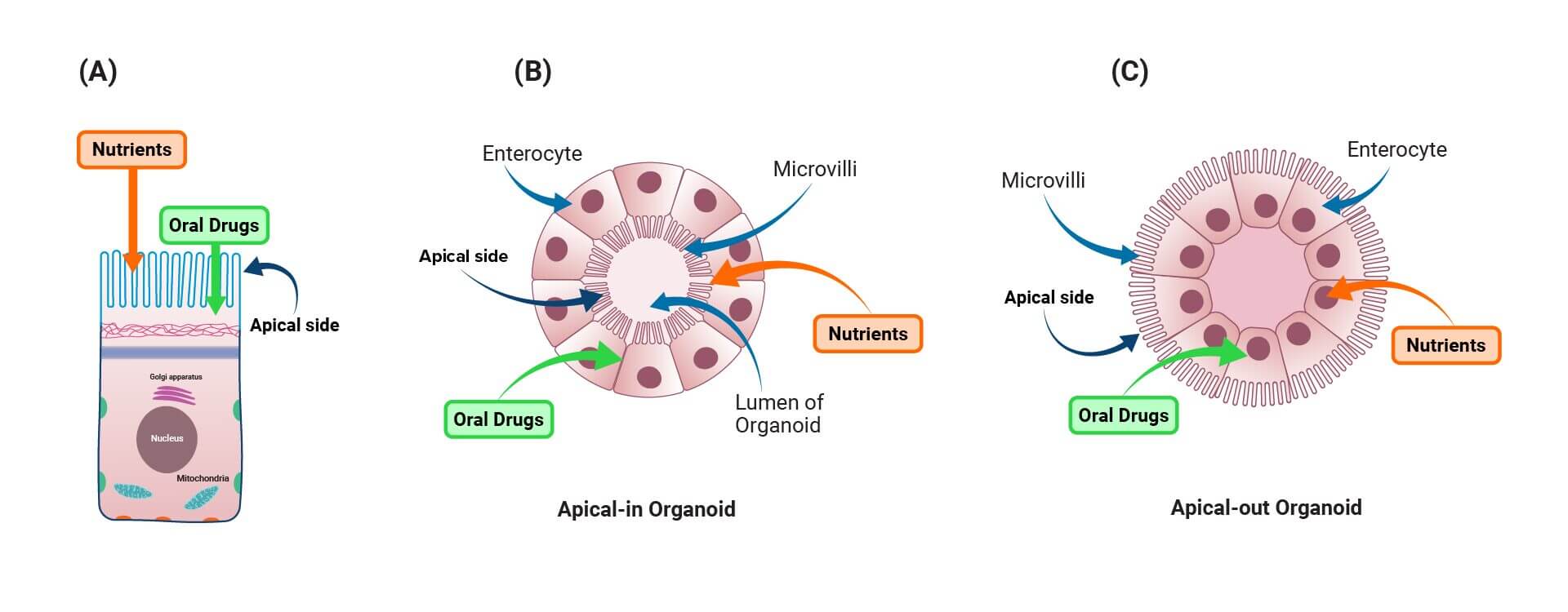
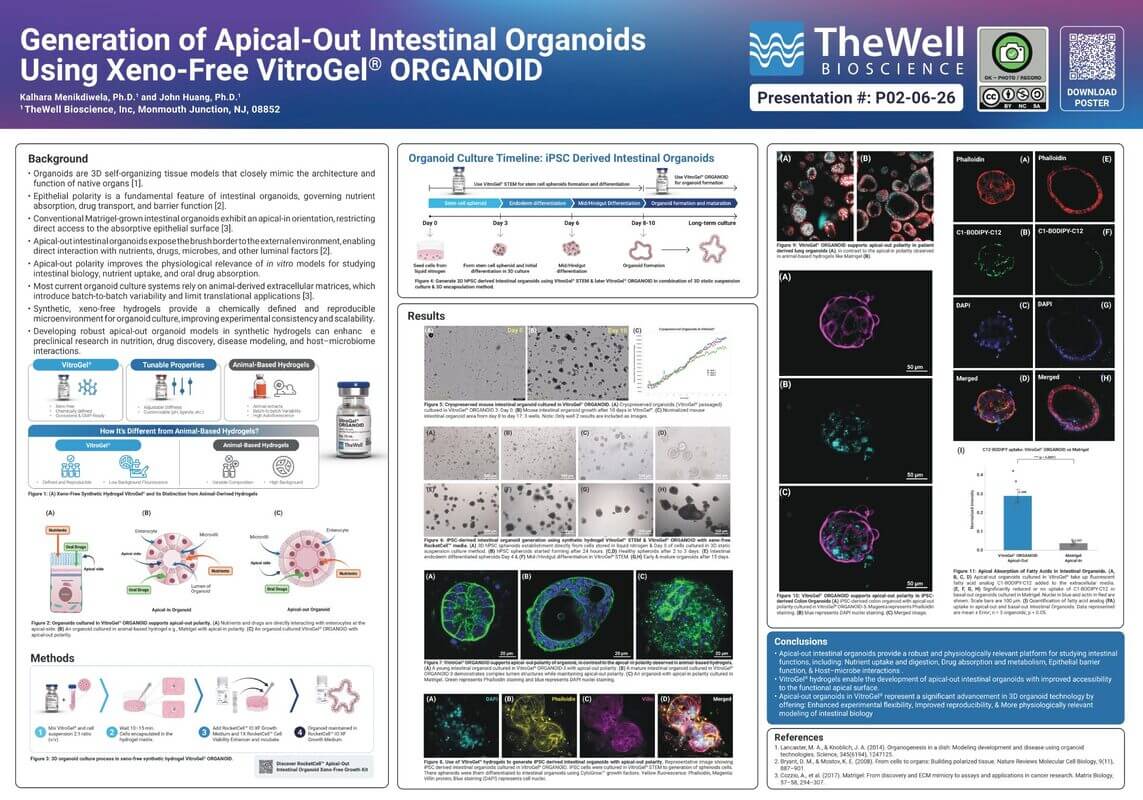
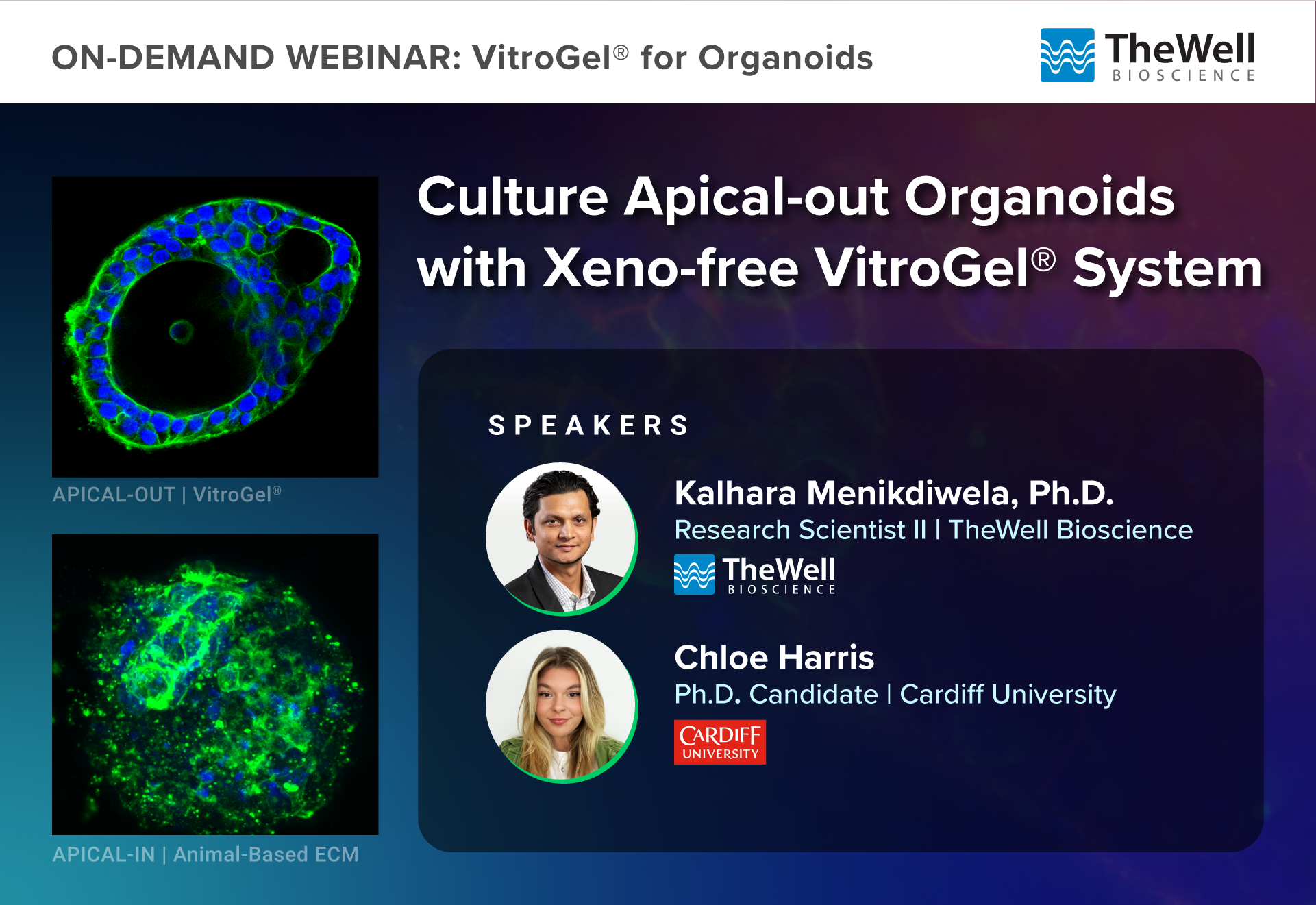
Organoids cultured in VitroGel® ORGANOID supports apical-out polarity. (A) Nutrients and drugs are directly interacting with enterocytes at the apical-side. (B) An organoid cultured in animal-based hydrogel e.g., Matrigel with apical-in polarity. (C) An organoid cultured VitroGel® ORGANOID with apical-out polarity.
Easy Workflow
Data and References
CASE 1
RocketCell™ Apical-out Intestinal Organoid Growth Kit, AOF
Supports Apical-Out Intestinal Organoid Generation
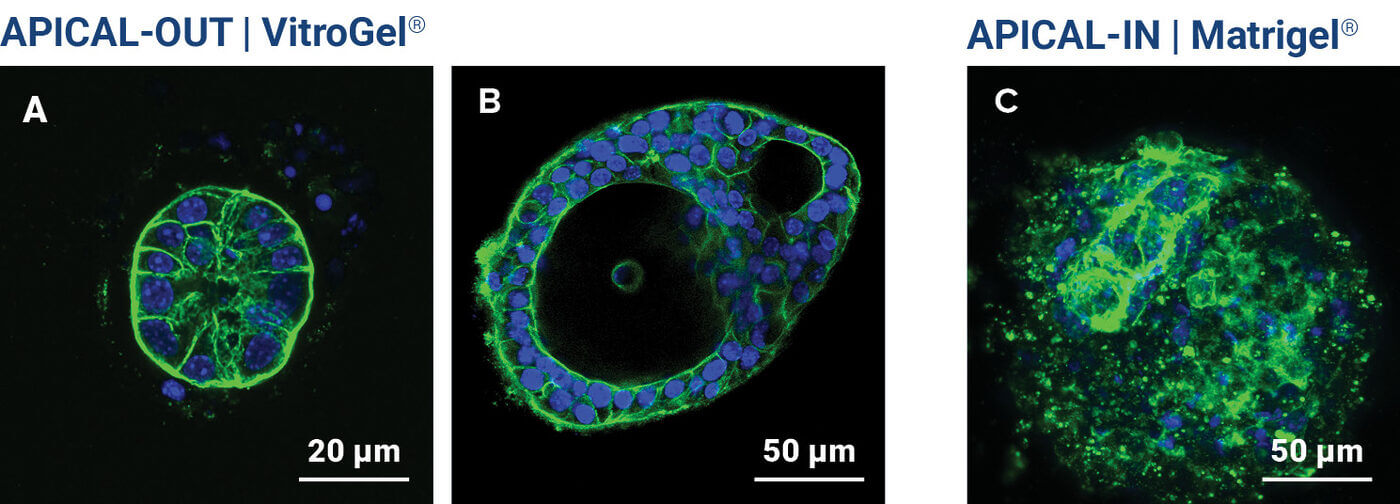
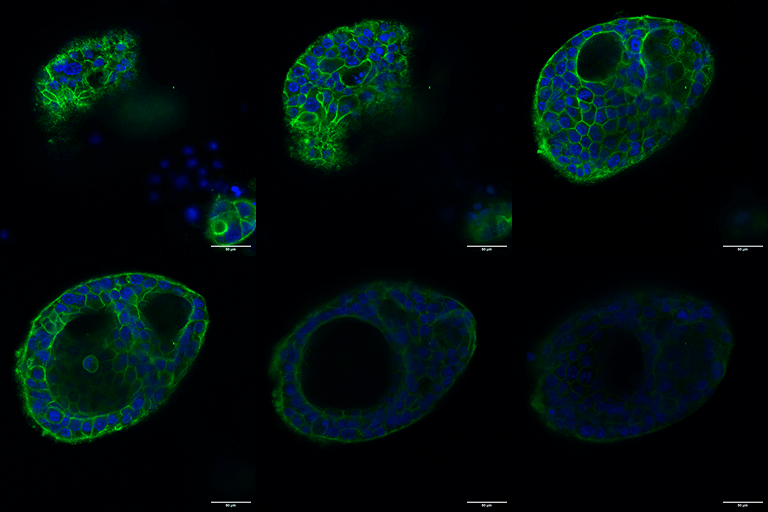
Figure 1. RocketCell™ Apical-Out Intestinal Organoid Growth Kit, AOF supports apical-out polarity in intestinal organoids, in contrast to the apical-in polarity observed in animal-based hydrogels. (A) A young intestinal organoid cultured in VitroGel ORGANOID with apical-out polarity. (B) A mature intestinal organoid cultured in VitroGel® ORGANOID demonstrates complex lumen structures while maintaining apical-out polarity. (C) An organoid with apical-in polarity cultured in Matrigel with RocketCell™ Apical-Out Intestinal Organoid Growth Medium, AOF. Green represents Phalloidin staining and blue represents DAPI nuclei staining.
CASE 2
Immunofluorescence Staining: iPSC-derived Intestinal Organoids Cultured Using RocketCell™ Apical-out Intestinal Organoid Growth Kit, AOF
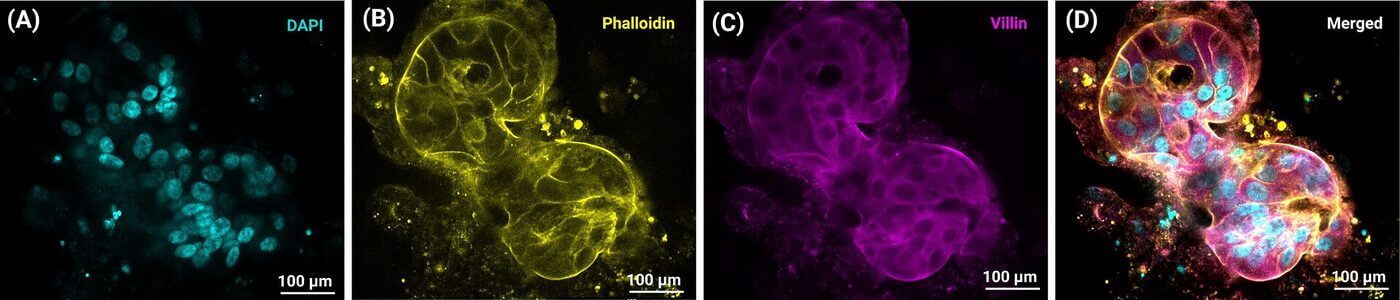
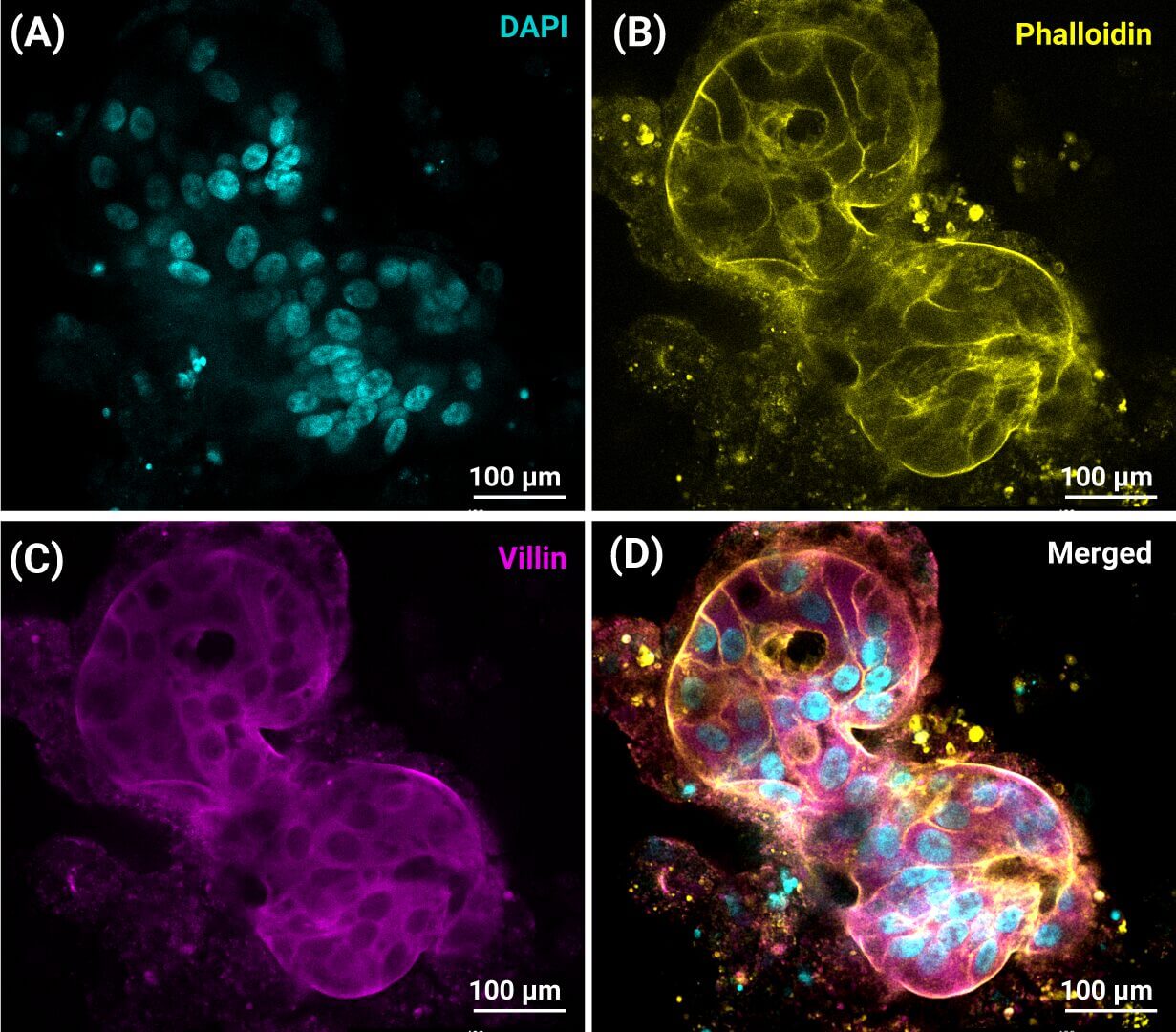
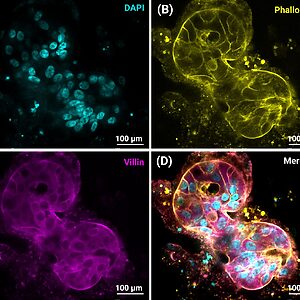
Figure 2: Use of VitroGel® hydrogels to generate an iPSC-derived intestinal organoid with apical-out polarity.
Representative images showing intestinal organoids cultured in VitroGel® ORGANOID. iPSC cells were cultured in VitroGel® STEM to generate spheroids. Spheroids were then differentiated to intestinal organoids using CytoGrow™ Growth Factors. (A) Blue staining (DAPI) represents cell nuclei. (B) Yellow fluorescence: Phalloidin; (C) Magenta: Villin protein; (D) Merged image of the iPSC-derived intestinal organoid.
CASE 3
iPSC-Derived Intestinal Organoid Generation using RocketCell™ Apical-Out Intestinal Organoid Growth Kit, AOF
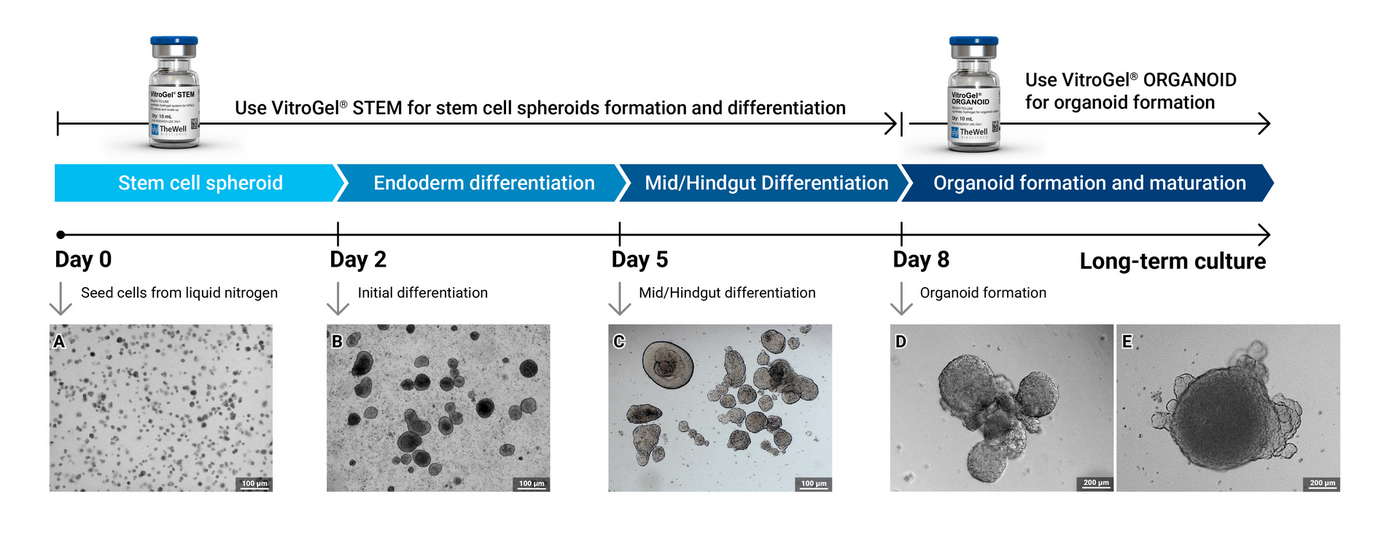
Figure 3. iPSC-derived intestinal organoid generation using RocketCell™Apical-out Intestinal Organoid Growth Kit, AOF.
(A) 3D hPSC spheroids established directly from cells stored in liquid nitrogen (B) hPSC-derived healthy spheroids. (C). Intestinal endoderm differentiated spheroids.
(D) Mid-/Hindgut differentiation in VitroGel® STEM. (E) Mature intestinal organoids in the VitroGel® ORGANOID System.
CASE 4
RocketCell™ Apical-Out Intestinal Organoid Growth Kit, AOF Supports Intestinal
Organoid Expansion and Passaging within VitroGel® system
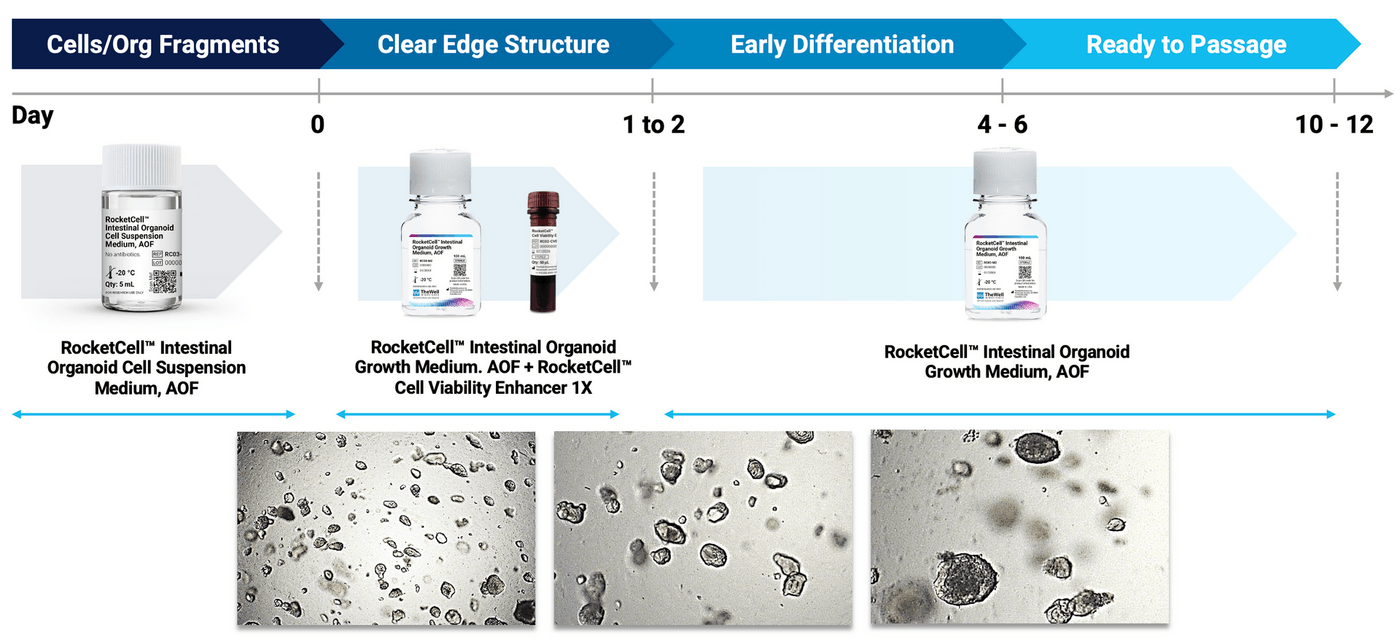
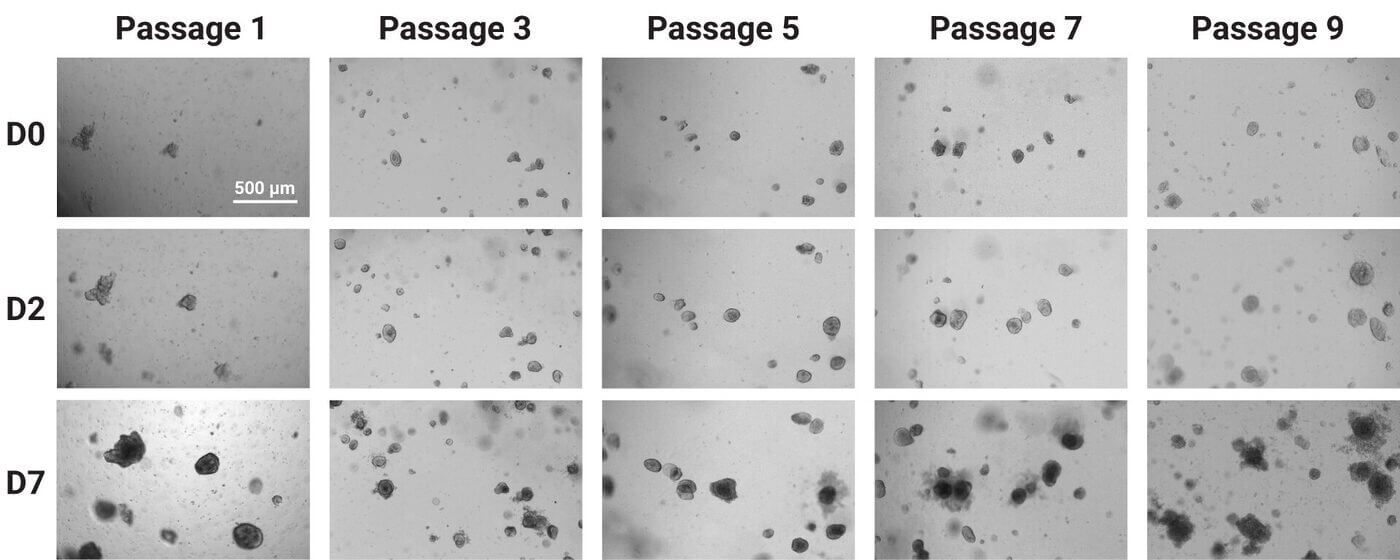
Figure 4: Intestinal Organoid Expansion and Serial Passaging in the VitroGel® System.
RocketCell™ Apical-out Intestinal Organoid Growth Kit, AOF supported successful expansion and serial passaging of intestinal organoids through 9 passages. Representative images are shown for Passages 1, 3, 5, 7, & 9. The top row shows organoid fragments immediately after passaging (Day 0). The second and third rows show organoid growth at Day 2 and Day 7, respectively, demonstrating consistent organoid expansion and morphology across serial passages.
CASE 5
Apical Absorption of Fatty Acids in Intestinal Organoids
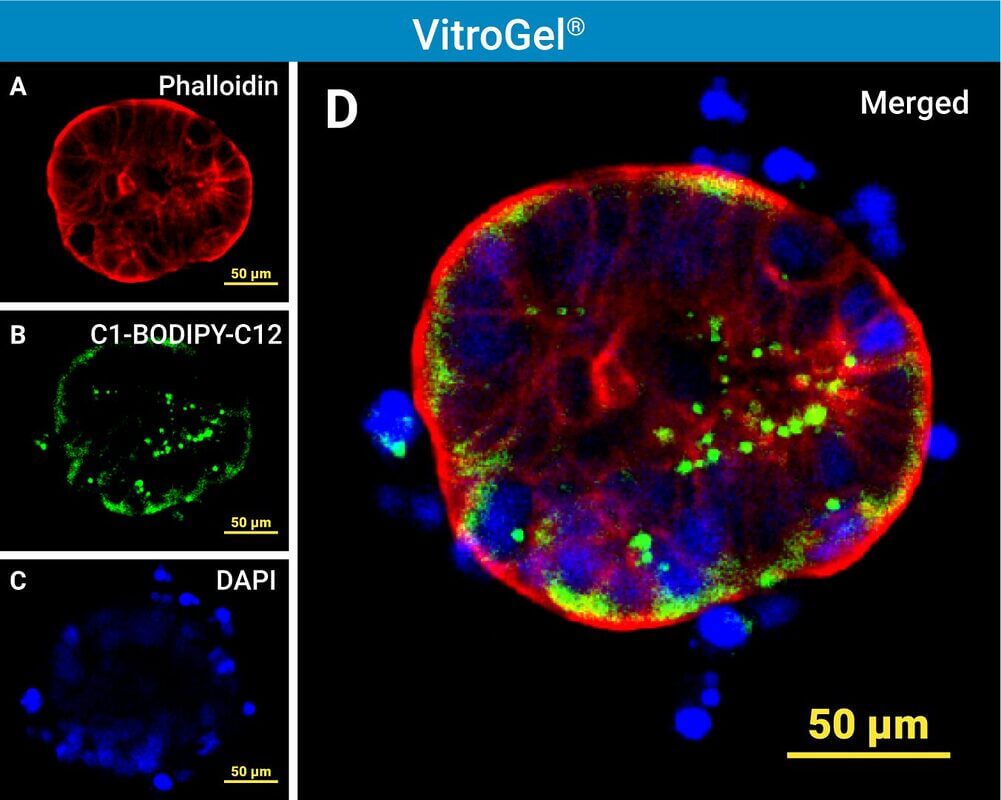
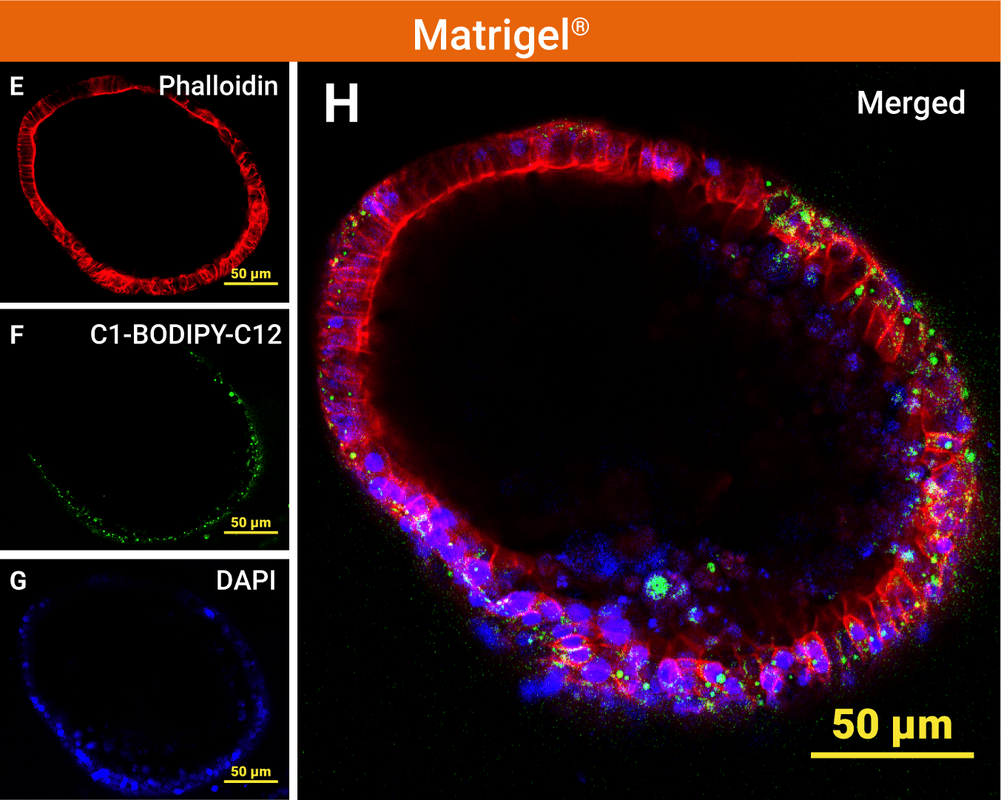
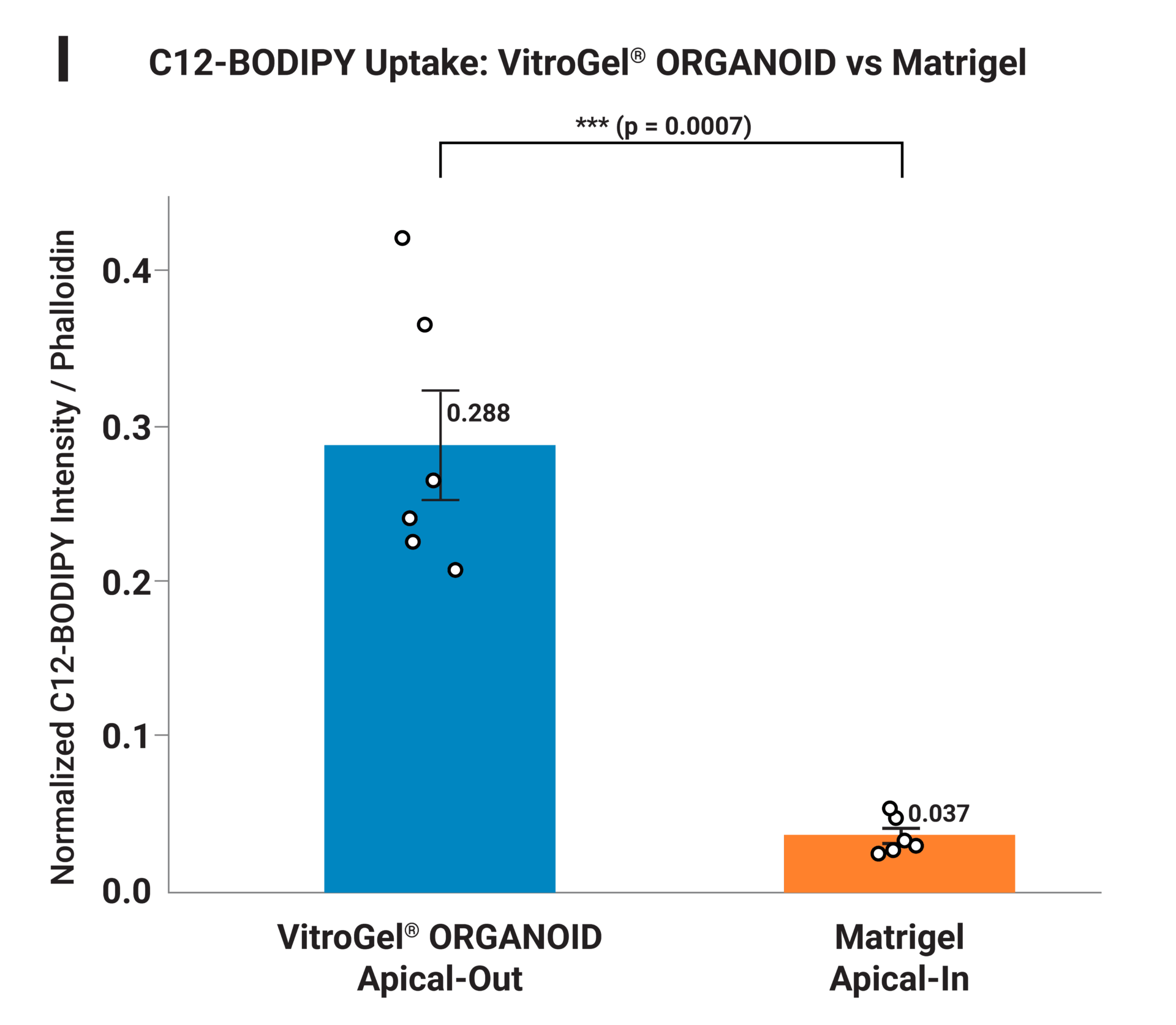
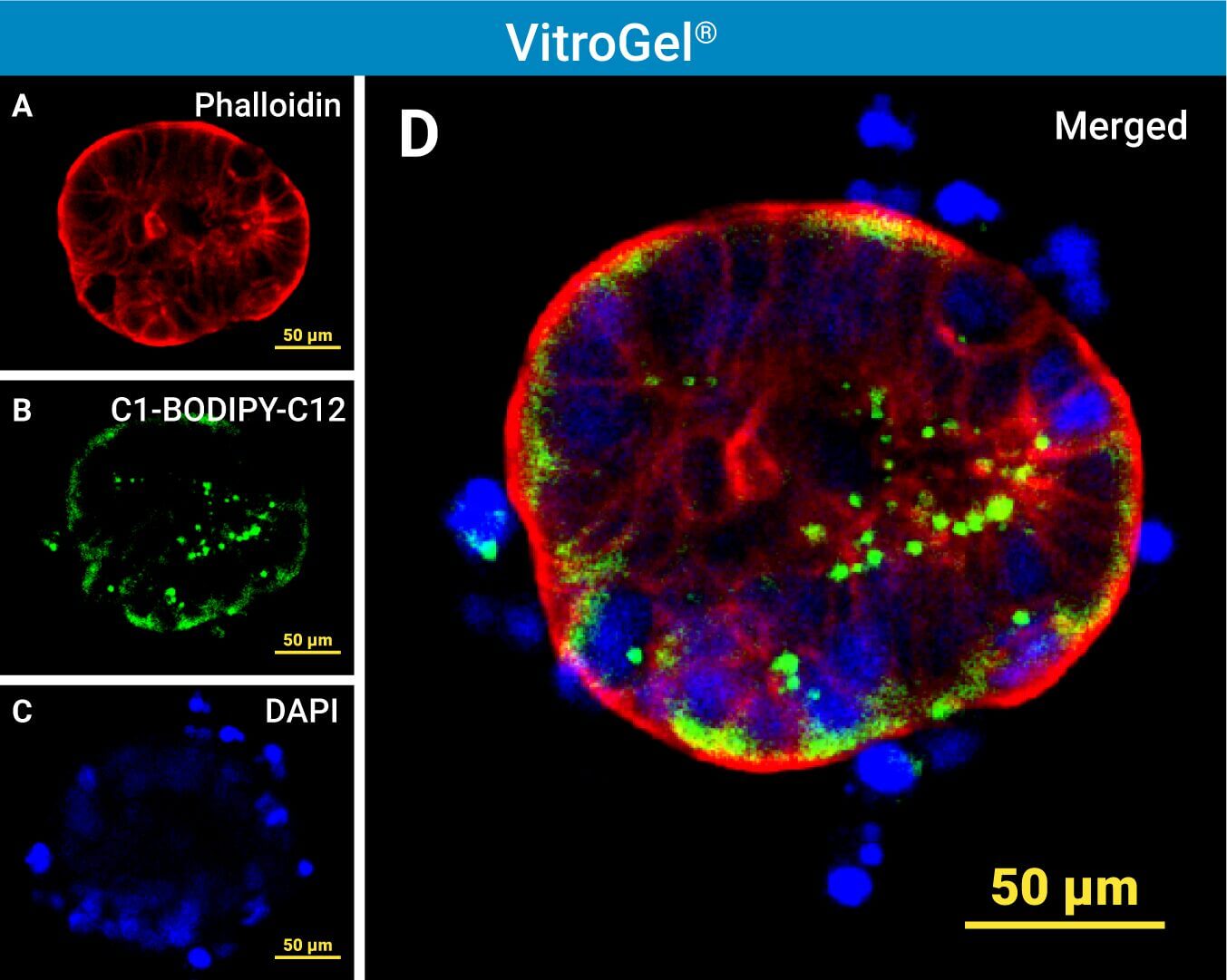
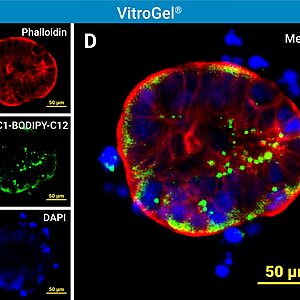
Figure 5: Apical Absorption of Fatty Acids in Intestinal Organoids. Images A-D show Apical-out organoids cultured in VitroGel® successfully take up fluorescent fatty acid analog C1-BODIPY-C12 from the media. Images E-H show significantly reduced or no uptake of C1-BODIPY-C12 in basal-out organoids cultured in Matrigel. (Nuclei in blue and actin in Red are shown. I, Quantification of fatty acid analog uptake in apical-out and basal-out Intestinal Organoids. Data represented are mean ± Error; n = 6 organoids; p < 0.05.
CASE 6
RocketCell™ Apical-Out Intestinal Organoid Growth Kit, AOF Supports Long-Term Intestinal Organoid Growth Over 60 Days
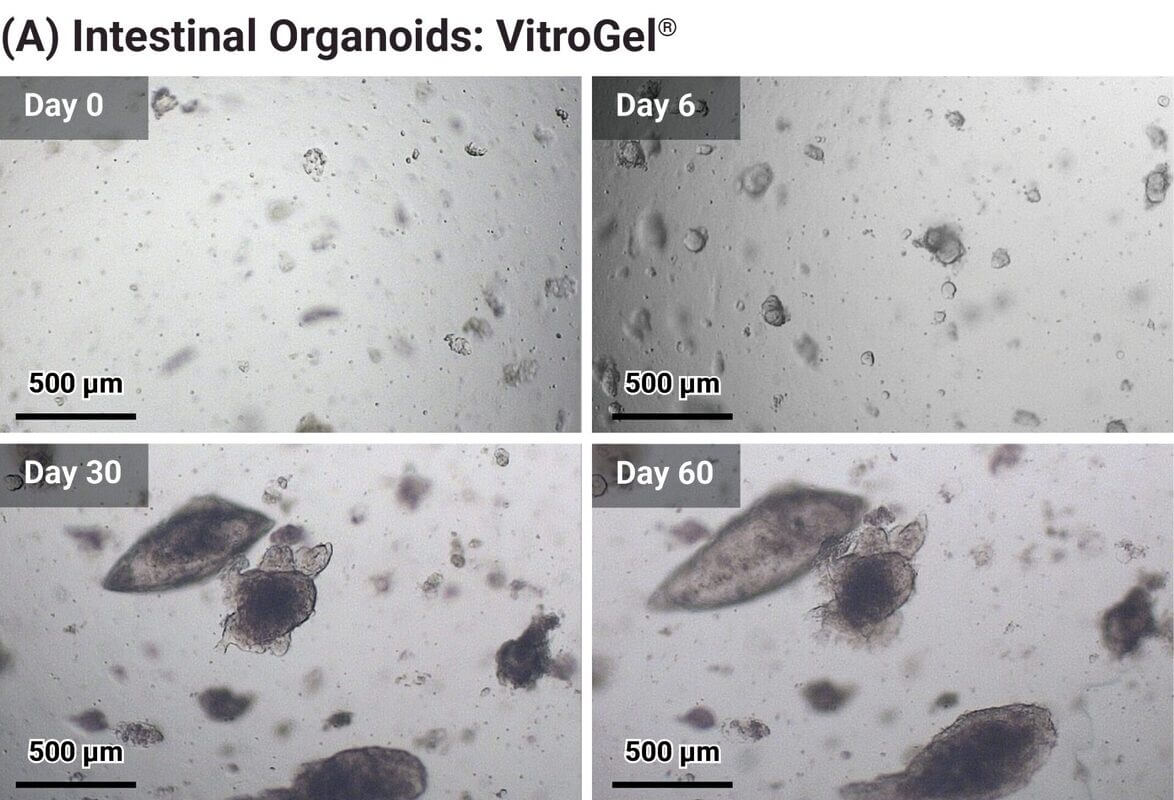
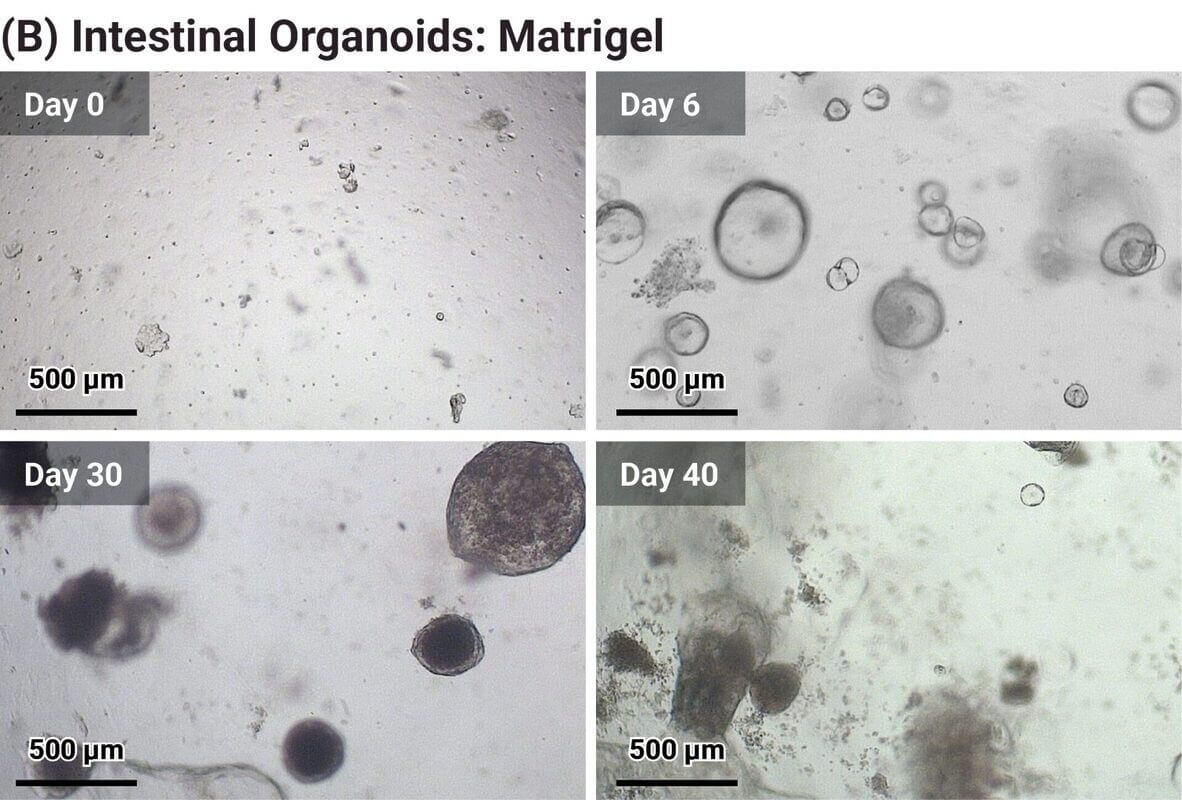
Figure 6. VitroGel® Supports Long-term Organoid Growth. (A) Bright-field images of intestinal organoids cultured and maintained in VitroGel® ORGANOID-3 over 60 days in RocketCell™ Apical-Out Intestinal Organoid Growth Media, AOF (from day 0 through day 60). (B) Intestinal organoids cultured and maintained in Matrigel with RocketCell™ Apical-Out Intestinal Organoid Growth Media. Organoids in Matrigel started dying after 30 days in 3D culture.
CASE 7
RocketCell™ Apical-Out Intestinal Organoid, AOF Growth Kit Supports Long-term Intestinal Organoid Growth while Maintaining Apical-out Polarity
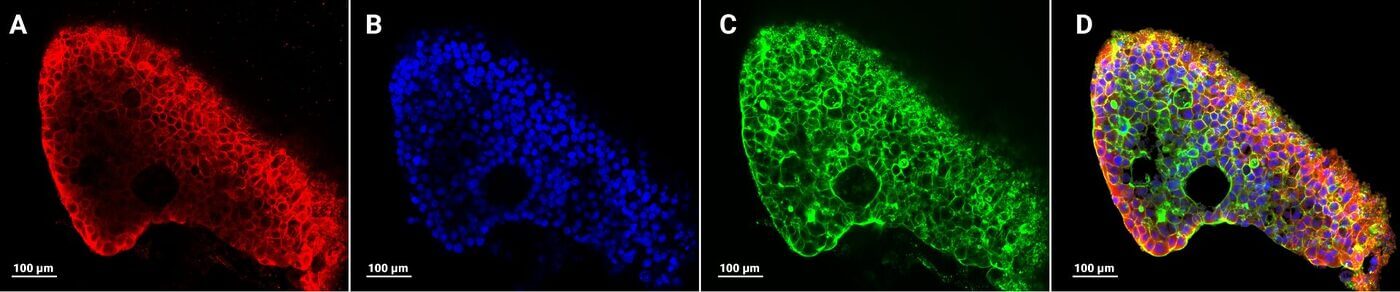
Figure 7: VitroGel® ORGANOID supports long-term organoid growth while maintaining structural integrity. (A) A mature intestinal organoid cultured in VitroGel® ORGANOID stained with β-catenin (in red). (B) DAPI nuclei staining (in blue). (C) Intestinal organoid cultured in VitroGel® ORGANOIDS stained with ZO-1 (in green). (D) Merged image.
Matrigel® is a trademark of Corning Incorporated.
Resources to advance your organoid research
| Product Format | Complete Kit, Growth Medium Only |
|---|
Related products
New
Cell Culture Media (Xeno-Free)
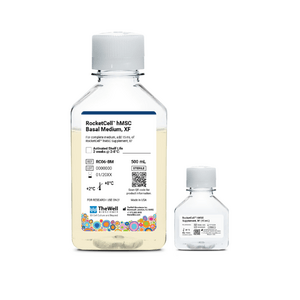
High-performance, xeno-free kit for superior expansion of human mesenchymal stem cells (hMSC)
NEW
Cell Viability Enhancer
Maximize cell recovery and growth during passaging, thawing, and cryopreservation.
New
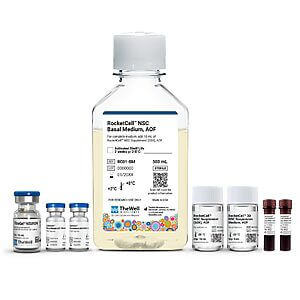
Cell Culture Media (Animal Origin-Free)
All-in-one, ready-to-use kit for 3D neural stem cell culture.
New
Cell Culture Media (Animal Origin-Free)
An all-in-one, animal origin-free kit with optimized matrix, medium, and reagents for 3D iPSC expansion.
New
Cell Culture Media (Animal Origin-Free)
Animal origin-free complete medium for 3D and 2D neural stem cell culture
NEW
Culture Media and Supplements
B27-like, Animal Origin-Free Supplement