

FGF-10/KGF2 (Human), Recombinant Protein, E. coli, Tag Free
Premium CytoGrow™ growth factor suitable for developmental biology, epithelial tissue regeneration, organoid culture, stem cell differentiation, and regenerative medicine.
CytoGrow™ Recombinant FGF-10/KGF2 (Human), E. coli, Tag Free
Recombinant human fibroblast growth factor 10 (FGF-10), also known as keratinocyte growth factor 2 (KGF2), is produced in E. coli in a tag-free format, ensuring high purity and biological activity. FGF-10 is a member of the fibroblast growth factor family and plays a key role in embryonic development, epithelial cell proliferation, and tissue repair, particularly in lung and skin biology.
In humans, FGF-10 primarily binds to the FGFR2b receptor isoform, activating downstream signaling pathways such as MAPK/ERK and PI3K/AKT. These pathways promote epithelial cell proliferation, differentiation, and migration, as well as organogenesis and tissue regeneration. FGF-10 is especially important in lung branching morphogenesis and skin homeostasis. Recombinant FGF-10 is widely used in epithelial biology research, stem cell and organoid culture systems, regenerative medicine, and wound healing studies.
| Synonym: | Fibroblast growth factor 10;FGF-10;Keratinocyte growth factor 2;FGF10;KGF-2;KGF2 |
| Species: | Human |
| Expression System: | E. coli |
| Endotoxin: | ≤10 EU/mg |
| Appearance: | White powder, colorless clear liquid after reconstitution |
| Formulation | Lyophilized from a 0.22 μm filtered solution containing 10 mM PB, 5% Trehalose, and 0.01% Tween 80 |
| Reconstitution: | Recommended to redissolve in sterile deionized water |
| Shipping: | US - Ships overnight |
| Storage and Stability: | Store in a manual defrost freezer and avoid repeated freeze-thaw cycles. Lyophilized state: 36 months at -20°C to -80°C After reconstitution and under sterile conditions: 6 months at -20°C to -80°C 7-10 days at 2°C to 8°C |


Data and Bioactivity
| Size | 1 μg, 10 µg, 50 μg, 1 mg, 10 mg, 100 mg, 1 g, 1 mL, 10 mL |
|---|
Related products
CytoGrow™ - Recombinant Proteins
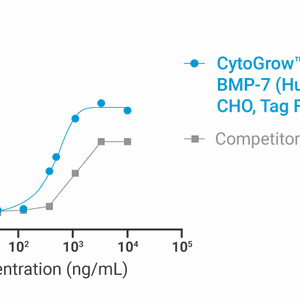
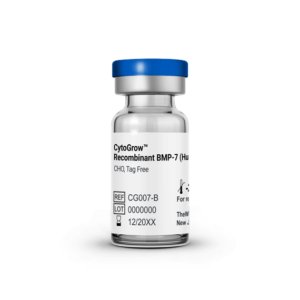
Premium CytoGrow™ growth factor suitable for bone and cartilage research, fibrosis models, kidney development studies, regenerative medicine, and drug discovery.
CytoGrow™ - Recombinant Proteins
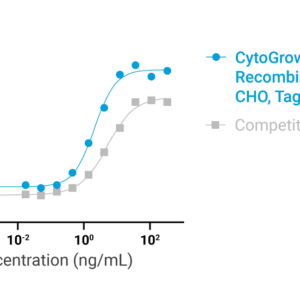
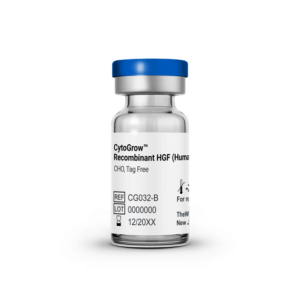
Premium CytoGrow™ growth factor suitable for liver regeneration research, wound healing, angiogenesis, fibrosis studies, cancer biology, and regenerative medicine.
CytoGrow™ - Recombinant Proteins
Premium CytoGrow™ growth factor suitable for developmental biology, stem cell differentiation, neurobiology, craniofacial development, and cancer research.
CytoGrow™ - Recombinant Proteins
Premium CytoGrow™ growth factor suitable for embryonic development research, stem cell differentiation, tissue engineering, and BMP-related signaling studies.
CytoGrow™ - Recombinant Proteins
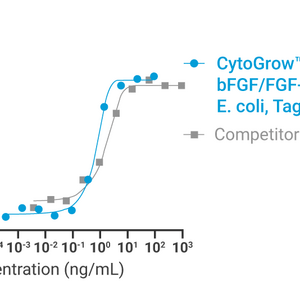
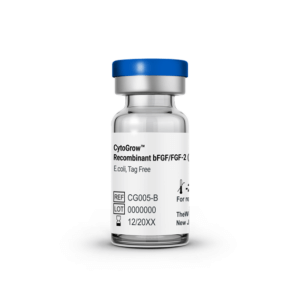
bFGF/FGF-2 (Sparus Aurata), Recombinant Protein, E. coli, Tag Free
Premium CytoGrow™ growth factor suitable for stem cell culture, organoid development, tissue regeneration studies, angiogenesis assays, and cell signaling research.
CytoGrow™ - Recombinant Proteins
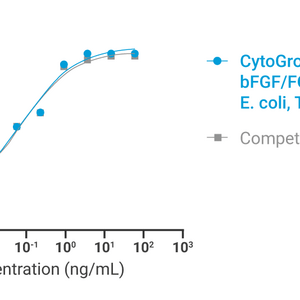
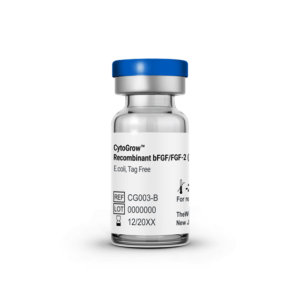
Premium CytoGrow™ growth factor suitable for stem cell culture, angiogenesis research, wound healing studies, and regenerative medicine.