


TGF-β2 (Bovine/Porcine), Recombinant Protein, CHO, Tag Free
Premium CytoGrow™ growth factor suitable for developmental biology, immunology, fibrosis and cancer research, wound healing, and tissue engineering.
CytoGrow™ Recombinant TGF-β2 (Bovine/Porcine), CHO, Tag Free
Recombinant transforming growth factor beta 2 produced in CHO cells to ensure proper folding, native post-translational modifications, and full biological activity. Supplied in a tag-free format, this protein maintains its natural structure and function for consistent and reliable performance in research applications.
TGF-β2 is a multifunctional cytokine involved in regulating cell proliferation, differentiation, apoptosis, and extracellular matrix (ECM) production. It plays a key role in developmental processes, immune modulation, and tissue homeostasis, with distinct functions in epithelial and mesenchymal cell interactions.
This recombinant TGF-β2 is widely used in cell culture to study signaling pathways, support cell differentiation, and modulate cellular responses. It is particularly relevant for applications in developmental biology, cancer research, fibrosis studies, and tissue engineering.
| Synonym: | Transforming growth factor beta-2; TGFB2; Polyergin; G-TSF; Glioblastoma-derived T-cell suppressor factor; Cetermin; BSC-1 cell growth inhibitor; TGF-beta-2 |
| Species: | Bovine/Porcine |
| Expression System: | Chinese Hamster Ovary cell lines (CHO) |
| Endotoxin: | ≤10 EU/mg |
| Appearance: | White powder, colorless clear liquid after reconstitution |
| Formulation | Lyophilized from a 0.2 μm filtered solution containing 0.085% TFA, 5% mannitol, and 30% ACN |
| Reconstitution: | Recommended to redissolve in 4 mM HCl |
| Shipping: | US - Ships overnight |
| Storage and Stability: | Store in a manual defrost freezer and avoid repeated freeze-thaw cycles. Lyophilized state: 36 months at -20°C to -80°C After reconstitution and under sterile conditions: 6 months at -20°C to -80°C 7-10 days at 2°C to 8°C |


Data and Bioactivity
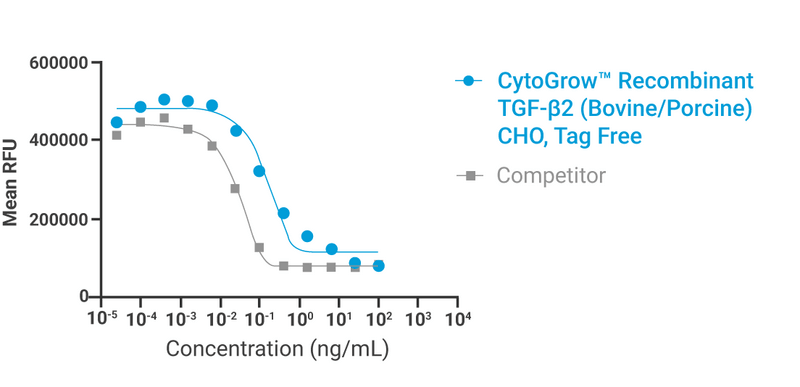
Measured in a cell inhibition assay using TF-1 cells at IL4 presence. The ED50 for this effect is ≤0.3 ng/mL.
| Size | 1 μg, 10 µg, 50 μg, 1 mg, 10 mg, 100 mg, 1 g, 1 mL, 10 mL |
|---|
Related products
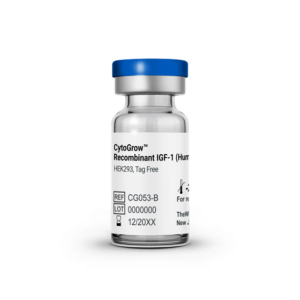
CytoGrow™ - Recombinant Proteins
Premium CytoGrow™ growth factor suitable for growth and development studies, cell signaling research, tissue regeneration, metabolic disease models, and drug discovery.
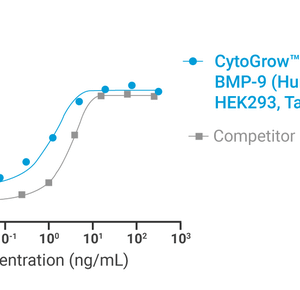
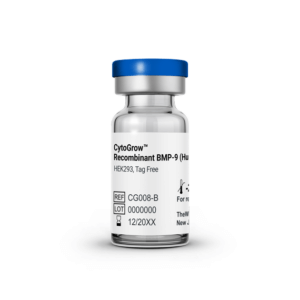
CytoGrow™ - Recombinant Proteins
Premium CytoGrow™ growth factor suitable for angiogenesis and bone research, vascular disease models, liver fibrosis studies, cancer biology, and drug development.
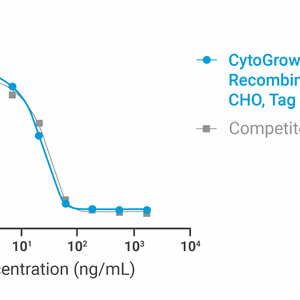
CytoGrow™ - Recombinant Proteins
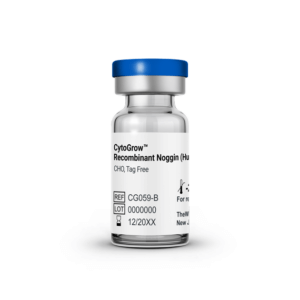
Premium CytoGrow™ growth factor suitable for embryonic development research, stem cell differentiation, tissue engineering, and BMP-related signaling studies.
CytoGrow™ - Recombinant Proteins
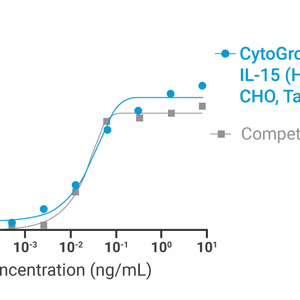
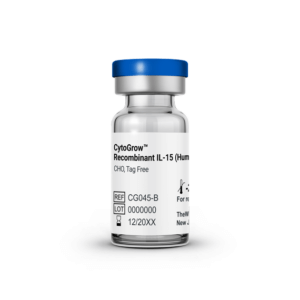
Premium CytoGrow™ growth factor suitable for cancer immunotherapy research, NK and T cell biology, infectious disease studies, and cytokine signaling analysis.
CytoGrow™ - Recombinant Proteins
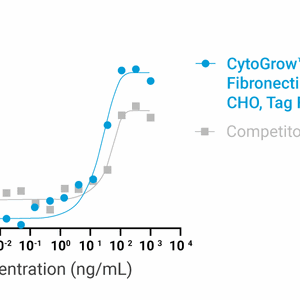
Premium CytoGrow™ growth factor suitable for cell culture coating, ECM research, wound healing, angiogenesis, tissue engineering, and regenerative medicine.
CytoGrow™ - Recombinant Proteins
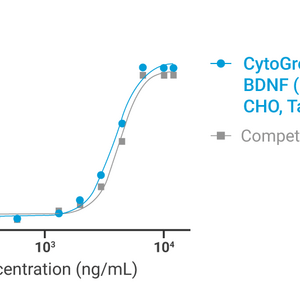
Premium CytoGrow™ growth factor suitable for neuronal cell culture, neurodegenerative disease research, synaptic plasticity studies, and drug discovery.