


TGF-β3 (Bovine), Recombinant Protein, CHO, Tag Free
Premium CytoGrow™ growth factor suitable for tissue regeneration, wound healing, fibrosis research, developmental biology, and cancer studies.
CytoGrow™ Recombinant TGF-β3 (Bovine), CHO, Tag Free
Recombinant bovine transforming growth factor-beta 3 (TGF-β3) is produced in CHO cells in a tag-free format, ensuring native dimeric folding and mammalian-specific post-translational modifications. TGF-β3 is a highly conserved member of the TGF-β superfamily, functioning as a potent regulator of embryogenesis, cell differentiation, and extracellular matrix (ECM) synthesis.
In bovine and cross-species models, TGF-β3 signals through the canonical SMAD pathway via the TGF-β Type I and Type II receptor complex. It is particularly recognized for its superior ability, compared to other isoforms, to induce chondrogenic differentiation and promote scarless wound healing by modulating the deposition of collagen and fibronectin. The CHO-derived, tag-free expression system ensures high specific bioactivity and eliminates potential interference with receptor binding or downstream signaling, providing a reliable and chemically defined tool for complex tissue modeling.
| Synonym: | Transforming growth factor beta-3; TGFB3; TGF-beta-3; Latency-associated peptide; LAP |
| Species: | Bovine |
| Expression System: | Chinese Hamster Ovary cell lines (CHO) |
| Endotoxin: | ≤10 EU/mg |
| Appearance: | White powder, colorless clear liquid after reconstitution |
| Formulation | Lyophilized from a 0.2 μm filtered solution containing 100 mM Glycine, 150 mM NaCl, 5% mannitol, and 0.01% Tween 80 |
| Reconstitution: | Recommended to redissolve in sterile deionized water |
| Shipping: | US - Ships overnight |
| Storage and Stability: | Store in a manual defrost freezer and avoid repeated freeze-thaw cycles. Lyophilized state: 36 months at -20°C to -80°C After reconstitution and under sterile conditions: 6 months at -20°C to -80°C 7-10 days at 2°C to 8°C |


Data and Bioactivity
Measured in a inhibition assay using TF-1 cells in the presence of IL4.
| Size | 1 μg, 10 µg, 50 μg, 1 mg, 10 mg, 100 mg, 1 g, 1 mL, 10 mL |
|---|
Related products
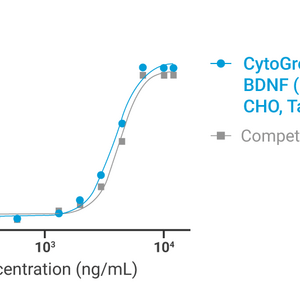
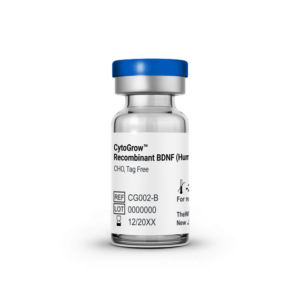
CytoGrow™ - Recombinant Proteins
Premium CytoGrow™ growth factor suitable for neuronal cell culture, neurodegenerative disease research, synaptic plasticity studies, and drug discovery.
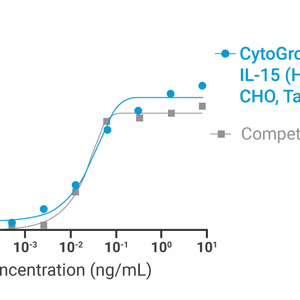
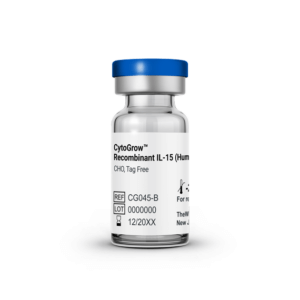
CytoGrow™ - Recombinant Proteins
Premium CytoGrow™ growth factor suitable for cancer immunotherapy research, NK and T cell biology, infectious disease studies, and cytokine signaling analysis.
CytoGrow™ - Recombinant Proteins
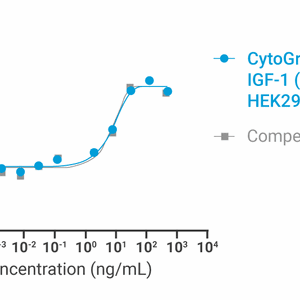
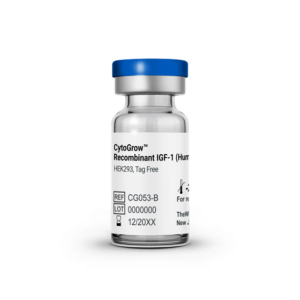
Premium CytoGrow™ growth factor suitable for growth and development studies, cell signaling research, tissue regeneration, metabolic disease models, and drug discovery.
CytoGrow™ - Recombinant Proteins
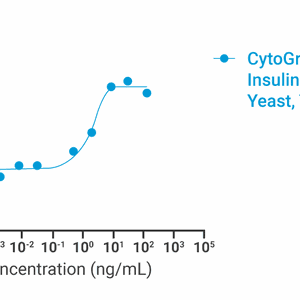
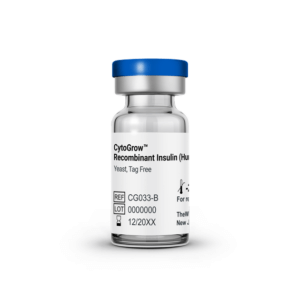
Premium CytoGrow™ growth factor suitable for diabetes and metabolic disorder research, cell culture supplementation, signal transduction studies, and therapeutic development.
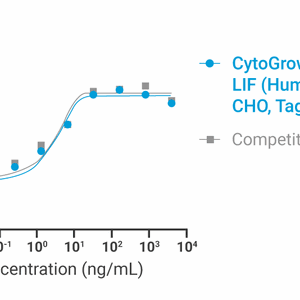
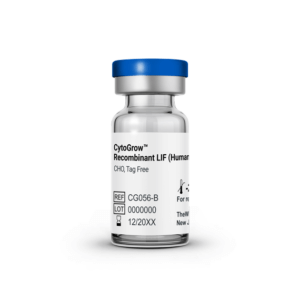
CytoGrow™ - Recombinant Proteins
Premium CytoGrow™ growth factor suitable for stem cell culture and differentiation, neurobiology, immunology, cancer research, and tissue regeneration studies.
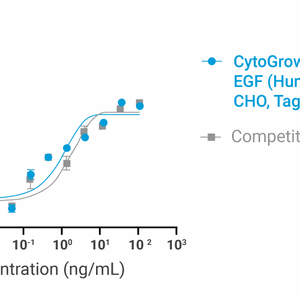
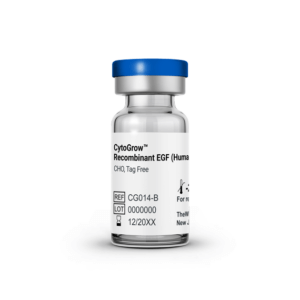
CytoGrow™ - Recombinant Proteins
Premium CytoGrow™ growth factor suitable for cell culture supplementation, wound healing research, epithelial biology, and cancer signaling studies.