
Poster Presentations
Innovative Xeno-Free Synthetic Hydrogel Supports iPSC-derived Intestinal Organoids and Colorectal Cancer (CRC) Organoid Growth

Organoids | Abstract #4863 at AACR 2026
Innovative Xeno-Free Synthetic Hydrogel Supports iPSC-derived Intestinal Organoids and Colorectal Cancer (CRC) Organoid Growth: An Advanced Organoid Platform for Therapeutic Screening.
Abstract:
Colorectal cancer (CRC) is the fourth most commonly diagnosed cancer and the second leading cause of cancer death in the United States of America. Organoids, specifically CRC organoids have emerged as a powerful preclinical model as they closely recapitulate patient-specific tumor features, including tumor morphology, genetics, and treatment response. However, most organoid culture systems heavily rely on animal-based hydrogel systems, which are tumor-derived and consist of a large number of undefined components, introducing batch variability, thus limiting their translational relevance.
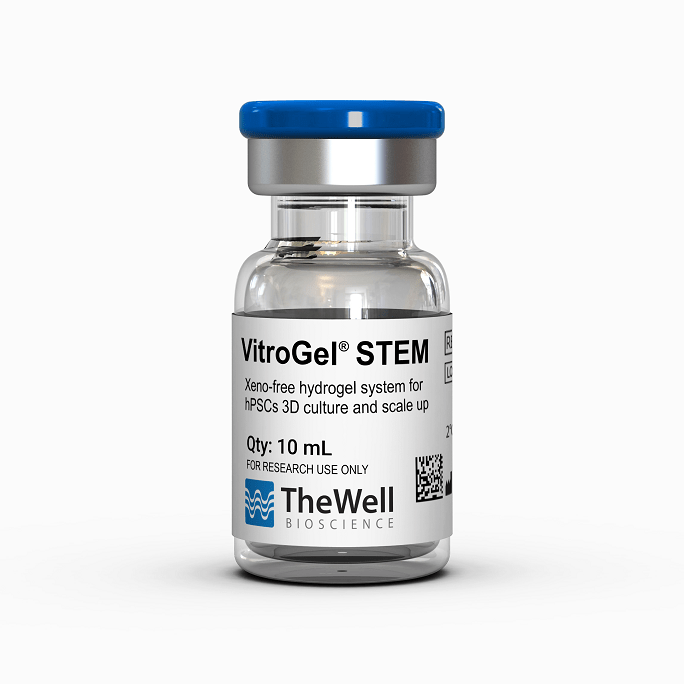
To overcome these limitations, we developed and engineered an innovative xeno-free synthetic hydrogel system (VitroGel) to provide mechanical support and a tunable extracellular environment for advanced CRC organoid research. Human iPSCs were first cultured in the synthetic hydrogel VitroGel® STEM to generate uniform spheroids. Using stepwise differentiation with endoderm-inducing and mid-gut patterning media, spheroids were guided toward intestinal lineage commitment. Immature intestinal organoids were subsequently transferred into VitroGel® ORGANOID with intestine-specific medium to generate mature intestinal organoids with stable expansion. Similarly, patient-derived CRC organoids were cultured in a synthetic hydrogel system, resulting in reproducible growth and structural integrity.
To further evaluate the utility of the VitroGel® system for modeling tumor-epithelium interactions, we established an advanced co-culture model by integrating iPSC-derived intestinal organoids with Wnt3a-overexpressing, RFP-labeled Caco-2 cells within VitroGel®. Activation of the Wnt pathway induced tumor-like phenotypes within the organoid structures, enabling the development of intestinal organoids with enhanced tumor characteristics.
Overall, the synthetic hydrogel VitroGel® ORGANOID provides a next-generation matrix that enhances the reproducibility, scalability, and translational relevance of intestinal and CRC organoid models, including advanced tumor-epithelium co-culture. By eliminating the limitations of animal-derived extracellular matrices, VitroGel® represents a significant advancement for precision oncology and drug discovery.
Please complete the form below to download the poster.
Related Products

VitroGel® ORGANOID

Discover how VitroGel® can support your cell culture research
Explore our updated resources for a concise overview of VitroGel®’s key features and application areas.
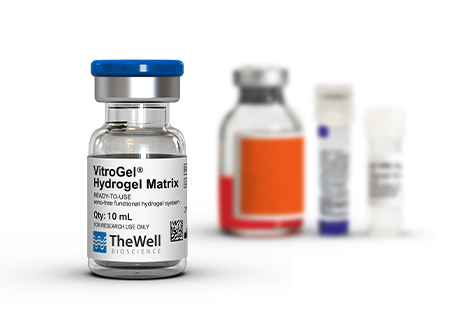
Comparison of VitroGel® vs. Animal-based ECM
Discover the 20+ advantages of VitroGel® over animal-based ECM with this comprehensive comparison on key features, operation, application, and storage conditions.
Learn More
What is VitroGel® | Overview Video
Learn why VitroGel® is the leading animal-free hydrogel for 3D cell culture.
Learn More
End-to-End Platform for Organoid Culture
Discover our xeno-free platform for a more robust and consistent organoid culture.
Learn More