Webinars
Streamlining Organoid Culture with a Universal RocketCell™ Organoid Xeno-Free Essential-Core Medium

Learn how a streamlined xeno-free platform supports efficient organoid establishment, growth, and maintenance.
Organoid technology has rapidly become a powerful platform for disease modeling, drug discovery, and translational biomedical research. However, most organoid systems still rely on highly specialized media formulations tailored to individual organoid types. There is currently no universal culture medium that supports all organoid types. This often leads to complex workflows, increased costs, and challenges in reproducibility and standardization across laboratories.
 In this webinar, we introduce RocketCell™ Organoid Xeno-Free Essential-Core Medium, a fully defined, modular platform designed to simplify and standardize organoid culture. The Essential-Core Medium serves as a universal foundation that can support the culture of multiple organoid types. By supplementing the Essential-Core with selected signaling factors—such as those from our CytoGrow™ premium recombinant growth factor family—researchers can easily tailor the system to meet the specific requirements of different organoid models.
We will demonstrate how this streamlined platform supports efficient organoid establishment, growth, and maintenance while enabling researchers to adapt to the universal medium foundation across diverse organoid applications. This flexible and modular approach reduces complexity in media preparation, improves reproducibility across experiments, and saves meaningfully in both time and cost for organoid research.
Join us to learn how the RocketCell™ Organoid Xeno-Free Essential-Core platform, combined with VitroGel® hydrogel system, provides a flexible, xeno-free solution for establishing and expanding a wide range of organoid models while enabling more standardized and scalable workflows for modern biomedical research.
KEY TAKEAWAYS
- Universal modular platform: RocketCell™ Organoid Xeno-Free Essential-Core Medium provides a common base medium adaptable to many organoid types with targeted supplements.
- Plug-and-Play Flexibility: Serves as a versatile base for multiple organoid lineages and differentiation stages; just add the specific growth factors required for your specific model
- Simplified Workflows: A standardized core medium reduces variability and complexity in organoid culture across experiments and labs.
- 100% Xeno-Free & Defined: Ensures a controlled, animal-origin-free environment, minimizing batch-to-batch variability and regulatory hurdles
PRESENTER
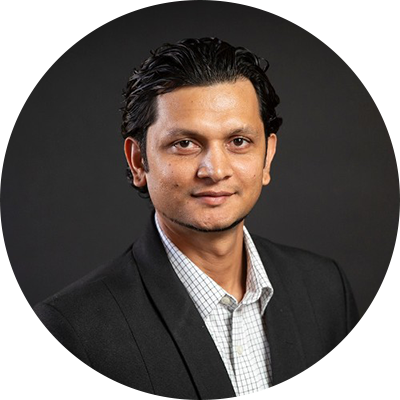
Kalhara Menikdiwela Ph.D.
TheWell Bioscience
Research Scientist II
Dr. Kalhara Menikdiwela is a Research Scientist II at TheWell Bioscience. Kalhara earned his doctorate from Texas Tech University, where he investigated the mechanisms linking adipose renin angiotensin system to inflammation and endoplasmic reticulum stress.
As a post-doctoral researcher at the Rutgers University New Brunswick, Kalhara explored the novel role of intestinal fatty acid binding proteins in regulating glucose metabolism and energy homeostasis through specific ligand binding using numerous models including 3D organoids.
At TheWell Bioscience, he oversees the 3D organoid modeling unit primarily focusing on developing and refining various VitroGel® hydrogel systems to support organoid cultures.