

CytoGrow™ is TheWell Bioscience’s portfolio of premium-grade recombinant proteins built for researchers who demand top-tier bioactivity, strong lot-to-lot consistency, and reliable performance—with a budget-friendly price. With 100+ recombinant proteins across multiple species—including human, mouse, bovine, porcine, and fish – CytoGrow™ spans all major growth factor families and essential cell culture components, including:
- EGF Family, FGF Family, TGF Family, BMP Family, PDGF Family, VEGF Family, IGF Family,
TNF Family, Interferons, Neurotrophins, Wnt-Related Proteins, and Hematopoietic Factors - Interleukins
- ECM Proteins (Vitronectin and Fibronectin)
- Accessory Proteins (Transferrin, Insulin, Fetuin A, and Tissue Factor)
- Additional Specialized & Difficult-to-Express Proteins

CytoGrow™ – Engineered for researchers who demand both scientific excellence and economic efficiency.
This comprehensive portfolio enables researchers to build fully defined systems that support applications ranging from routine cell expansion to complex, highly sensitive biological models.
CytoGrow™ proteins are trusted by our internal cell culture experts and have been validated in cell culture tests, including stem cells, organoids, neuronal cultures, immune cell platforms, and angiogenesis models, across 2D and 3D culture platforms.
Why choose cytogrow™?
CytoGrow™ is not just another recombinant protein catalog. It is a performance-driven, application-validated growth factor platform engineered to deliver superior results at disruptive pricing.
Superior Performance

- 30%+ of our 100+ growth factors outperform the
top-tier major brands in head-to-head assays. - 100% of products show comparable or superior performance relative to leading market standards.

Budget-Friendly Pricing

- ~50-60% average cost savings compared to the premium market pricing
- Up to 80 – 90% savings on selected high-demand products
Broad and Comprehensive Portfolio

- 150+ proteins across multiple species.
- CytoGrow™ covers all major growth factor families allowing full workflow coverage from basic expansion to complex differentiation systems.
Real Application Validation

- Trusted by cell culture experts: these proteins are used internally by TheWell Bioscience’s team for multiple applications, from organoid, stem cell, to neuronal models.
- Instead of just a basic QC readout, the quality is supported by real culture data.
Find Your CytoGrow™ Growth Factors
Explore recombinant proteins by family
Need a quick list of all our CytoGrow™ and introductory guidance on growth factors and pricing? Download below:
Growth Factors | View below or go to Catalog Page >
FGFs (Fibroblast Growth Factors)
Interleukins
View below or go to Catalog Page >
Interleukin List
Extracellular (ECM)
View below or go to Catalog Page >
Explore recombinant proteins by Application
Organoids
Organoid Growth Factors
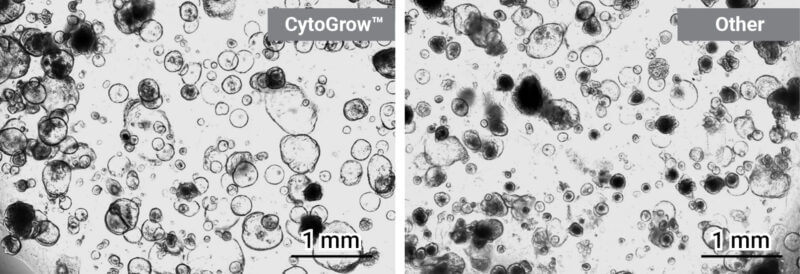
CytoGrow™ growth factors enhance intestinal organoid growth
A.
B.
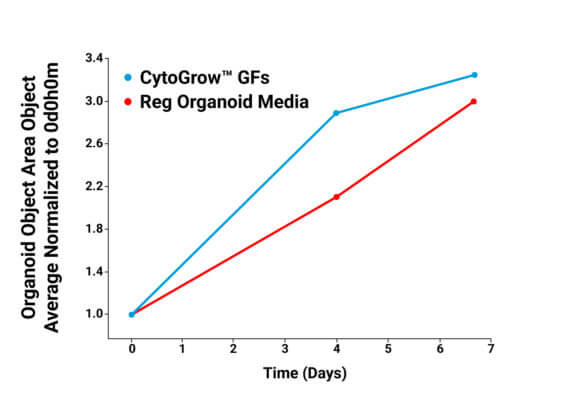
A. Comparison of CytoGrow™ growth factors and other growth factors in supporting the growth of intestinal organoids in Matrigel. The organoid grown in the CytoGrow™ system shows a bigger size and faster growth rate within 6 days. B. The curve of organoid growth area within 6 days, showing the fast growth of Intestinal organoid with CytoGrow™ growth factors.
CytoGrow™ growth factors support intestinal organoid growth
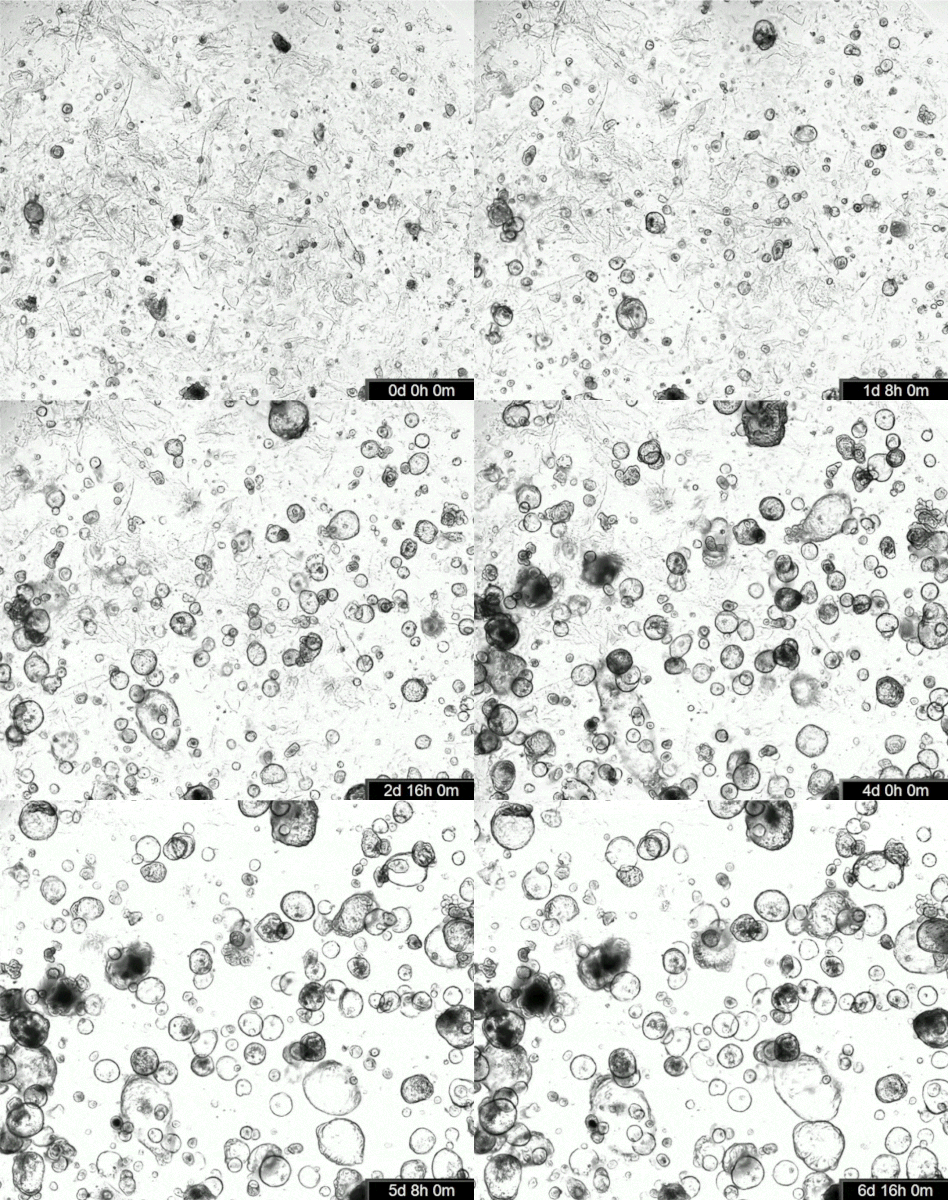
Intestinal organoids grown in Matrigel were cultured with organoid growth medium supplemented with CytoGrow™ growth factors. The video shows the expansion of the organoids over 6 days.


Intestinal Organoid Growth Comparison
RocketCell™ Organoid Essential-Core Medium, AOF was supplemented with intestinal organoid growth factors, (e.g., Wnt pathway agonists, EGF, Noggin, and R-Spondin1), following the recommended protocol. Commercial intestinal organoid media were prepared according to the manufacturer’s instructions. Mouse intestinal organoids were cultured in Matrigel domes, and growth was compared over 5 days. (A–B) Day 0 organoid fragments. (C–D) Organoid growth on Day 5. (E) Normalized mouse intestinal organoid area from Day 0 to Day 5.
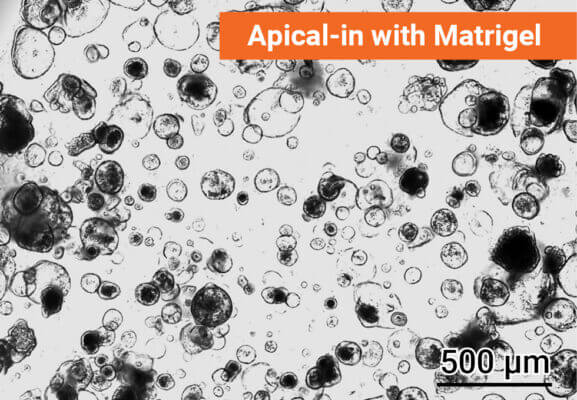
CytoGrow™ growth factors support the different polarities of organoid morphologies
A.
B.
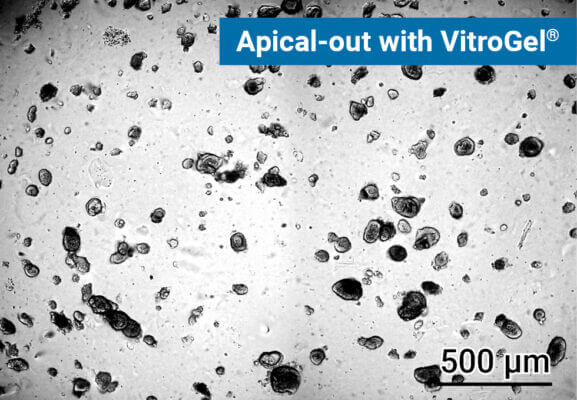
CytoGrow™ growth factors support the Apical-in (A) and Apical-out (B) morphologies of intestinal organoid grown in Matrigel (A) and VitroGel® (B), respectively.

Neuronal Culture
Neuron Growth Factors
CytoGrow™ growth factors support the development of Dopaminergic Neuron Progenitors (DNPs) on 2D thin coating surface with VitroGel® NEURON hydrogel
A.
B.
C.
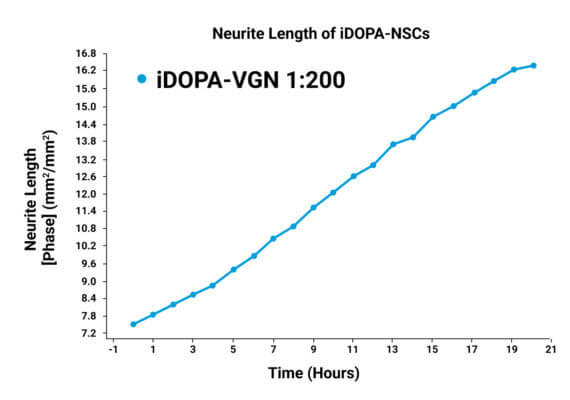
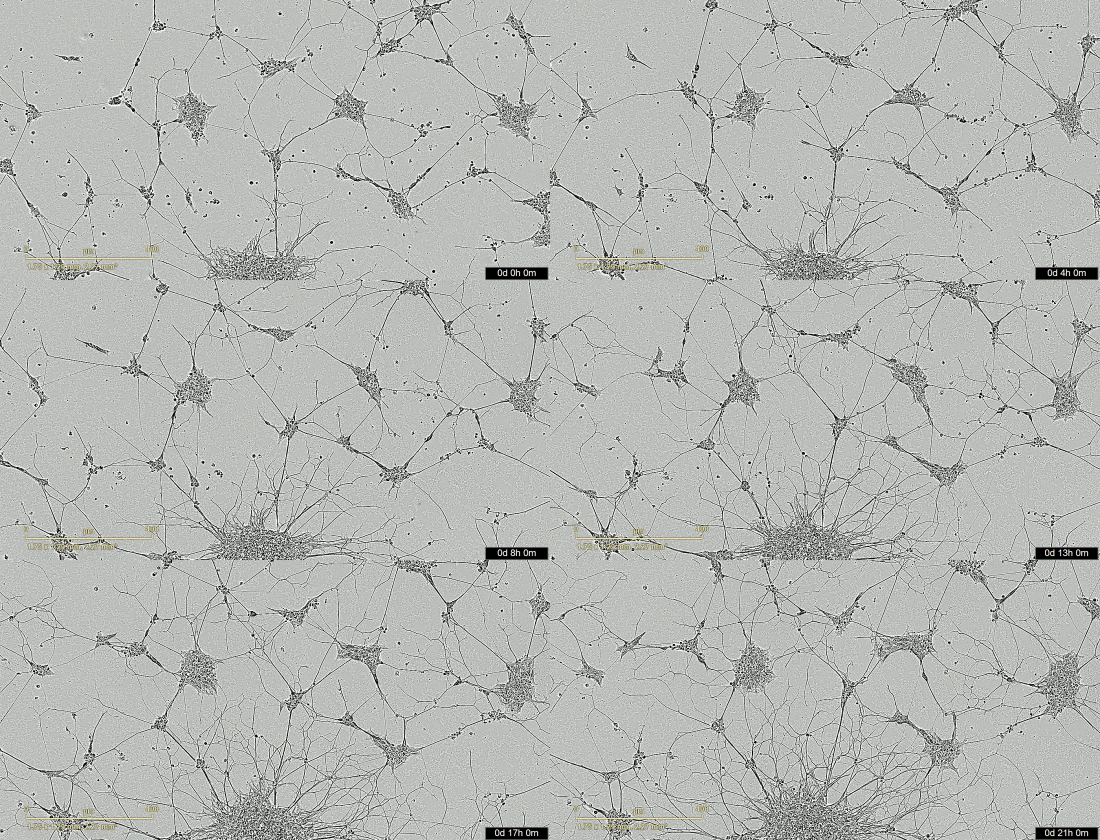
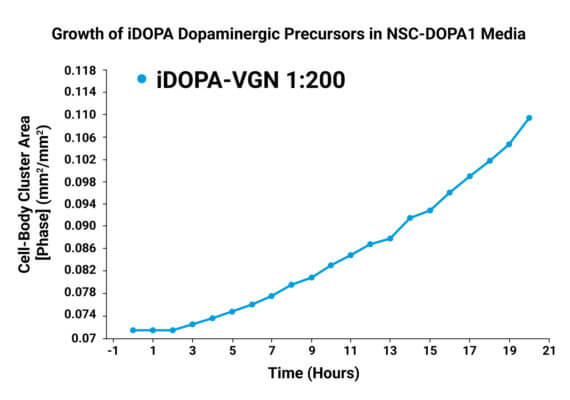
A. Video shows robust survival of DNP colonies, and elaboration of neurites; B & C. IncuCyte Neurotrack analysis software was used to quantify the expansion of the area of DNP colonies, and their enhanced complexity of neurite elongation.
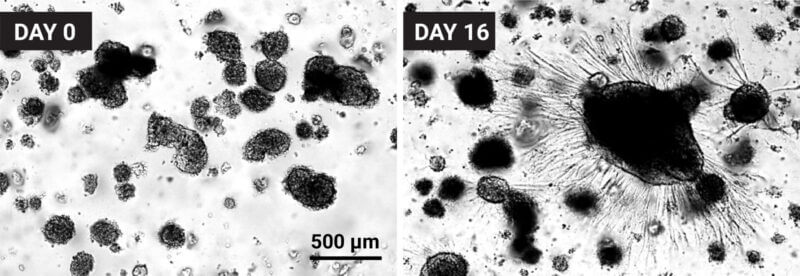
CytoGrow™ growth factors support the 3D development of dopaminergic neurons encapsulated in VitroGel® NEURON hydrogel.
A.
B.
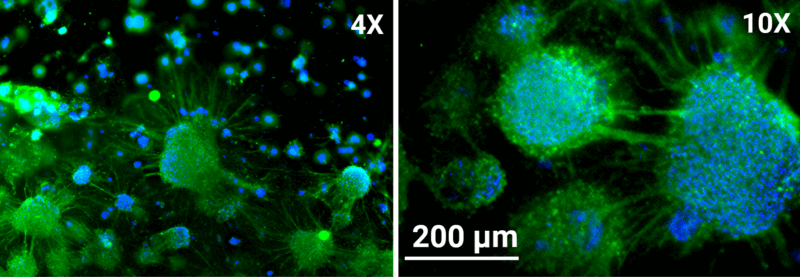
iPSCs were 3D cultured in VitroGel® STEM with RocketCell™ IPSC Growth Medium , AOF (Cat. No. RC02-GM) for 6 passages and were differentiated into Floor Plate Neuro-Epithelial Spheroids. The spheroids were recovered from the hydrogel using the VitroGel® Organoid Recovery Solution and embedded in VitroGel® NEURON. A. Brightfield images of spheroid on day 0 (A, left) that were differentiated for 16 days (A, right). B. The samples were fixed and stained with beta-III-tubulin antibody and DAPI, depicting that the majority of the spheroids are neurons with the ability to form axonal connections. The cultures were visualized with the Keyence BZ-X microscope at 4X and 10X magnifications.

Stem Cell Culture
Stem Cell Growth Factors
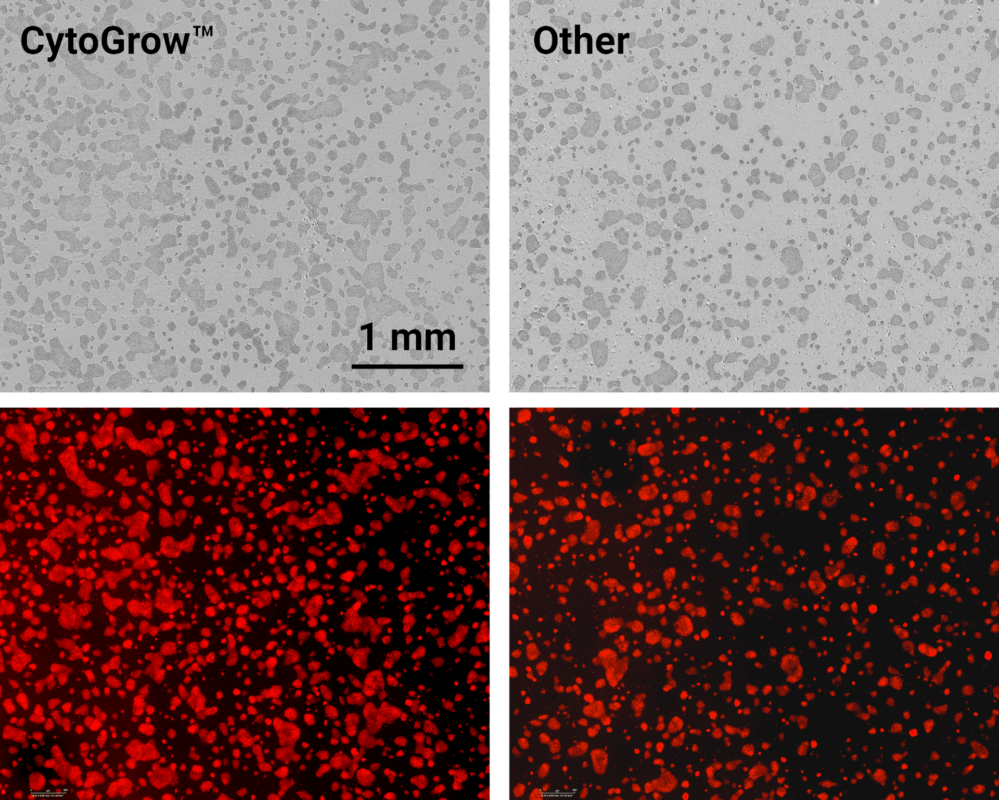
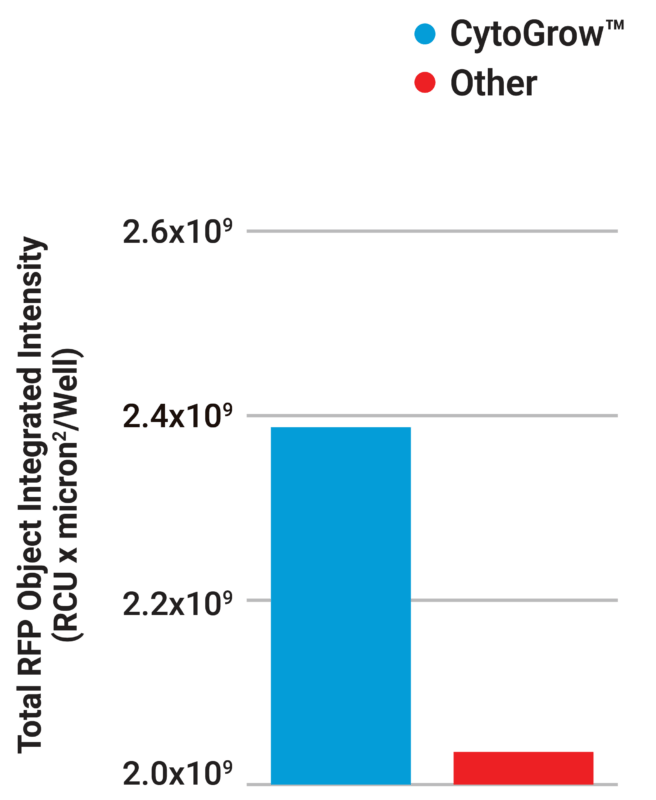
Comparison of micrographs and growth of IPSC colonies cultured in CytoGrow™ and other growth factors.
The 6-well plate was placed into an Incucyte S3 and scanned using “Whole Well” function for both brightfield and red fluorescence. The resulting pictures were analyzed usingan algorithm to detect colonies.
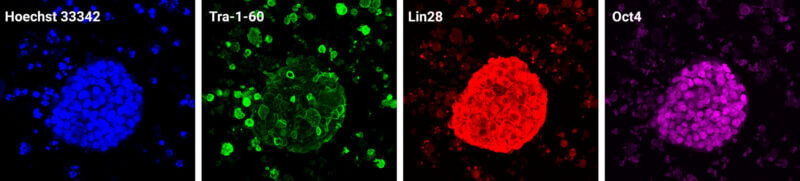
Confocal imaging of IPSC spheroids growing in VitroGel® STEM.
IPSC cultures were plated in VitroGel® STEM and grown for 5 days. The slides were imaged using a Leica Mica confocal microscope. An IPSC spheroid was imaged in 3D using the Z-stacking function, and images for Hoechst 33342 (DNA), Tra-1-60 (Podocalyxin, cell surface), Lin28A (cytoplasmic RNA binding protein), and Oct4 (nuclear transcription factor) were projected using the maximum intensity algorithm.

Immune Cell Culture
Immune Cell Culture Growth Factors

Angiogenesis / Vascular

Cultivated Meat
Cultivated Meat Growth Factors