Poster Presentations
Towards Ethical and Robust Drug Development: Comprehensive Validation of an Animal-free Matrix for In Vivo Tumor Models

Xenograft | Abstract #2175 at AACR 2026


Towards ethical and robust drug development: Comprehensive validation of an animal-free matrix for in vivo tumor models
Presenter: Julia Schueler, Ph.D. – Charles River Laboratories
Abstract:
The 3R principles are embedded in regulatory frameworks and industry standards. However, drug development pipelines are highly standardized and validated over decades. Introducing new models and adapting existing ones requires extensive validation.
The need to compare data before and after these adaptations can lead to inconsistencies and complicate interpretation. The current project aims to introduce an animal-free matrix, VitroGel® (TheWell Bioscience), in our experimental pipeline, focusing on subcutaneously implanted human and murine cancer cell lines into mice. Of the 250 human and 38 murine cell line-derived models in our panel, 92 require the use of a matrix for optimal growth.
To introduce the new matrix in a comprehensive way, we implemented a two-step process. At first, we validated the technical feasibility and the influence of the new matrix in two models, which are known to have low take rates and show experiment-limiting characteristics such as the onset of ulceration. The ovarian cancer cell line SKOV-3 and the breast cancer cell line MDA-MB-468 were implanted with two different cell numbers and three different matrices into NSG mice. Tumor volume was followed twice weekly, and in the case of SKOV-3, the time and degree of ulceration were plotted as well.
In this experiment, we could show that SKOV-3 tumor growth and ulceration rate are independent of the matrix. For MDA-MB-468, the synthetic hydrogel induced faster tumor growth in the group receiving the higher cell numbers and vice versa. The histological examination of the tumors did not show any differences. Based on those results, we decided to fully implement the VitroGel® hydrogel across all models. For each cell line, we injected 5 animals using hydrogel and 5 animals using Matrigel. Again, tumor volume was monitored by twice-weekly caliper measurements. To better understand the influence of the matrices in relation to other biological and technical parameters that influence tumor growth, we compared the actual wet lab data with our database of control groups, which is annotated for cell line passage, mouse strain, and control vehicle (Clark et al, Cancer research. 2023;83(7_Supplement):4676-4676).
By feeding these data into the database, we were able to quantify the biological variability and determine whether the matrix had an influence on tumor growth beyond or within the range of the biological variability of the specific model. So far, we have tested 32 of 92 lines and have not observed significant differences driven by the choice of matrix. With this combination of wet lab experiments and in silico analysis, we can refine our in vivo experiments while minimizing the use of additional animals. Furthermore, this workflow ensures the consistency of data output from those experiments and enables the comparison of data before and after the implementation of the animal-free hydrogel.
Please complete the form below to download the poster.
Related Products
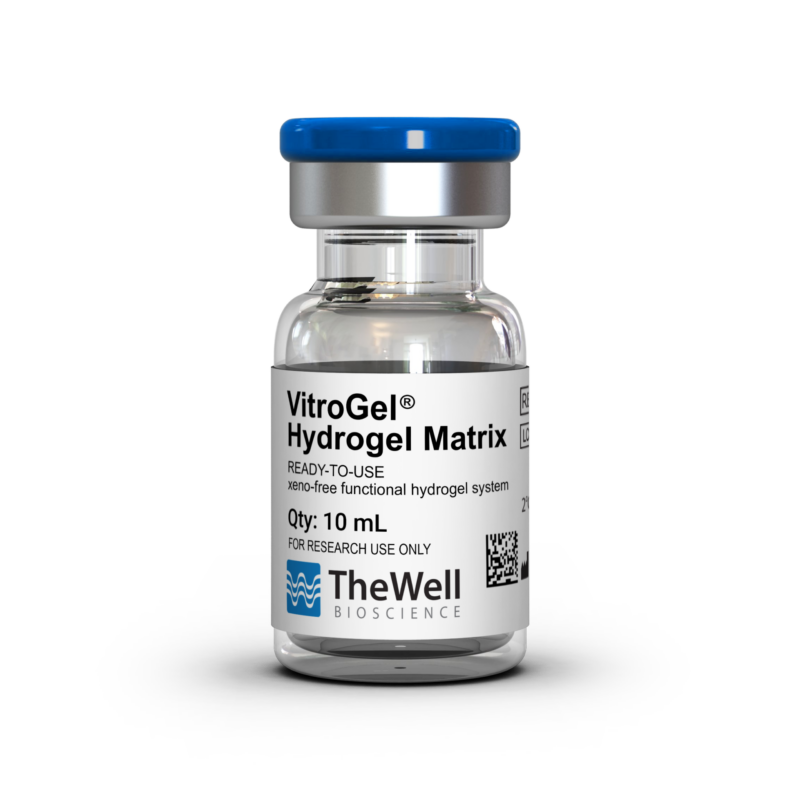
Discover how VitroGel® can support your cell culture research
Explore our updated resources for a concise overview of VitroGel®’s key features and application areas.
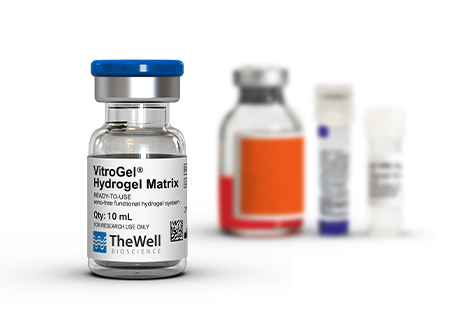
Comparison of VitroGel® vs. Animal-based ECM
Discover the 20+ advantages of VitroGel® over animal-based ECM with this comprehensive comparison on key features, operation, application, and storage conditions.
Learn More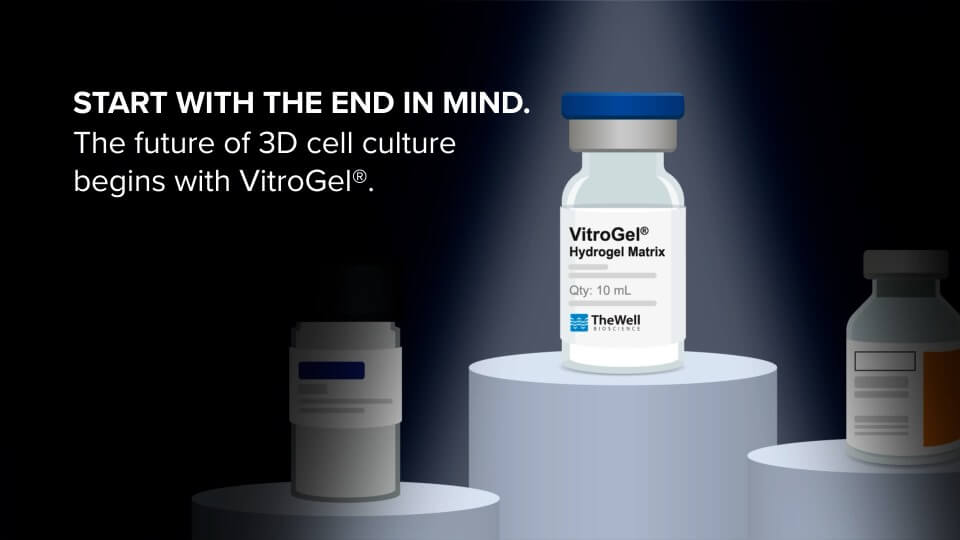
What is VitroGel® | Overview Video
Learn why VitroGel® is the leading animal-free hydrogel for 3D cell culture.
Learn More