
Poster Presentations
Volumetric time-course analysis of chemotherapeutic dose-response in 3D hydrogel embedded cancer spheroids using VitroPrime™ 3D Culture and Imaging Plates together with CYTOQUBE light-sheet microplate cytometer
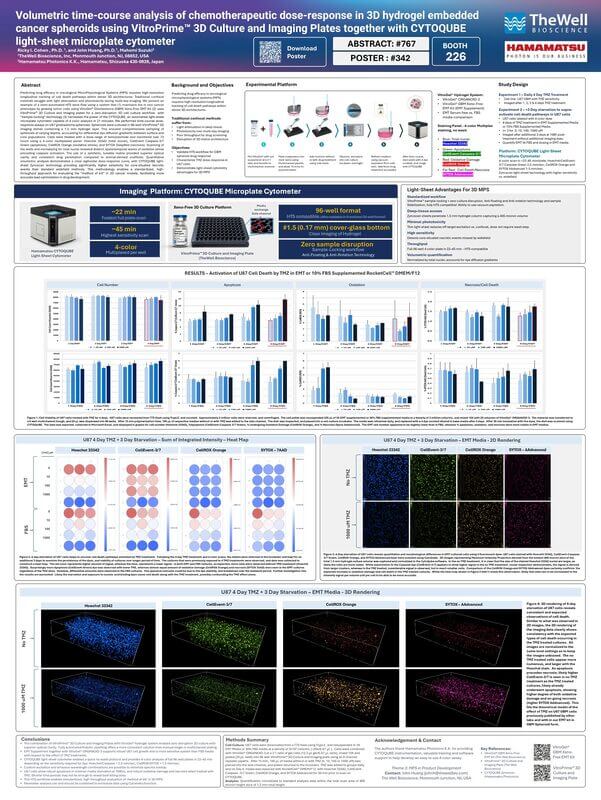
Poster Presentation #342 at MPS 2026
Authors
Rick Cohen, Ph.D., John Huang, Ph.D., Mahomi Suzuki, Ph.D.

ABSTRACT
Predicting drug efficacy in oncological microphysiological systems (MPS) requires high-resolution longitudinal tracking of cell death pathways within dense 3D architectures. Traditional confocal methods struggle with light attenuation and phototoxicity during multi-day imaging. We present an example of a semi-automated HTS workflow using a system that (1) maintains the in vivo cancer phenotype by growing tumor cells using VitroGel® Glioblastoma (GBM) Xeno-
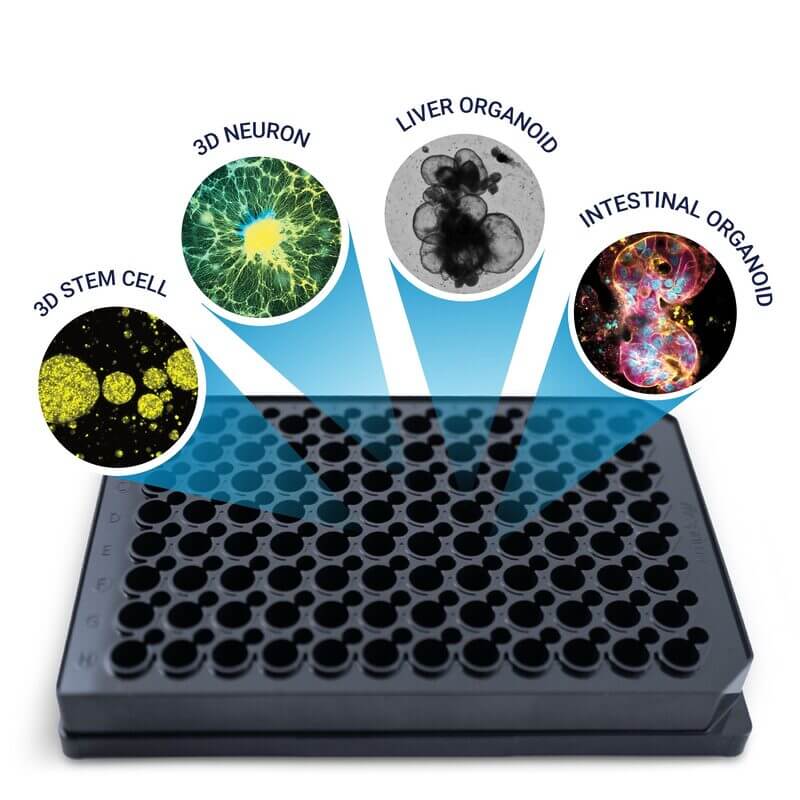
Free EMT Kit (2) uses VitroPrime™ 3D culture and imaging plates for a zero-disruption 3D cell culture workflow with “sample-locking” technology (3), harnesses the power of the CYTOQUBE, an automated light-sheet microplate cytometer capable of 4 color analysis in 21 minutes.
We performed time-course dose-response assays on U87 glioblastoma spheroids. Spheroids were cultured in 96-well VitroPrime™ 3D Culture and Imaging plates containing a 1.5 mm hydrogel layer. This ensured a comprehensive sampling of spheroids at varying depths, accounting for differential dye diffusion gradients between surface and core populations.
Cells were treated with a dose range of temozolomide and monitored over 72 hours using a 4-color multiplexed panel: Hoechst 33342 (total nuclei), CellROX Green (oxidative stress), CellEvent Caspase-3/7 Red (apoptosis), and SYTOX DeepRed (necrosis). Scanning of the wells and normalizing for total nuclei revealed distinct spatiotemporal waves of oxidative stress preceding caspase activation. The use of a synthetic, tunable matrix provided superior optical clarity
and consistent drug penetration compared to animal-derived scaffolds.
Quantitative volumetric analysis demonstrated a clear sigmoidal dose-response curve, with CYTOQUBE light-sheet Zyncscan technology providing significantly higher sensitivity for core-situated necrotic events than standard widefield methods. This methodology enables a standardized, high-throughput approach for evaluating the “method of kill” in 3D cancer models, facilitating more accurate lead optimization in drug development.
Products Used

Please complete the form below to download the poster.